ANALYSIS
Democratic euphoria in the primaries doesn't guarantee a turnaround in the midterms: The map and the money are still on the Republican side
In the 2026 primaries, Democrats have seen higher turnout than Republicans in several key states. That enthusiasm alone does not change the landscape for November: the House is elected in districts redrawn by the GOP, the Senate race is contested primarily in states that Donald Trump won in 2024 and Republicans maintain a documented financial advantage.
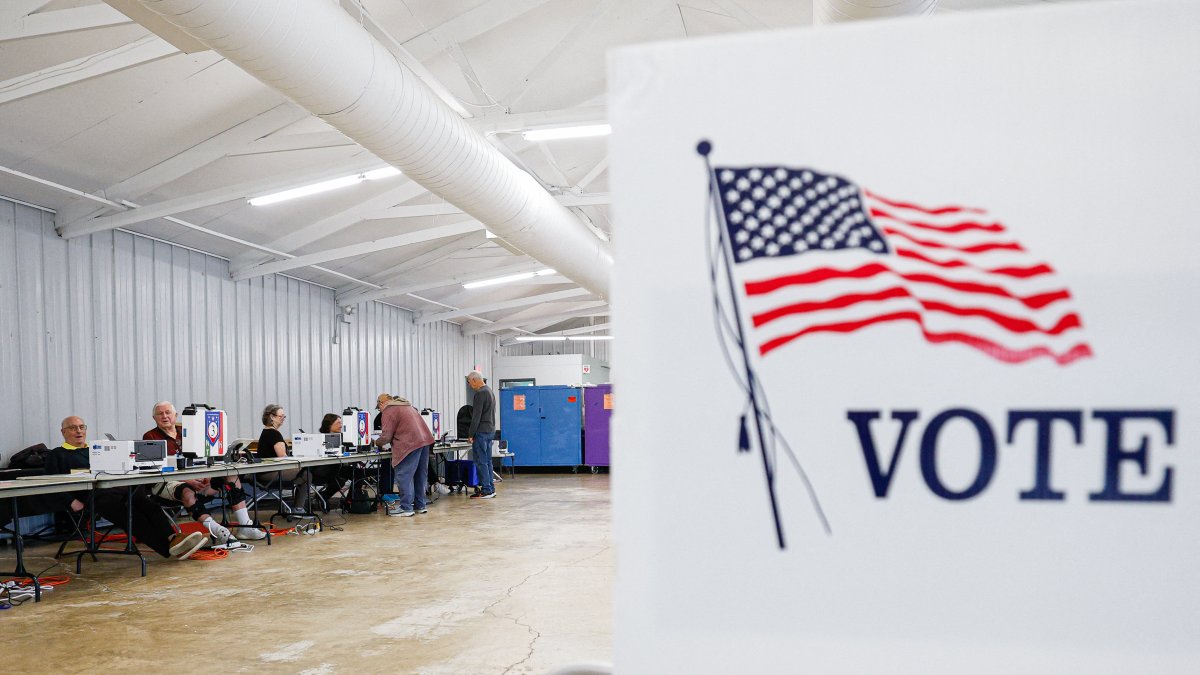
Voting center in Illinois—File photo

Democrats have achieved higher turnout than Republicans in the 2026 primaries in several key states, but the hard data suggests that this advantage may not be enough to change the electoral map in the midterms, according to an analysis by the New York Times (NYT).

The turnout numbers
That tally, compiled using data from the Associated Press and election boards, sums up the season as follows: In Texas, the Democratic Senate primary drew about 150,000 more votes than the Republican primary. This marks a reversal from 2022, when the Republican primaries for state offices surpassed the Democratic ones by 900,000 ballots, and from 2018, when the Republican Senate primary won by 500,000 votes.
In Wisconsin, turnout in the Democratic primary rose by 47% compared to 2018, with more than 250,000 additional votes. In Michigan, the 2026 Democratic Senate primary drew 1.5 million voters, compared to 1.1 million in the 2018 Democratic gubernatorial primary.
The newspaper adds that, in the 22 states with competitive gubernatorial or Senate primaries in both parties in 2022 and 2026, Democratic turnout rose in three-quarters of them compared to four years ago, while Republican turnout fell in two-thirds. The Times measures this turnout as the number of votes cast relative to the eligible voting population.

Republican structural advantages
Despite these numbers, Republicans maintain decisive advantages. They have redrawn congressional districts across the country to secure seats and enjoy a vast financial advantage, according to the NYT.
In the House, the GOP redrew districts in states like Florida and Texas to secure seats. Reuters estimates its advertising war chest at at least $888 million, compared to $666 million for the Democrats. Following a Supreme Court ruling that lifted caps on coordinated spending, Republican national committees ended August with about $233 million in cash on hand.
In the Senate, the Republican Party holds 53 seats and the Democratic Party holds 47. To secure a majority, the Democrats would need to hold on to Georgia and Michigan—states that Donald Trump won in 2024—and win at least four seats currently held by the GOP. Losing either of those two states would raise the threshold. The decisive battleground states are Maine and North Carolina, as well as states with a clear Republican lean, including Iowa, Ohio, Texas and Alaska. The enthusiasm seen in the primaries is a significant factor, but it does not negate the advantages of the electoral map and financial resources.

Enthusiasm does not guarantee victories
Tom Perez, who chaired the Democratic National Committee during the blue wave of 2018, acknowledged to the New York Times that the mobilization seen in the primaries does not guarantee the outcome in November.
In 2018, that enthusiasm carried over into the general election and was enough to regain control of the House. Perez himself, however, does not take it for granted that the same will happen this year.
"I really do believe that people are going to come out in abundance," he said, but cautioned that it will be necessary to pour more money into competitive races.
The message is not to take a national victory for granted and not to neglect districts or states where a narrow margin could decide control of Congress.
"You don’t want to wake up the day after and see that you lost by three points somewhere because you didn’t do anything," he said.

Just The News
Hispanic voter shifts could threaten Republican redistricting advantage in midterms
Just The News/Steven Richards
The Senate remains Republican territory
The Senate, however, did not move in the same direction. Republicans won seats in deep-red states—Indiana, Missouri and North Dakota—and unseated Democrats who had won in 2012, during Barack Obama's second term: Joe Donnelly, Claire McCaskill and Heidi Heitkamp. The Senate map that year, like that of 2026, was contested primarily in territory that Trump had won two years earlier. The Times points this out to emphasize that a national wave alone does not redraw the Senate's geography.
This election cycle presents a parallel. The increase in Democratic turnout in the primaries may foreshadow more votes in November and put pressure on the House. However, it does not erase two structural realities: many House seats have been redrawn in favor of the GOP and the decisive Senate battles are once again taking place in red states or states leaning toward Trump. Euphoria measures sentiment; Congress is decided by district, by state and by resources.
LATEST