Hispanic voter shifts could threaten Republican redistricting advantage in midterms
Shifting party support in the Hispanic demographic may put Republican gains in Florida and Texas redistricting at risk in the upcoming elections.
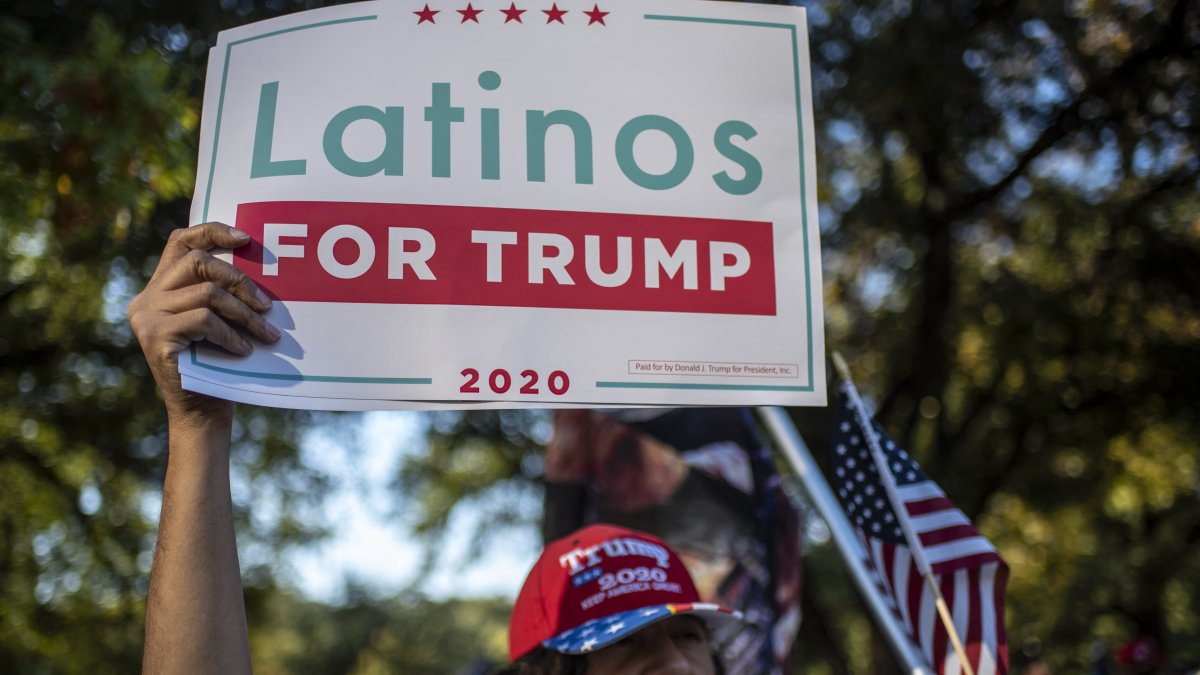
Imagen de seguidores hispanos del presidente Trump

Ahead of the midterm elections, Florida and Texas remade their congressional maps to cement a Republican advantage in the House of Representatives. But, a dramatic shift in Hispanic voters evident in recent polls could upend that strategy.
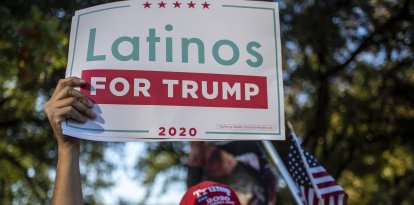
President Donald Trump’s significant gains with Hispanic voters in the 2024 election were widely seen as a key factor in the former president’s return to power. After his opponents Hillary Clinton and Joe Biden each won the voting bloc by more than 25 points in 2016 and 2020, respectively, the president closed the gap–nearly drawing even with Kamala Harris. In 2024, Trump only lost the Hispanic vote by 3 points, according to Pew Research Center polling.

Politics
Democratic candidate backed by DSA arrested during protest against Netanyahu in New York
Joaquín Núñez
Texas and Florida, whose state governments are dominated by Republicans, relied on that new data before the midterm elections to redraw their congressional maps in ways that sought to maximize Republican representation. This redistricting effort was spread to many states across the country and spurred on by President Trump, who saw an opportunity for his party to hang on to the House in those elections.
Latest polls showing a downward trend for Trump in Hispanic demographic
But now, the latest polls suggest that Trump’s massive gains have dissipated as Hispanic voters grow increasingly disillusioned with his presidency. An average of polls in recent weeks shows that Democrats are now leading Republicans 64 points to 29 points. If the pattern endures until election day, this would mark a complete reversal of Trump’s gains with the group. The shift would also put Democrats in a much more favorable position to win several congressional seats in Texas and Florida redrawn specifically to shore up Republican chances of victory.
The threat to Republicans is especially pronounced in Texas and Florida, two states with large Hispanic populations. In 2024, Texas had the second-largest Hispanic population with 12.6 million residents of Hispanic descent. In 2021, Hispanics also became the largest single racial or ethnic group in the state, making up 40% of the population, and for the first time surpassing the white population. Florida has the third-largest Hispanic population at 6.7 million residents.
About thirteen districts across Texas and Florida could become more competitive than Republicans had hoped when they redrew the maps earlier this year if the Hispanic shift holds on election day. That includes a group of Texas border districts that have changed hands between Democrats and Republicans as the latter party scooped up more Hispanic support. For example, The New York Times estimated that Texas’s 28th District could become up to 31 points more Democratic in 2026 than 2024 if the polling trend holds. Others, like the 24th, 15th and 35th could shift between 16 and 24 points to the left if the polling breakdown holds.
Salazar advocates less stringent immigration, in break from Trump-led GOP platform
In Florida, several Miami metropolitan area districts are becoming more competitive. Florida’s 27th District, which includes the heart of downtown Miami, suburbs like Coral Gables and the University of Miami, could see a shift. The district’s incumbent lawmaker, Rep. Maria Elvira Salazar, has drawn fire from fellow Republicans for breaking with Trump and advocating a less stringent immigration policy.
For example, she introduced the Dignity Act earlier this year, which would pair increases in border enforcement funding with pathways for legal residency for illegal aliens who could prove they were living in the country before the Biden-era surge in illegal immigration.
Salazar has directly criticized President Trump’s deportation and immigration policies, citing declining support among Hispanic voters for Republicans. “Mr. President, some of your immigration enforcement efforts have gone too far,” Salazar said in a televised advertisement filmed in front of the White House. “The same Hispanics who helped you get to the White House in 2024 feel betrayed today,” she added.
GOP state lawmaker says "ICE operations have “gone too far”
Ileana Garcia, a little-known Florida State lawmaker and Republican who worked for the first Trump administration and co-founded the Latinas for Trump organization, has repeatedly warned the president this year that his immigration policies are threatening Hispanic support. Back in January, Garcia said the president’s aggressive ICE operations have “gone too far” and urged the administration to course correct.
Garcia has blamed a lot of the shift on the president’s close adviser, Stephen Miller. Earlier this week, she criticized Miller’s push to accelerate the deportation of migrant children. “Take this to church or your place of worship today. Compare it to scripture and reflect on how Christians and Catholics should behave. This man is indifferent to the state of the country and the outcome of the midterms,” Garcia posted to X, referring to Miller. “He does not care if the President loses the midterms. His actions reveal his true nature and the hidden aspects of his character.”
Last year, President Trump sparked the nationwide redistricting war when he urged Texas to redraw its congressional districts to advantage Republicans. California quickly retaliated by redrawing its own maps. In the tit-for-tat battle that followed, many state legislatures made changes to their districts, which is unusual outside of a census year when the U.S. population is counted and apportionment reevaluated.
The Supreme Court’s decision in Louisiana v. Callais earlier this year curtailed the power of Section 2 of the Voting Rights Act of 1965, opening the door for Southern Republican states to eliminate Democratic districts that were drawn based on race under the old regime.
However, as the opinions of the electorate shift and Trump’s approval rating plummets to the lowest levels on record, Republican gains may not be as durable as the party expected.
LATEST