Federal court ruling in Washington confirms role of AI in military operation that captured Maduro
The court ruling confirms that the intelligence community and the Department of Defense had been using this technology to process classified data, assess threats and analyze strategic information on the ground.
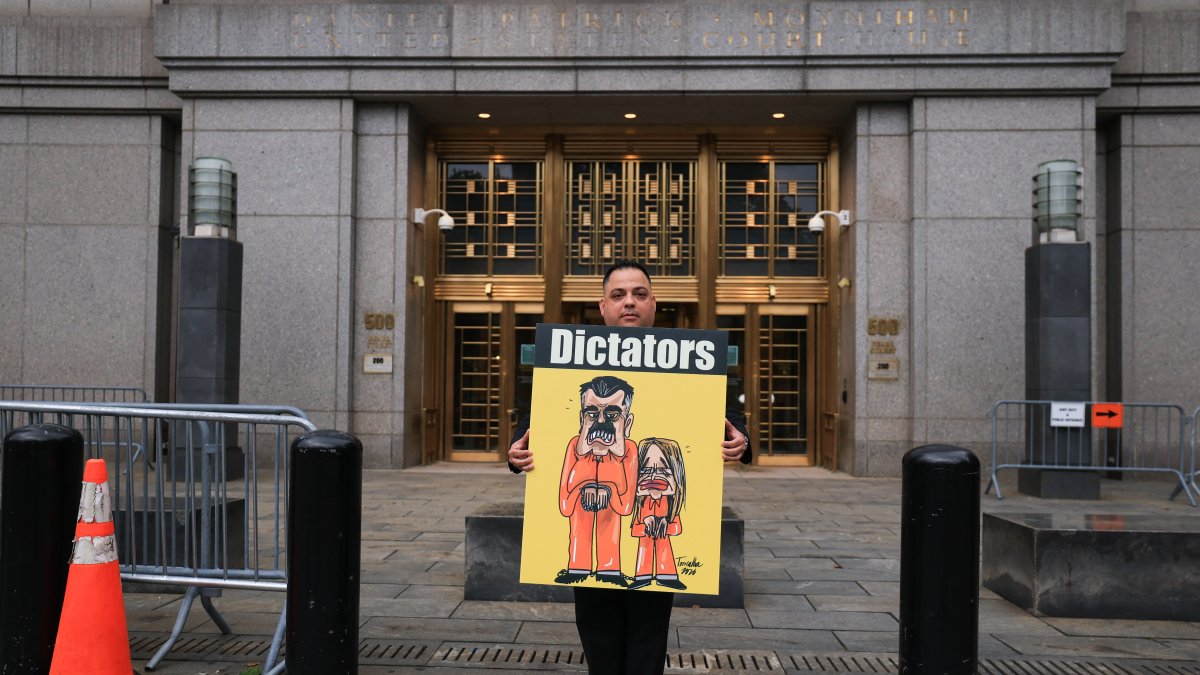
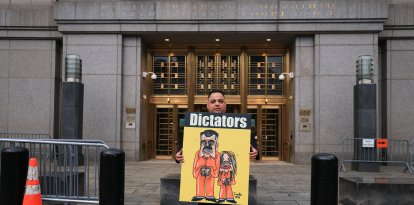
A protester holds a sign featuring an illustration of ousted Venezuelan President Nicolás Maduro and his wife, Cilia Flores.

A court ruling handed down in Washington brought to light previously unknown details about the technological deployment behind the U.S. military operation that culminated on Jan. 3 with the capture of Nicolás Maduro.
According to journalist David Alandete based on the court document, the artificial intelligence model Claude, developed by the company Anthropic and linked through the Palantir platform, was directly involved in the mission.
The court ruling confirms that the intelligence community and the Department of Defense had been using this technology to process classified data, assess threats and analyze strategic information on the ground.
In the context of the operation against the Venezuelan regime's leadership, the system enabled the processing of enormous volumes of pre-mission and real-time intelligence, tracking targets, analyzing surveillance data and supporting logistical planning for the assault and extraction.
Ethical tensions in the midst of a military mission
The court record reveals that the use of the tool led to deep disagreements between military leadership and executives at the developer company.
During the course of the operations aimed at capturing the foreign head of state, an executive at Anthropic questioned the appropriateness of using its software in what he described as a "sensitive military operation abroad."
This private objection caused alarm within the Pentagon. Military commanders feared that the security filters imposed by the tech company would cause the system to stop responding at critical moments, putting the lives of troops deployed on the kinetic mission at risk.
Break with the Pentagon and strategic shift
Following the operation in Venezuela, the Department of Defense demanded that the company provide guarantees to enable any legal use of its technology in the defense sector. However, the company refused to remove its restrictions regarding the development of fully autonomous weapons and mass surveillance of citizens.
The lack of an agreement led to the government's decision to terminate its contracts with Anthropic and replace its systems in national security agencies, opting instead to expand strategic partnerships with OpenAI for strategic intelligence processing.


World
X-ray of power in Caracas: New documentary exposes Delcy Rodríguez's ties to extremism, Spanish socialism
Andrés Ignacio Henríquez
LATEST