Supreme Court reinstates Trump's system for mass voter verification
The nation's highest court allowed states to use federal information, including Social Security numbers, to verify the citizenship status of people registered to vote, just weeks before the midterm elections.
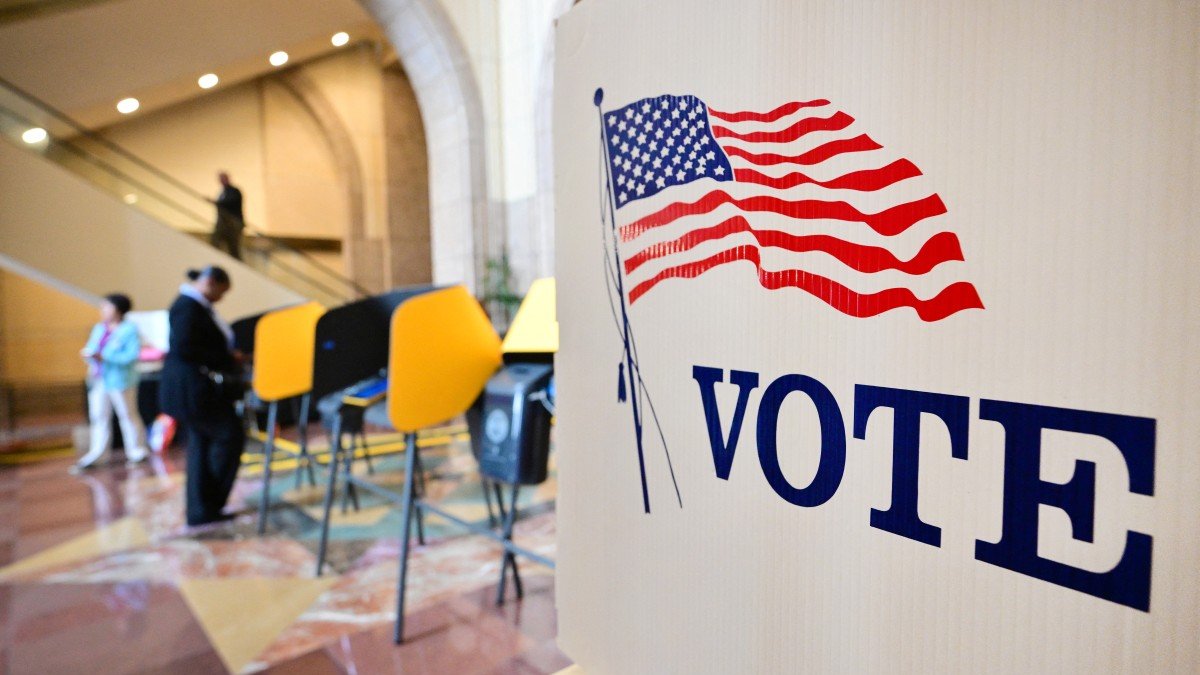
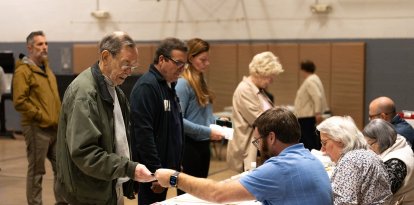
Reference image of the elections

The Supreme Court authorized the Trump administration to reactivate an expanded federal database on Friday that allows for the verification of registered voters' citizenship status, after a lower court had blocked its use.
Reuters reported that the judges accepted the Justice Department's request to suspend a judge's order that prevented state officials from using Social Security numbers and other data to cross-check voter rolls with federal information.
The decision once again allows for the expanded use of the Systematic Alien Verification for Entitlements (SAVE) system, administered by the Department of Homeland Security (DHS). The Trump administration argues that the tool is intended to combat voting by non-U.S. citizens, while organizations that have challenged the system warn that it could affect citizens who are eligible to vote.
The Supreme Court, which has a conservative majority of six justices versus three liberal ones, issued the order despite opposition from the three liberal-leaning justices.
The majority held that the plaintiffs' arguments are unlikely to succeed because federal law expressly authorizes the Department of Homeland Security to request and receive information regarding citizenship and immigration status from other agencies, including the Social Security Administration.
An expanded system ahead of the November election
Last year, DHS modified the SAVE database to allow simultaneous searches of multiple records and queries using Social Security numbers.
Since then, several Republican-led states have used the system to compare their voter rolls with the federal database. Some individuals identified as potential non-citizens have subsequently been removed from the voter rolls.
The organizations that sued the government argue that the system may contain outdated information and mistakenly flag immigrants who have since obtained U.S. citizens, and are therefore eligible to vote, as non-citizens.
The system's overall error rate is not publicly known. Neither DHS nor the Department of Justice provided that information when requested.
Organizations question the system's reliability
The voting rights advocacy groups that filed the lawsuit argued that the modified version of SAVE had already mistakenly identified U.S. citizens as non-citizens.
In their brief to the Supreme Court, they cited an election official from Travis County, Texas who stated that 25% of the matches with alleged non-citizens were actually people who had already proven their U.S. citizenship.
They also pointed to reports indicating that at least 81% of the system's results in St. Louis County, Missouri were erroneous.
The League of Women Voters and the Electronic Privacy Information Center filed a lawsuit in September 2025 to block the modified system. The organizations argued that the changes violated federal privacy laws and other U.S. regulations.
Politics
Federal appeals court clears Ohio to require proof of citizenship to register to vote again
Joaquín Núñez
In June, U.S. District Judge Sparkle Sooknanan of Washington, D.C. had blocked the system, ruling that it had been poorly developed and contained unreliable information about citizenship.
The judge's decision was upheld on September 4 by a three-judge panel of the U.S. Court of Appeals for the District of Columbia, which rejected the government's request to stay the ruling by a 2-1 vote. Subsequently, the Department of Justice appealed to the Supreme Court.
The system may be used in several states
The Supreme Court's new ruling comes as states prepare for the November midterm elections, in which Republicans are seeking to retain control of Congress.
The case also comes amid a broader debate over the federal government's role in election administration—a responsibility that the U.S. Constitution primarily assigns to the states.
Justice Ketanji Brown Jackson, joined by the other two liberal justices, dissented from the decision.
LATEST