Fulton Sheen, anti-communist icon in the Catholic Church
In the end, the blame lay with Western Christians. Communism would not exist if the Christian world had not ceased to behave in a Christian manner.
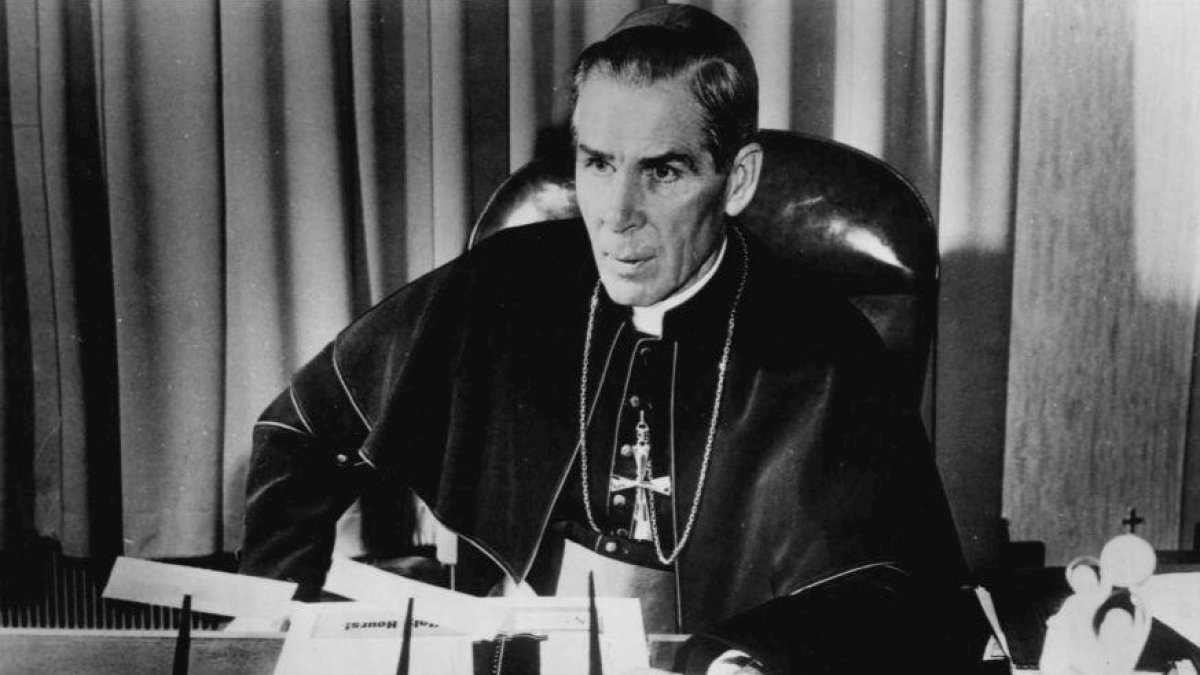
Now Blessed Fulton Sheen.

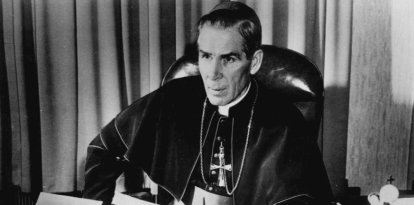
This Thursday, tens of thousands of Catholics gathered in St. Louis, Missouri, to celebrate the beatification of one of the most extraordinary men in the history of the Church in the United States. Nearly 50,000 people gathered at the Dome at America's Center to stop referring to Fulton Sheen as a priest. He is now Blessed.
There is much to say about Sheen. Without a doubt, he was the most important evangelizer the Catholic Church in the United States has ever had. First, through an NBC radio program between 1930 and 1950 called :The Catholic Hour." He then made the leap to television. From 1952-57, he hosted "Life is Worth Living"; finally, from 1961-68, now on ABC, "The Fulton Sheen Program."
He was an intellectual. He drew millions of Americans to their television sets to speak to them about theology, God, sin, suffering, freedom and human nature. However, I would like to highlight here one of his most valuable aspects, given what it meant for the Church during sensitive times: the anti-communist Fulton Sheen.
Sheen understood that communism was not simply a flawed economic system. Nor was it a theory about the distribution of wealth limited to economic debates. It was something much deeper and, therefore, more dangerous: a comprehensive conception of man and the world that directly rivaled Christianity.
He first developed this idea in 1948, in his major work "Communism and the Conscience of the West." There, Sheen argues that the great conflict of his time was not between individualism and collectivism or between capitalism and socialism. The problem that Sheen identifies — and which fuels communist movements — was not frustration with economic models but a kind of sickness of the soul: Western man had turned his back on God to throw himself into materialism.
Communism, Sheen said, was the reduction of man to a resource for the construction of a political project. To this end, it was essential to deny man's likeness to God, his dignity, his soul, his yearning for transcendence and his very nature.
Sheen's reflections were not complacent. Ultimately, the Western Christian was to blame. Communism would not exist if the Christian world had not ceased to behave in a Christian manner. It is, in the end, a consequence of something he identified in his time, but which we feel more acutely today: a profound nihilism.
For this reason, for Sheen, the alternative to Marxism is not simply unchecked capitalism. In fact, his stance was also critical of an unchecked market — one that would reduce man to his economic function. For him, private property was sacred because it helped preserve a sphere of responsibility, autonomy and freedom.
"Man works harder and with greater enthusiasm when he works on what is his own," he wrote.
The alternative to communism that Christians should propose was not, then, to replace one form of materialism with another. It was a matter of recovering the essence of the Christian man.
"And when a civilization begins to die morally or spiritually, that's when the vultures begin to appear. And that is the nature of communism in the world," he said in one episode of his popular television show.
"Communism is the carrion of a civilization in decline. It infiltrates a country — and its culture — only when that culture begins to rot from within," he added.
And these reflections largely shaped his preaching. It was a personal crusade, beyond all his other causes, broadcast to millions of people. And so it remained until his death in 1979, having witnessed much of the horror he had denounced. Although he did not live to witness the fall of the Berlin Wall, he was embraced by another of the great protagonists of the spiritual battle against communism in the 20th century.
Just two months before Sheen's death, Pope John Paul II visited St. Patrick's Cathedral in New York. He asked that Sheen be present, and when he saw him, he embraced him and said in front of everyone present: "You have written and spoken well of the Lord Jesus Christ. You are a loyal son of the Church." And nearly half a century later, the Church has declared Sheen blessed.
It is worth remembering him today, during his week of glory, not only as the eloquent and incisive preacher, the profound intellectual, or the courageous Christian, but also as one of the leading figures of 20th-century Catholic anti-communism. A voice in a harsh context: a few years before Sheen's death, a Peruvian priest, Gustavo Gutiérrez, published a book that would become the spark for the socialist movement within the Latin American Church.
Sheen understood something that is often overlooked when communism is evaluated solely from an economic perspective — a problematic interpretation that has ultimately plunged the West into a dogmatic cycle of consumption. For Sheen, the problem begins earlier. It concerns the question of man: What is man? Does he possess a dignity that no state can grant or take away, or is he merely a commodity at the disposal of politics?
For Fulton Sheen, that question lay at the root of all economic discussions. And that is why his anti-communism was Christian rather than political.
LATEST