'Peace is a verb': Secretary Rubio and the administration rewrite foreign policy
Multiple polls conducted in recent days indicate that most Americans back the president’s strategy in the Caribbean against drug trafficking.

Rubio at the Civil-Military Coordination Center.
"President Trump said he was going to go after the cartels. And now he's going after the cartels," said Secretary of State Marco Rubio at a press conference, highlighting the particularity of having a president who is following to the letter what he promised on the campaign trail. Indeed, this administration has made big changes in international policy, including the new strategy of focusing on the region and sinking whatever vessels are necessary to curb the entry of drugs into the United States.
Trump "doesn't like wars"
Secretary Rubio highlighted on different occasions President Trump's real intention to end the wars that, unfortunately his administration inherited. "He really doesn't like wars" Rubio said.
Regarding the war between Ukraine and Russia, the secretary highlighted that if it were not for the president's intention to mediate in the conflict, those two countries would not even be in negotiations, because there is no other administration capable of talking to the two governments.
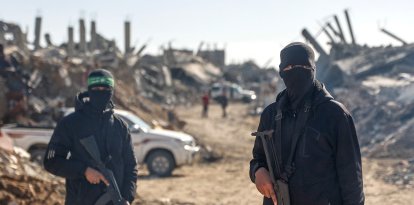
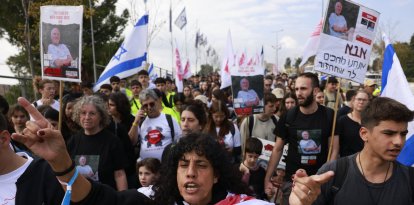
When a reporter, suggesting that the Israeli government had violated agreements, asked him about the war between Hamas and Israel, the Secretary replied that he did not agree with that characterization and that Hamas is constantly committing crimes. He added: "Peace is a verb. It's an action. It's not a sentiment. Every single day will bring challenges. Every single day. We also have had instances, for example, over the last couple weeks, where Hamas elements emerged from a tunnel, attached an explosive device to the side of a vehicle, and injured and almost killed Israeli soldiers. We still have this threat."
This response is perhaps one of the main keys of this administration and the restructured State Department, they understand peace as an action and not as a declaration that remains on paper. That realism, and acting with a focus on results, has made Secretary Rubio clear that in a war, if a way out is sought through negotiation, both sides must give something up. The idea that peace is a verb has also guided an administration that does not believe in shenanigans by communist regimes in the region and acts tough to confront threats.
"People run for office all the time saying, 'I'm going to take on the cartels, I'm going to do this or that.' He's actually doing it. He's not doing anything he didn't say he was going to do during this campaign," Rubio said about the president.
The secretary also made it clear that his job is to implement the president's foreign policy. "The person the people of the United States elected to be the president of the United States and the commander-in-chief is Donald J. Trump. That's who they elected. And my job, and the job of the people in our administration, is to implement the president's foreign policy," the secretary said.
Maduro's activities are a threat to U.S. national security
"We think that the Maduro regime is illegitimate and that its cooperation with other terrorist groups in our region, and even its own terrorist activities, pose a threat to the national security of the United States," Secretary Rubio said.
He also noted that the Venezuelan regime cooperates with terrorists and criminal elements that it allows to operate from its territory. "They invite Hezbollah to operate from their territory. But they also allow the ELN and the FARC dissidents, not just to operate from inside of Venezuelan territory, to control Venezuelan territory, unencumbered, unimpeded. On top of that, we know that they are in cahoots with drug trafficking organizations," Rubio said.
"It's not just that they don't work with us against these organizations. It's that they openly cooperate with these guys and allow them to operate. So these guys are marching in and out, doing whatever they want from Venezuelan territory. And it's a challenge," the Secretary of State added.
Polls show that most Americans support the president's work in the Caribbean
While the president's strategy is definitely a far cry from the actions of the previous administration and may seem risky to some journalists and Democrats, several polls conducted in recent days show that a majority of Americans support the president's work in the Caribbean in the fight against drug trafficking.
According to a poll by the Reagan institute, 62% of all Americans support the use of military force against suspected drug traffickers in the Caribbean, and among "MAGA Republicans" that support rises to 90%.
A Harvard/Harris poll shows that 71% of Americans—including 89% of Republicans and 56% of Democrats—support U.S. bombing raids against drug boats attempting to bring drugs into the United States.
It is clear that this administration, like no other in the past, knows the reality of Latin America and is not willing to fall for the deceptions of regimes such as Maduro's. On top of that, we are seeing an administration willing to use all of its power to effectively end national security threats, including drug trafficking. Such a level of movement and action seems to astound many, but well does Secretary Rubio point out that the president is only fulfilling his campaign promises.
LATEST