
The museum as a battleground: Critical Race Theory colonizes the Smithsonian
The Smithsonian, which should tell of America's greatness in its respect for freedom, development of science, art, space exploration, and democratic culture, seems to have become obsessed with remaking American history to be seen as a catalog of supremacist oppression.
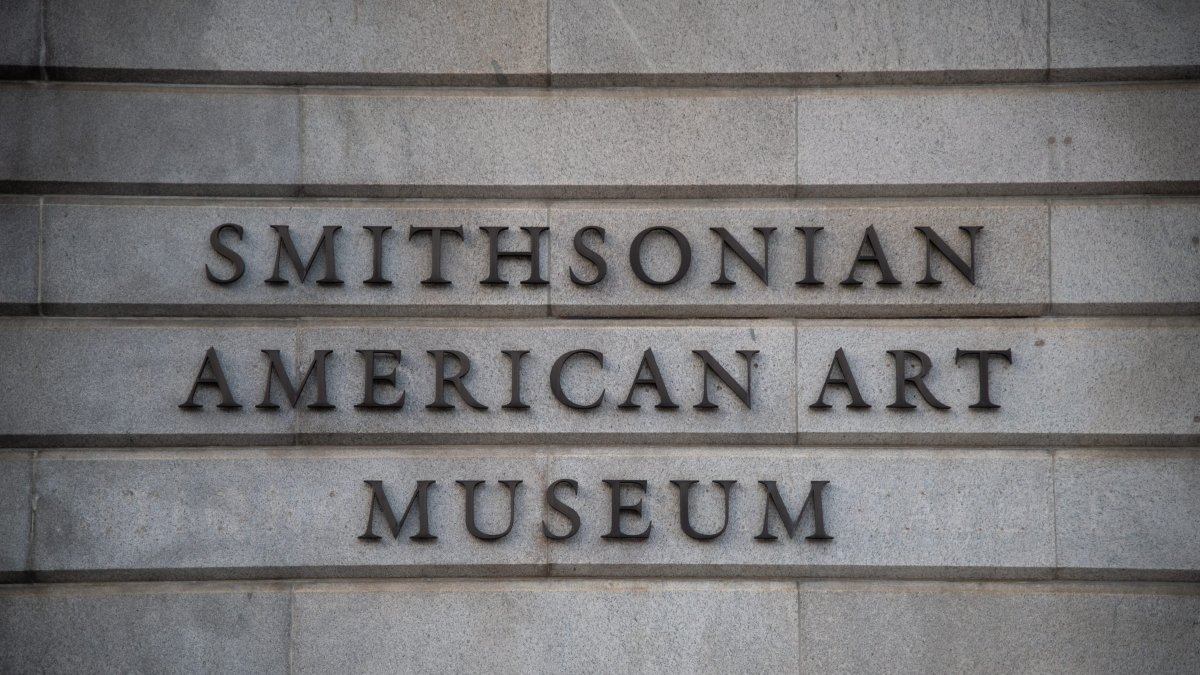
A general view of the Smithsonian American Art Museum (Archive).
Museums, traditionally conceived as
the keepers of cultural heritage, have undergone a radical transformation in recent decades, shifting their mission from preserving heritage to becoming laboratories of social engineering. This metamorphosis is particularly evident in the case of the Smithsonian Institution, the largest and most prestigious cultural institution in the United States, under the influence of Critical Race Theory (CRT).
The Critical Race Theory is a school of thought that argues that racism is structurally embedded in all institutions in the West, and that, consequently, all of Western society is built on the basis of maintaining white privilege. Universal concepts such as meritocracy, individualism, rational thinking or hard work are reinterpreted as tools of racial domination. From this perspective, everything is permeated by racial power relations, which justifies the pursuit of politicizing traditionally apolitical institutions such as museums.
Many historical reparations laws are nourished by the same ideology. Like any current that draws on woke ideology, it reduces the complexity of human experience to a binary scheme of oppressors and the oppressed, promoting a divisive view of civic life.
Under the leadership of Lonnie Bunch, the Smithsonian Institution has undergone a radical transformation, explicitly articulating its vision of the Smithsonian as a "Great Legitimizer" of leftist political causes, such as the 1619 project of the New York Times, which sought to rewrite U.S. history, in an explicit attempt at narrative manipulation riddled with historical inaccuracies that were pointed out by prominent historians across the political spectrum. However, its value lay not in its factual accuracy, but in its utility to the ideological agenda of presenting the United States as an illegitimate nation from its origins.
The Smithsonian created the "Talking About Race" platform, aimed at students in grades 3-12, which included materials that catalogued universally valued concepts such as hard work, rational thinking, individualism and the nuclear family as characteristics of "white culture." The graphic was subsequently removed in July 2020 after intense criticism, but not before sowing divisive controversy.
In an extensive interview that Smithsonian magazine itself did with Bunch, the institution's director said he sought to: "reframe the country’s history, understanding 1619 as our true founding, and placing the consequences of slavery and the contributions of black Americans at the very center of the story we tell ourselves about who we are ." He added: "We call ourselves the Great Convener, but really we’re a Great Legitimizer. And I want the Smithsonian to legitimize important issues, whether it’s 1619 or climate change. We help people think about what’s important, what they should debate, what they should embrace. Everybody that thought about the 1619 Project, whether they liked it or disagreed with it, saw that the Smithsonian had fingerprints on it. And that to me was a great victory."
The influence of the Critical Race Theory is not limited to the United States. In the UK, prestigious museums such as the Pitt Rivers in Oxford and the Tate Britain adopted "decolonization" policies. Museums have traditionally served as mediating institutions between specialized knowledge and the general public. The adoption of TCR misrepresents this mission and currently predetermines the conclusions visitors should reach, turning museums into propaganda tools rather than centers of learning.
Paradoxically, movements that present themselves as anti-racist are creating new forms of segregation. When museums decide that certain objects should not be seen or that certain narratives can only be told by members of specific groups, they are institutionalizing racial and cultural separation. This segregation is particularly pernicious because it is presented as a moral virtue.
It destroys the idea of a common heritage of humanity and replaces it with a museum tribalism where each object is sequestered by the identity of the collective that originated it. All the while deliberately ignoring the horrors of other non-Western civilizations, such as the slavery practiced in Africa or in the Islamic world.
Recently, Donald Trump signed an executive order entitled "Restoring Truth and Sanity in American History," outlining the need to return these institutions to their original mission. Trump correctly identified the central problem: under the influence of TCR, the Smithsonian has been promoting narratives that portray American and Western values as inherently harmful and oppressive. This characterization is morally destructive.
The appointment of JD Vance to oversee compliance with the executive order comes hand-in-hand with the vice president's demonstrated understanding of the competing ideological forces in the famous cultural battle within institutions and how they influence public discourse. For decades, cultural institutions have been captured by the identitarian left to promote anti-Western political agendas, turning taxpayer-funded institutions into platforms for woke activism.
America is about to commemorate its 250th anniversary, and this should be an opportunity to celebrate the nation's achievements, not to promote self-hatred and give fuel to those who wish for the country's fall from grace. A tour of Smithsonian exhibits in recent years reveals a disturbing pattern of historical and scientific distortions designed to support specific political narratives, especially regarding slavery, which is TCR's foundational topic. These distortions are designed to instill guilt, not reflection; and create negative emotional associations with the country's history. When young people are taught that their country is inherently evil and that race relations are determined by immutable structures, it undermines the possibility of cooperation and progress.
The Smithsonian, which should tell of America's greatness respect for freedom, in the development of science, art, space exploration and democratic culture, seems to have been obsessed with remaking American history to be seen as a catalog of supremacist oppression. Trump described it bluntly: "The Museums throughout Washington, but all over the Country are, essentially, the last remaining segment of 'WOKE.' The Smithsonian is OUT OF CONTROL, where everything discussed is how horrible our Country is, how bad Slavery was, and how unaccomplished the downtrodden have been — Nothing about Success, nothing about Brightness, nothing about the Future."
Resistance to this executive order by the president will be intense, given that much of those who work in these institutions, from administrators and authorities to curators and scholars, entered, were educated and benefited from TCR's promotion, and their careers would likely lack sustenance if this theory were disproved or simply stopped receiving state funding for expansion.
Museums were not born to shame nor to indoctrinate. They were born with a universalist vocation: to make human heritage accessible to all, to transmit knowledge and to cultivate civic pride. Only by restoring their fundamental mission can museums regain their role as the keeper of human knowledge and sources of inspiration for future generations. Western culture has produced the most sublime expressions of human genius in art, science, philosophy and political organization. These contributions deserve to be presented with the respect and admiration they have inspired for centuries. Museums, as guardians of knowledge and collective memory, have a responsibility to pass on the greatness of human achievement to future generations. They cannot become anachronistic courts of the past. The Critical Race Theory not only impoverishes the understanding of the past, but mortgages the common future.
LATEST