

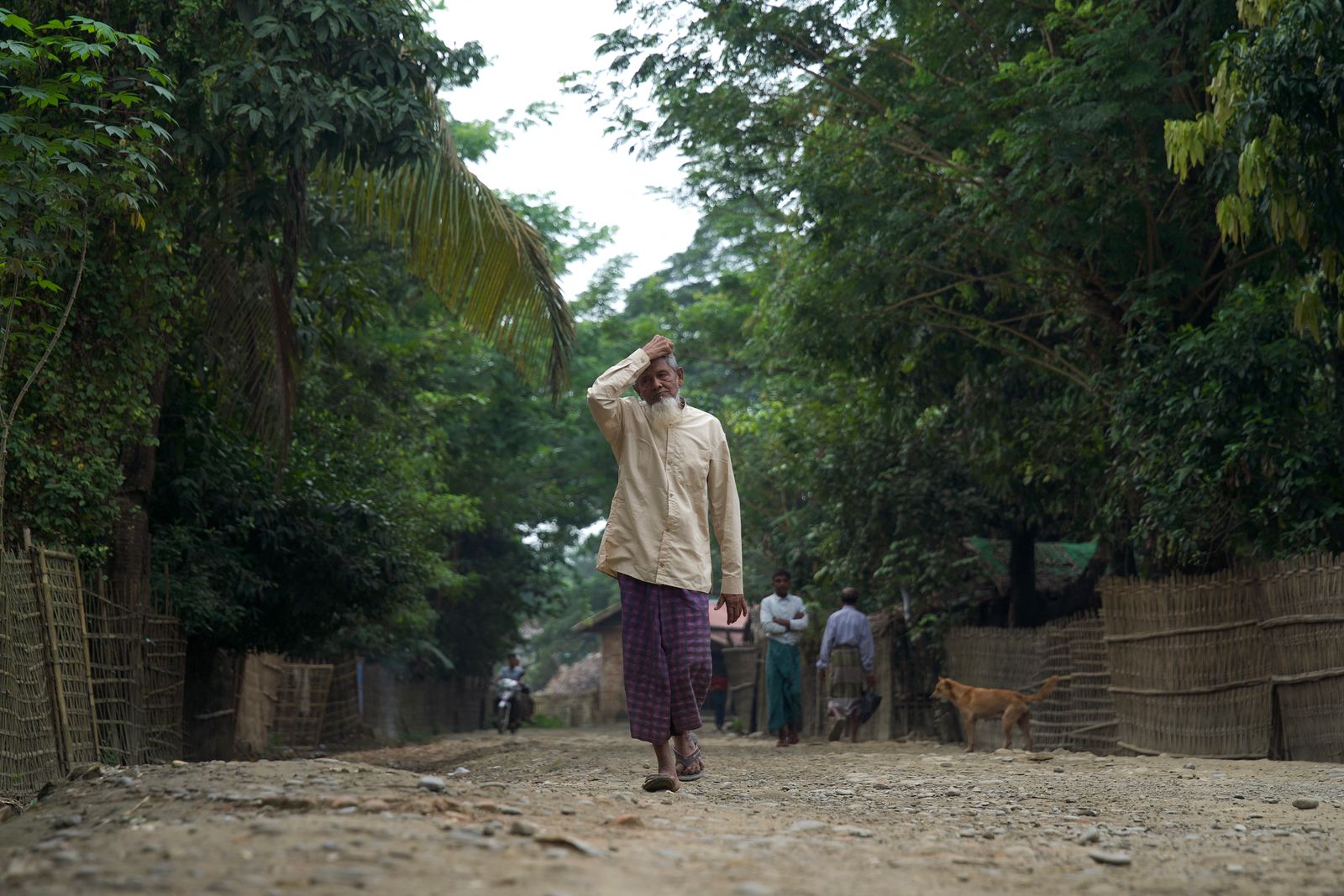
The International Court of Justice (ICJ) ruled on Thursday that Myanmar committed genocide against the Rohingya minority during the 2017 military operations in Rakhine State. This is the first time in its 80-year history that the United Nations' highest court has held a state responsible for genocide.
Historic ruling
The court, composed of 15 judges, adopted the decision by a vote of nine in favor and six against. The president of the ICJ, Yuji Iwasawa, stated that the only reasonable inference that explains Myanmar's actions is the intent to destroy a substantial part of the Rohingya population in northern Rakhine, one of the central elements required to classify an act as genocide.
The ruling concludes a case filed in 2019 by The Gambia before the ICJ, with the support of the Organization of Islamic Cooperation. The Gambia invoked the 1948 Convention on the Prevention and Punishment of the Crime of Genocide, which allows one state to bring a case against another when it believes that state has violated its international obligations.
The ruling is final and cannot be appealed. However, the ICJ resolves disputes between states and cannot prosecute individual military personnel or leaders; that responsibility falls to criminal courts and Myanmar authorities.

ARSA and Myanmar's response
The Rohingya are a persecuted Muslim ethnic minority in Myanmar. The vast majority are civilians, although there is a local armed group, the Arakan Rohingya Salvation Army (ARSA).
On Aug. 25, 2017, ARSA attacked some 30 security posts and a military base in northern Rakhine. Twelve members of Myanmar security forces were killed. The country labeled the group a terrorist organization and used those attacks as a pretext to launch so-called "clearance operations."
The International Court of Justice acknowledged the ARSA attacks, but concluded that Myanmar acted with genocidal intent and that the military response was disproportionate and directed against the Rohingya civilian population.
The ICJ determined that Myanmar security forces killed thousands of Rohingya civilians and committed widespread sexual violence, as well as extreme violence against children. The evidence cited by the ICJ supports the estimate that approximately 10,000 Rohingya were killed, villages were systematically destroyed and measures were taken aimed at preventing births within the community.
Trump reopens dialogue with Min Aung Hlaing without lifting sanctions
The discussions initially focused on combating fraud centers targeting U.S. citizens, but they also addressed the possibility of greater cooperation. A strategic document from the State Department links peace diplomacy to expanding U.S. influence and exploring access to Myanmar's rare-earth reserves.
The State Department maintains that the dialogue seeks to defend U.S. interests and to advance the cessation of violence, humanitarian accessand the release of political prisoners. However, Washington has not lifted the sanctions against Min Aung Hlaing, which were imposed following the 2021 coup and are linked, among other reasons, to abuses against the Rohingya minority.
Reparations and return
The ICJ ordered Myanmar to allow and facilitate the "safe, voluntary, and dignified" return of displaced Rohingya, both within the country and abroad, and to ensure the reunification of separated families.
More than 1 million Rohingya currently live in camps in Cox's Bazar, Bangladesh, after fleeing the military crackdown in 2017.
The court also required the Myanmar government to immediately and effectively investigate all persons suspected of having committed acts of genocide and, where appropriate, to prosecute and punish them. Furthermore, Myanmar must compensate the Rohingya community for damages that cannot be remedied through the return or replacement of property.
The ruling includes other reparations: recovering or replacing lost or damaged property, facilitating the search for missing persons, and ensuring the physical and psychological rehabilitation of the victims. It also orders the regime to enact legislation guaranteeing compliance with its international obligations and to provide assurances of non-repetition.
The ruling also recognizes that the Rohingya constitute a distinct ethnic group, with their own language and culture, and therefore a group protected under international law against genocide. This recognition is significant because Myanmar has historically denied the Rohingya identity and described them as Bengali migrants.

International reactions
U.N. Secretary-General António Guterres called on Myanmar to comply with the court's decision, including the obligation to allow for the safe, voluntary and dignified return of refugees and family reunification.
U.N. High Commissioner for Human Rights Volker Türk described the ruling as a potential turning point for justice for the Rohingya and for ending impunity in Rakhine.
The United Kingdom announced immediate diplomatic measures and will expel Myanmar's defense attaché and summon its chargé d'affaires, in addition to requesting an urgent session of the U.N. Security Council to address the ruling.
Limitations of the judgment
Myanmar has consistently denied the charge of genocide and maintained that its operations were in response to an armed insurgency. The country argues that it was not obligated to remain inactive in the face of attacks that resulted in deaths among its security forces.
The ruling establishes the state's international responsibility, not an individual criminal conviction. Nevertheless, it sets an important precedent for victims of genocide and other serious crimes around the world and increases international pressure on a regime seeking diplomatic legitimacy.