ANALYSIS AND OPINION
The Negreira case, ‘villarato,’ and accusations on the official television channel: Why Real Madrid and the press are waging a war with no end in sight
Clashes between Real Madrid and the media in Spain have become increasingly prominent since Florentino Pérez's second term as president of Real Madrid began in 2009.
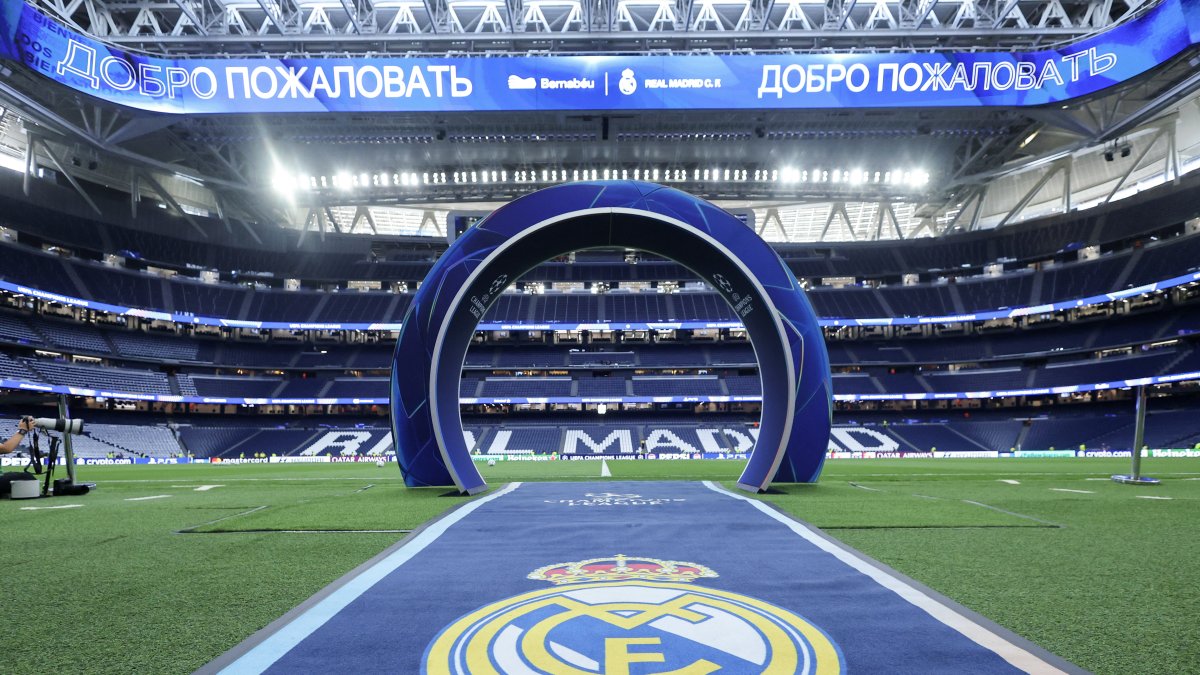
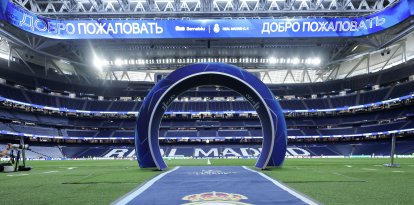
The Santiago Bernabéu Stadium.
In recent months, Real Madrid and the Spanish press have entered a spiral of aggressive confrontation that shows no sign of ending soon, and whose root cause is as sensitive as it is indisputable: what is clearly the most serious scandal in the history of Spanish soccer has neither the significance nor the media attention one would expect.
While it is true that clashes between the club and the media in Spain have become increasingly noticeable since Florentino Pérez's second term as president of Real Madrid began in 2009, many of these were not particularly noteworthy, as they were the typical frictions that go no further than complaints about creating an allegedly negative atmosphere or paranoid and reprehensible actions aimed at controlling information. This is no different from many other cases across Europe, where tensions between soccer power structures and the press are almost a daily occurrence.
Between that time and what journalist Juanma Castaño has now described in an article in the ABC newspaper as a war between Real Madrid and the press, the most sensitive period was José Mourinho's first stint, as he was, at the time, a coach known for his constant controversies and fierce clashes with the media and journalists, and because his counterpart was Pep Guardiola's Barcelona, a team adored and admired for its style of play and treated by much of the Spanish and international press as a Greek statue to be protected and admired.
Throughout this period, the press created an image of the Catalan team as the spotless hero and Madrid as the villain. This was a highly effective media strategy, not only to appease anti-Madrid sentiment but also to make the rivalry even more compelling, along with all the economic benefits that come with it. The real problem at the time lay in the numerous refereeing scandals that clearly favored Barcelona and that much of the media insisted on downplaying or simply ignoring.
The "villarato" theory
One of the very few who decided not to look the other way and to scrutinize this issue, which was uncomfortable for many, was the then-editor-in-chief of the sports newspaper AS, Alfredo Relaño, who defined the entire issue of refereeing bias in favor of the Catalan club as "villarato," a term used to describe a power structure in Spanish soccer that allowed the then-president of the Royal Spanish Soccer Federation (RFEF), Ángel María Villar, to remain in power through alliances and favors granted to influential individuals and entities.
Relaño maintained that Barcelona had played an important role in that structure, especially during Joan Laporta's presidency. In his view, the club's support for Villar at decisive moments in his federation career created a relationship of shared interests that, on the sporting field, was reflected in clear refereeing bias in favor of the Catalan team.
During that period, Real Madrid relied on this concept to allege refereeing bias in Barcelona's favor, but much of the press opposed this view and even claimed these were conspiracy theories intended both to discredit the Catalan team and to give Real Madrid an excuse when sporting results were unfavorable.
By this point, the tension between Real Madrid and the press was already undeniable, and it persisted for some time after Mourinho left the team. However, over the years, many journalists who initially rejected the "villarato" theory eventually acknowledged that it existed. And if there was one reason why many skeptics, such as José Félix Díaz and Elías Israel, became converts, it was mainly due to a scandal that has yet to be resolved, a scandal that today is the primary reason why the press and Real Madrid have a more strained relationship than at any other time this century.
The Negreira case
In 2023, it was revealed that Barcelona paid approximately 8.4 million euros to companies linked to José Enríquez Negreira over a 17-year period (2001–2018). The individual in question was the vice president of the RFEF's Technical Committee of Referees (CTA) from 1993 to 2018, and he was considered its leader because his immense influence gave him the power to decide which matches and divisions they would referee. Essentially, Negreira determined the referees' assignments.
As if that weren't enough, the payments coincided with the most successful era in Barcelona's history, and the transfers suspiciously stopped just as Negreira stepped down as vice president of the CTA. To make matters worse, two actions by Negreira further clouded the matter: registered letters from 2019 in which he threatened Barcelona to prevent it from stopping the payments, asserting that "If there is no agreement, all the irregularities will come to light," and statements made in March 2022 to the Spanish Tax Agency in which he noted that Barcelona paid "so that no arbitrary decisions would be made against them."
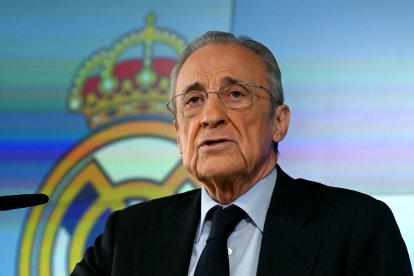
Florentino Pérez, during the press conference in which he announced the early election for the presidency of Real Madrid. May 2026
Many have described the power Negreira wielded. The most recent and explicit case was explained this Monday by former referee Pedro Tristante Oliva, who, during an interview with journalist Ramón Álvarez de Mon, claimed that his career went into a tailspin because the former vice president of the CTA decided so, as a result of a controversial penalty call in Madrid's favor against Valencia in 2004.
"I can say that Enríquez Negreira was the one among the three vice presidents who had the most influence. That's why I was very surprised when they all came out in force with a somewhat coordinated narrative saying he was just a figurehead, that he had no real influence. It surprised me. How could Enrique have no influence at all? […] I was assigned to the Madrid-Valencia match and had a play in the 91st minute. That left a mark on me. They wanted it to define my career and, in a way, an important part of my life. Two days after the match, there were some physical tests. I think it was in Las Rozas. Enríquez Negreira was there along with Sánchez Arminio, and he said to me: 'Come on, now pass the tests. Forget about it and focus on the tests.' It was nothing major, but as I was walking away, I heard Enríquez say to him: 'That's the problem with the computer—which back then selected the referee for each match—we should get rid of it.' I heard that, and when I heard it, I thought: 'Pedro, you're finished because they're going to use me as a scapegoat.' I've always been a pessimist, and I've usually been right. Unfortunately, I was right about that: the following season, I was relegated. And since I was already over 41 years old, I couldn't go back to the Second Division, so I left right away," Tristante commented.
In another part of the interview, he hinted that Negreira might give the green light if one had a successful match refereeing Barcelona. However, in that case, he was the main figure, and it involved the club's youth teams. "During some physical tests, while I was in Second Division B, Enríquez Negreira told me they'd given me a bad score in the report, so I got angry because I'd just been relegated. Enríquez accepted my challenge—let's put it that way—and the next match was Barcelona C vs. Terrasa; I'll never forget it. I had some very difficult calls to make as a referee, and I got them right, and that season I was promoted again. In that case, it worked in my favor. But it shows that he had a lot of power. When referees went to Barcelona, they knew they were taking a risk," he stated.
Although all suspicions point to Barcelona paying for favorable treatment from the refereeing body (they even went two consecutive years without a single penalty called against them), this has not been proven. The case remains open, and no ruling has been issued on whether the Catalan team is guilty.
Despite this, media coverage of the Negreira case in the Spanish press has been inconsistent, polarized, and clearly too weak given the gravity of the established facts. In many media outlets and sports programs, even though this is a scandal of monumental proportions, the media focus has largely remained on almost any other topic, to the point of featuring guests, whether analysts or referees from the period when Negreira was on Barcelona's payroll, who have claimed that either the magnitude of the case is being exaggerated or, quite simply, the former head of referees was an insignificant figure whose power did not extend that far.
The press and Real Madrid TV
Clearly, the Negreira affair is an extremely sensitive issue in the Spanish sports world, where the dichotomy between "Madridismo" and "anti-Madridismo" is strong enough to suggest a nation deeply divided between those who support the club and those who outright condemn it. And the fact that the club might have been harmed by being the most prominent hypothetical victim in a case like this is not exactly easy to fathom.
That is why, in light of the numerous refereeing controversies (several of which have recently disadvantaged Madrid), the club has deemed, whether rightly or wrongly, the media's passivity in highlighting the controversy to be intolerable, especially given the precedent of the Negreira case, which has been treated by many as an "ongoing legal matter" rather than a systemic scandal in Spanish soccer. And it is in the face of this sense of complicity on the part of a lenient press, a refereeing body that chooses to look the other way, and a league and federation that follow the same line as the club that it has decided to use its Real Madrid TV channel to voice its discontent and its position.
Through this institutional platform, the club has not only made a point of constantly bringing up the scandal involving the former vice president of the referees, but also criticizes the refereeing body, journalists, the entire structure of Spanish soccer, and even—on occasion and without substantial evidence—levels serious accusations against certain referees, insinuating that they are victims of a conspiracy in which it is "us against the system," and that the system is determined to prevent any sporting success at all costs.

Undoubtedly, such content could be considered frivolous and conspiracy-theory-driven were it not for the precedent set by the former head of the referees, the case's lack of resolution, and the silence from both insiders and outsiders. Given this situation, every refereeing error that disadvantages Madrid raises legitimate doubts that can only be dispelled once the matter is finally clarified and appropriate measures are taken in light of the final verdict.
As expected, a significant portion of the content on Real Madrid TV has sparked all sorts of furious reactions from referees, journalists, and even other teams in La Liga, who have seized the opportunity to offer a curious defense of Spanish refereeing and even claim that Real Madrid is trying to rig the competition through intimidation. To make the situation even more surreal, one of these clubs is none other than Barcelona.
A problem that could cast a long shadow
The media case is particularly curious: many who for years amplified suspicions of favoritism toward Real Madrid have shown remarkable restraint in the face of the millions transferred to the vice president of the referees. Some talk show hosts and columnists have even gone so far as to portray Real Madrid's persistence as a strategy to "change the narrative" or justify poor results.
One of the journalists who has been most vocal against Real Madrid recently was Castaño, who, in his column in ABC—the newspaper that Florentino Pérez railed against in a controversial press conference last May— pointed out that Madrid is making these accusations as a way to divert attention from its own sporting woes and even went so far as to compare Real Madrid TV to the extremist newspaper Gara, linked to the terrorist organization ETA.
Following a harsh response from the club, in which it stated that it reserved the right to take whatever measures it deemed appropriate, the journalist stated that he stood by his position regarding how, in his view, the team's official television channel acted and continues to act, though not before apologizing for the comparison.
Castaño's case could reflect what the Spanish press has shown in recent years: unqualified outrage toward Madrid over complaints and accusations aired on its official television channel, and total passivity on everything related to the biggest sports scandal in Spanish soccer history. In fact, Castaño is a prime example of this reality: he attacks Real Madrid, yet he has never made similar remarks about Barcelona's payment to the former head of referees over nearly two decades.

The real problem in this entire war between Real Madrid and the press is not the content of its official television channel or any criticism that a journalist or media outlet might freely and rightfully voice against the club.
The real problem is a scandal that, as it drags on and remains unresolved, will cast a shadow across the entire Spanish soccer landscape and fuel all manner of complaints and conspiracy theories as long as refereeing errors continue. This is an untenable scenario, since while it is common for a referee to make a mistake, more than a few will harbor legitimate suspicions given a precedent like the Negreira case and the attitude of the league and the federation, part of the press, and the refereeing body itself. And that's where the inflammatory content comes from: the virulent accusations, the press reactions, and the creation of a self-destructive cycle.
And yes. People shouldn't make accusations about anything related to such a case until the courts have ruled. But acting as if nothing had happened, as if this were not an act with extremely serious implications, is not even assuming that the fan is a fool.
It's simply being convinced of it.
LATEST