ANALYSIS
Washington: Insurance premiums paid by state schools rise 45% due to sexual abuse lawsuits against educators
School insurance premiums have skyrocketed in Washington due to sexual abuse lawsuits. Meanwhile, dozens of schools are following a program that removes students from class to leave them alone with a "trusted adult"—sometimes without a clinical license and, in some cases, with a criminal record.
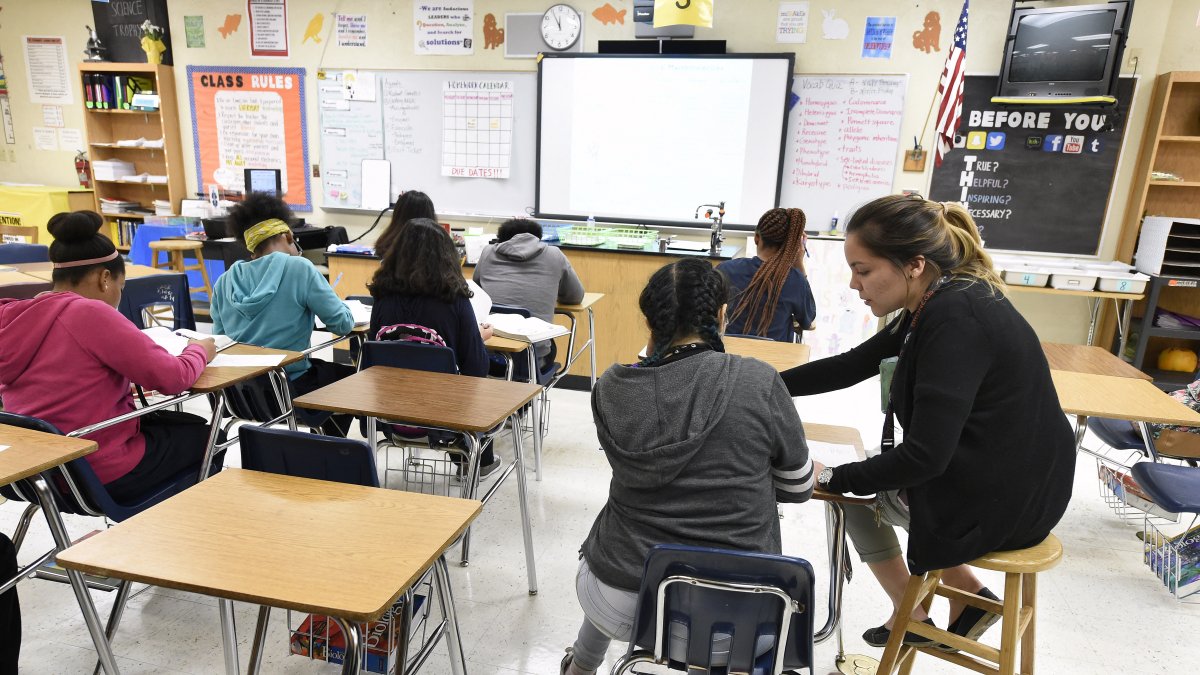
A teacher interacts with her students in a classroom (File photo)

This spring, the Washington Schools Risk Management Program (WSRMP), which covers more than a third of the state's school districts, raised premiums by an average of 45%. The main reason is the rising cost of sexual abuse claims against educators. According to the Department of Education, Washington is among the states with most sexual violence in K-12 schools.
According to an investigation by City Journal, the problem is not that districts don't know how to prevent abuse, but that many continue to follow a program that contradicts the state's own anti-abuse guidelines.

A massive "behavioral health" program
The program is called “Screening, Brief Intervention, and Treatment Referral” (SB-SBIRT) and is already in use at more than 60 high schools and middle schools in 13 districts across King County. Seattle is the primary user: it is implemented in all 12 of its middle schools and nine high schools. Since 2018, it has passed the filter to more than 75,000 students and has spread to at least eight schools in Spokane County.
Here's how it works. Students in grades 6 through 10 are given the “Check Yourself” questionnaire: mental health, drugs, "gender identity" confusion and other "risk factors." A specialist in prevention and intervention reviews the responses and contacts those who have "a potential need" for support.
Approximately half undergo a "brief intervention": one to eight private, semi-structured meetings designed to establish that adult as the minor's "trusted adult." In practice, the district says, these meetings tend to be ongoing.

Politics
Fewer bureaucrats and more funding for students: Greg Abbott sets a strict cap on administrative spending in Texas schools
Andrés Ignacio Henríquez
"Equity" over licensing
The grant documents promise staff who are "licensed behavioral health specialists." In practice, the position often does not require a clinical license. It does require, in at least one job posting, "knowledge of equity and social justice principles and practices." According to City Journal, King County Ombudsman Jeremy Bell has defended this model: the program must "reflect the community," and there is a "pro-equity basis" for not requiring a license or clinical training.
That rationale has led to hiring decisions that are difficult to explain. Louis Eaglestaff has been arrested at least nine times—most recently in April 2026—and has a criminal record, primarily for drug and alcohol offenses. In 2016, he also faced charges for property destruction in a domestic violence case. He is in his third year as specialist P&I at a middle school.
Tavar Proctor was a specialist at Franklin High School and a basketball coach. His public Instagram account, followed by students, includes photos of nude women, jokes about rape, sexual assault and domestic violence, misogyny, and praise for R. Kelly and Chris Brown.
The WSRMP guide, obtained through a public records request, specifically recommends monitoring social media to detect "problematic online conduct." Internal district emails document issues with his behavior. Seattle Public Schools responds that it reviewed its policies and found no grounds to suspend either of the two.

Health
Young Americans are drinking and smoking less, but vaping and marijuana are gaining ground
Diane Hernández
What the guide calls "harassment," the program calls a "protective factor"
WSRMP and state law align with experts' advice: do not single out students, do not meet alone out of sight, do not become a confidant, do not discuss personal problems, do not talk about sex outside the curriculum, and do not write to the student about non-school-related matters. The YMCA and the Boy Scouts reduced abuse by enforcing these rules.
According to City Journal, SB-SBIRT does the opposite. WSRMP calls "special relationships" between staff and students the essence of grooming. SB-SBIRT calls them a "protective factor." Specialists should discuss "sensitive" topics, including sexuality and who the student is most likely to fall in love with. The program encourages "sharing a piece of themselves" to build trust. It allows for email, text messages and calls via Google Voice, taking the child out of class, and "hang[ing] out" on a peer-to-peer basis.
Charol Shakeshaft, an expert on sexual abuse by educators, is skeptical: "If we give a whole class of people ‘trusted adult’ status without guardrails, we’re asking for trouble."
This month, in Virginia, police charged a social-emotional learning coach. The program involves: extensive access to minors and permission to take them out of class for private meetings. At least four victims have been identified.

More bonuses, less prevention
WSRMP CEO Deborah Callahan warns that this is unsustainable. Her solution is not a prevention plan: overturn the ruling, end joint liability and create a state compensation fund.
King County counters that SB-SBIRT saves lives and that every employee undergoes a background check. Seattle says there are central visits and an administrator at each center. The program's own playbook does not mandate a single system for recording interventions.
According to City Journal, there are two ways to reduce litigation: making it harder to sue or preventing abuse. The latter requires teaching students to recognize grooming, adhering to the safeguards the state itself has already established and not funding programs that undermine them. "The solution to Washington’s rising sexual-misconduct liability problems is fewer victims, not fewer lawsuits."
LATEST