ANALYSIS
Bipartisan duo unveils four changes to the Senate's rules
According to the assessment presented by Senators Daines and Merkley, there are too many bills with bipartisan support that fail to become law due to internal issues.
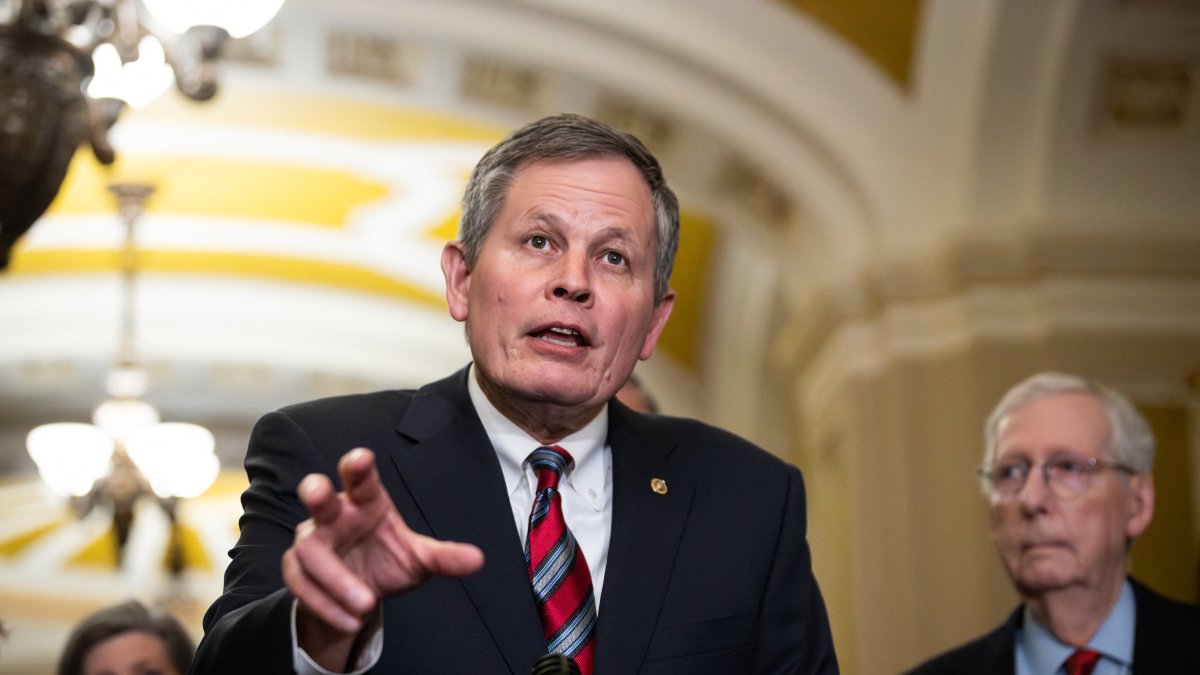
Senator Steve Daines, a Republican from Montana / Allison Bailey

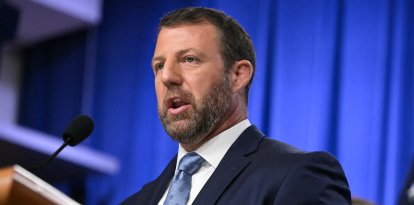
"Save the Senate." Under that slogan, Senators Steve Daines (R-MT) and Jeff Merkley (D-OR) introduced a bipartisan proposal to change the Senate's internal rules. Knowing the task is an uphill battle, since a supermajority is required to approve the changes, they defended the initiative by arguing that its goal is simply to reduce internal bureaucracy so more bills can be voted on.
According to the analysis presented by Senator Daines in a document released on Thursday, too many bipartisan bills fail to become law because of internal procedural issues.
According to the data he presented, committees approved 797 bills with co-sponsors from both parties between 2017 and 2024. Of that total, only 132 became law, and the other 665 never reached a floor vote.
"America today is larger, busier and more complex than the America our Founding Fathers designed the Senate and its rules to govern. The enormous workload and today's political polarization impairs the ability of the Senate to address the concerns of the American people," Daines and Merkley stated in a press release.
"These and other factors have caused the Senate to become unnecessarily-and unacceptably-diminished as an institution," they added.
Furthermore, in the preamble to the document in which they presented their proposals, they stated that these "would make the Senate more functional" while "upholding the constitutional design and distinctive characteristics of the Senate."
In this context, the senators presented four specific proposals.
1-Simplify the rules for ending debate
To end a debate and proceed to a vote, the Senate currently requires a vote known as cloture (end of debate), which requires 60 out of 100 votes—a rule known as filibuster. However, this is not a single vote. One vote may be needed to begin debating the bill, another for each amendment, and yet another for the bill itself. Furthermore, an "intermediate day" must pass between the introduction of a motion for cloture and the vote on it, and once approved, the rules allow for up to 30 more hours of debate.
Appointments of judges and officials are already confirmed by a simple majority, but they still require their own cloture votes. Normally, the Senate bypasses many of these steps through "unanimous consent," an agreement in which no senator objects. But it only takes a single senator to reject it for the full procedure to be followed.
To address this, Daines and Merkley propose three changes: eliminating cloture on nominations, motions to proceed, and amendments; eliminating the one-day waiting period between the filing of a motion and the vote on it; and reducing the debate time following cloture from 30 to 12 hours.
In practice, this would eliminate the intermediate votes required to begin debate, consider amendments, and confirm nominations, although the 60-vote threshold to end debate on a bill would remain.
The proposal would not modify or eliminate filibustering, something that, for example, President Donald Trump has proposed eliminating.
During the 2024 presidential campaign, Kamala Harris was the one who proposed to eliminate the rule. In that context, Senator Daines spoke with VOZ and defended the practice of filibustering: "If you just give the Democrats fifty-one votes and eliminate the filibuster, they will run and restructure our government. So it's not just about implementing higher taxes or more spending, as bad as that is. It's gonna be about actually changing the power structure of the country because there were only two Democratic senators that saved the filibuster last Congress."
2- A "suspension agenda," like the one used by the House of Representatives
Currently, the Senate has no fast track for bills that enjoy broad consensus among its members. They must go through the same legislative process as all other bills. Generally, this red tape can be avoided with a unanimous agreement, but if even a single senator objects, the bill spends several days on the floor.
Since plenary session time is limited, many popular bills end up not being voted on. The news outlet Semafor, the first to report on the proposal by Daines and Merkley, cited as an example Republican Senator Rand Paul's blocking of the Online Child Safety Act (KOSA), which had broad bipartisan support.
On this point, the reform seeks to emulate the process in the House of Representatives, which does have a shortcut known as Suspension of Rules. This process limits the time allotted for debate, prohibits the introduction of amendments, and requires a two-thirds majority to pass a bill.
Specifically, the proposal would include a fast track for bills that enjoy broad bipartisan consensus. The motion would have to be introduced jointly by a committee chair and the ranking member. In addition, debate on the motion would be limited to one hour, and the motion itself would set the amount of time allotted for debate on each bill. To pass, the bill would require a two-thirds majority (67 out of 100, assuming a full quorum).
3- Another fast-track option for bills with strong bipartisan support
The third change also aims to streamline the process for bills that enjoy broad bipartisan support. Currently, even if a bill is approved by the committee, there is no guarantee that it will reach the full Senate. In practice, the majority leader has broad authority to decide which bills can be debated and when. Furthermore, if a bill does reach the floor, it must secure 60 votes to move beyond the debate stage.
Given this scenario, Daines and Merkley are proposing a mechanism whereby bills that emerge from committee with proven bipartisan support can reach the floor despite opposition from the majority leader and be passed by a simple majority, that is, half plus one of the members present.
The document referred to this process as the "one-day fast track" and it would work as follows. First, the bill must pass out of committee with the votes of a majority of members from each party on the committee, or with at least 5 votes from each party.
Subsequently, the committee leaders of the committee from which the bill originated (for example, Agriculture) introduce a formal motion to bring the bill to the full Senate. It must bear the signatures of at least 16 senators—including the two committee leaders and a minimum of three more from each party—to demonstrate broad, bipartisan support. The motion may also list in advance the amendments to be voted on, and each amendment requires the support of four senators from each party.
Once everything has been submitted, the majority leader (currently John Thune) would have 15 session days to schedule the bill. If he does not do so, the motion automatically proceeds on the 16th .
Debate would be limited to a total of six hours; no new amendments would be allowed unless all 100 senators agree, and the bill would be passed by a simple majority.
As for the differences between this third point and the second, the second applies to bills with nearly unanimous support across the Senate, since it requires two-thirds of the votes (67 out of 100) and does not allow amendments. In contrast, this point is aimed at bills that may not reach that majority on the floor but have already demonstrated bipartisan support in committee.
4- Government shutdown
The final point also seeks to streamline processes; it concerns the mechanism for funding the federal government and restoring the Appropriations Committee's leading role, rather than allowing major spending decisions to be concentrated in last-minute negotiations.
Each year, Congress must pass 12 appropriations bills, the laws that set federal government spending. When these are not approved on time, Congress resorts to continuing resolutions (CR)—temporary extensions of the previous budget to fund the government—or to large year-end omnibus bills. If even that fails, the government shuts down completely or partially until Congress reaches an agreement.
To increase the chances of avoiding a government shutdown, senators are proposing a two-day fast-track procedure for bills that have received at least five votes from the majority and five from the minority in the Appropriations Committee. It would also be possible to combine up to three bills from different subcommittees into a single package, known as a minibus.
Once on the floor, the procedure would allow for 20 amendments, 10 from each party, that could only modify existing spending line items, without creating new programs. Those with at least four senators from each party as co-sponsors could be approved by a simple majority, while the others would require 60 votes. Each amendment would be subject to a maximum of five minutes of debate. Finally, the bill could be passed by a simple majority.
For the proposal to succeed, Daines and Merkley will need to secure 67 votes in the Senate.
LATEST