

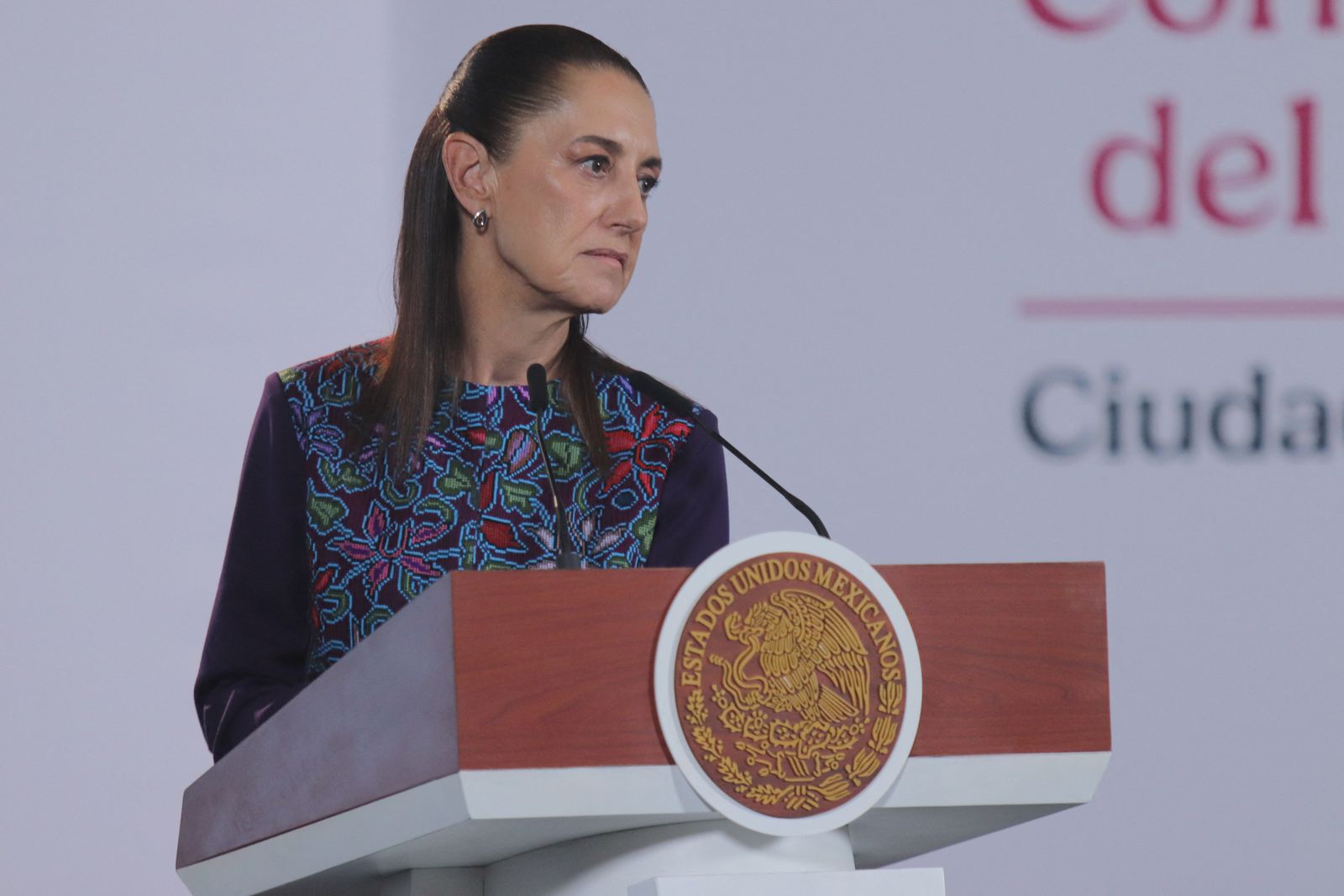
The government of Mexico filed a formal complaint with the United States regarding the anonymous hotline created by the Drug Enforcement Administration (DEA) to receive information about alleged members of the Sinaloa Cartel, corrupt officials and money-laundering networks. The president, Claudia Sheinbaum, had already described the measure on Thursday as "interference" in internal affairs and defended Mexican sovereignty.

The diplomatic protest
Sheinbaum reported on Friday that the Foreign Ministry had conveyed the complaint to the U.S. ambassador to Mexico, Ron Johnson. "The Secretary of Foreign Affairs contacted the ambassador in Mexico to lodge a formal complaint about this situation, and the ambassador said he would look into it," she said.
The mayor maintained that Mexico has an obligation to express its position and protect its jurisdiction. "When there is a statement like the one made by the DEA director, we have to speak out, say what we think, and it is also our obligation to do so, because we have to defend our sovereignty," she affirmed.
The DEA's policy was announced by its administrator, Terry Cole, and seeks anonymous tips regarding individuals, public officials, and financial structures allegedly linked to the Sinaloa Cartel, an organization that Washington classifies as a terrorist group.

The complaint does not hinder bilateral cooperation
Last week, on November 20 in Guasave, Sinaloa, special forces from the Mexican Army and the National Guard captured Fausto Isidro Meza Flores, known as El Chapo Isidro, an alleged leader linked to the Sinaloa Cartel and a member of the FBI's list of the ten most wanted fugitives.
The operation involved intelligence coordination between Mexico and the United States. The attorney general, Ernestina Godoy Ramos, initially stated that Meza Flores would be tried in Mexico, although the Attorney General's Office left open the possibility of considering extradition in accordance with the bilateral treaty.