

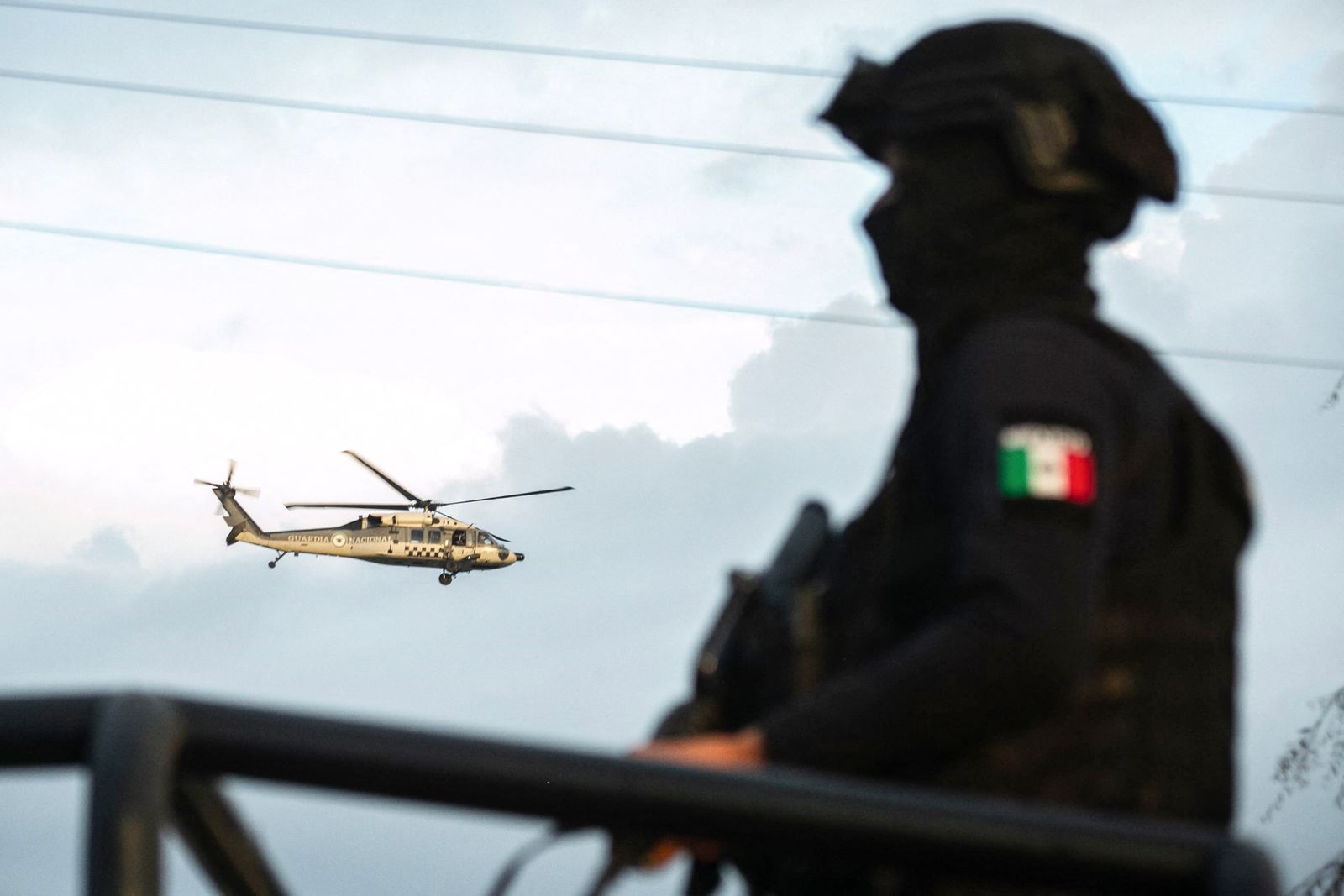
On Tuesday, the Mexican government began delivering more than 200 vehicles—including patrol cars, motorcycles and armored units, to Sinaloa's police forces, following the wave of violence triggered by the capture of Fausto Isidro Meza Flores, alias El Chapo Isidro, one of the drug traffickers most wanted by the FBI.
The Secretary of Security and Citizen Protection, Omar García Harfuch, traveled to Culiacán to oversee the delivery of the equipment and reaffirm the federal presence in the state. "We will maintain the federal presence and continue operations against all criminal groups that generate violence," he declared during the public event.

World
Mexico kills 16 alleged cartel members after capturing one of the FBI's most wanted
Williams Perdomo
The reinforcements: vehicles, drones and cameras
In addition to the more than 200 vehicles, of which 104 were deployed to Culiacán, García Harfuch announced the addition of new tactical and technological capabilities. These include additional armored vehicles, drones and specialized surveillance equipment.
The Ministry of Security's highway C4 command center will operate 240 monitoring points, with 720 cameras and 30 license plate detectors, on the Culiacán-Mazatlán and Mazatlán-Durango stretches. The infrastructure aims to strengthen surveillance and response capabilities on the state's highways.
The president, Claudia Sheinbaum, ordered that the strengthening of institutions be permanent and that state and municipal governments be equipped with better capabilities.

22,000 soldiers deployed
According to AFP, Sinaloa currently has nearly 22,000 soldiers deployed, equivalent to 23% of the entire national operational force, with the mission of containing organized crime violence.
García Harfuch highlighted that, between October 2024 and November 2026, coordinated efforts led to the arrest of nearly 4,200 people and seizure of more than 149 metric tons of drugs, 7,400 firearms, and shut down 2,627 methamphetamine laboratories and production sites.

The operation that sparked the violence
Meza Flores was arrested on November 20 in Guasave, Sinaloa, during a joint operation by Army special forces and the National Guard, with intelligence support from the United States.
Arrested alongside El Chapo Isidro was German Rolando Gálvez Meza, alias El Serafín, an alleged leader linked to the same criminal organization. The operation mobilized 361 personnel from the Army, the National Guard, and special forces, with support from 14 aircraft.
The arrest of Meza, who was on the FBI's Ten Most Wanted list, sparked a violent reaction from gunmen loyal to his organization. Roadblocks with burned-out vehicles, vandalized businesses and clashes spread across several municipalities in Sinaloa.

The toll: 20 dead
The Mexican government reported Monday that the operation resulted in a death toll of 20 people, including four military personnel and 16 alleged criminals. The figure includes those killed during the arrest and subsequent clashes.
Authorities acknowledged that the criminal organization remains active despite the blow. Meza was transferred to a prison in Mexico City, where he faces arrest warrants for organized crime and drug-related offenses.
The Mexican Army also arrested eight alleged members of the Beltrán Leyva faction linked to El Chapo Isidro during a subsequent operation in El Platanito, Sinaloa.
The background: A drug lord with a history
The capture of El Chapo Isidro represents one of the most significant blows against organized crime in Sinaloa in recent years. However, the subsequent violence demonstrates that the criminal structure retains the capacity to respond and that the challenge for the Sheinbaum administration remains containing the backlash from armed factions.