

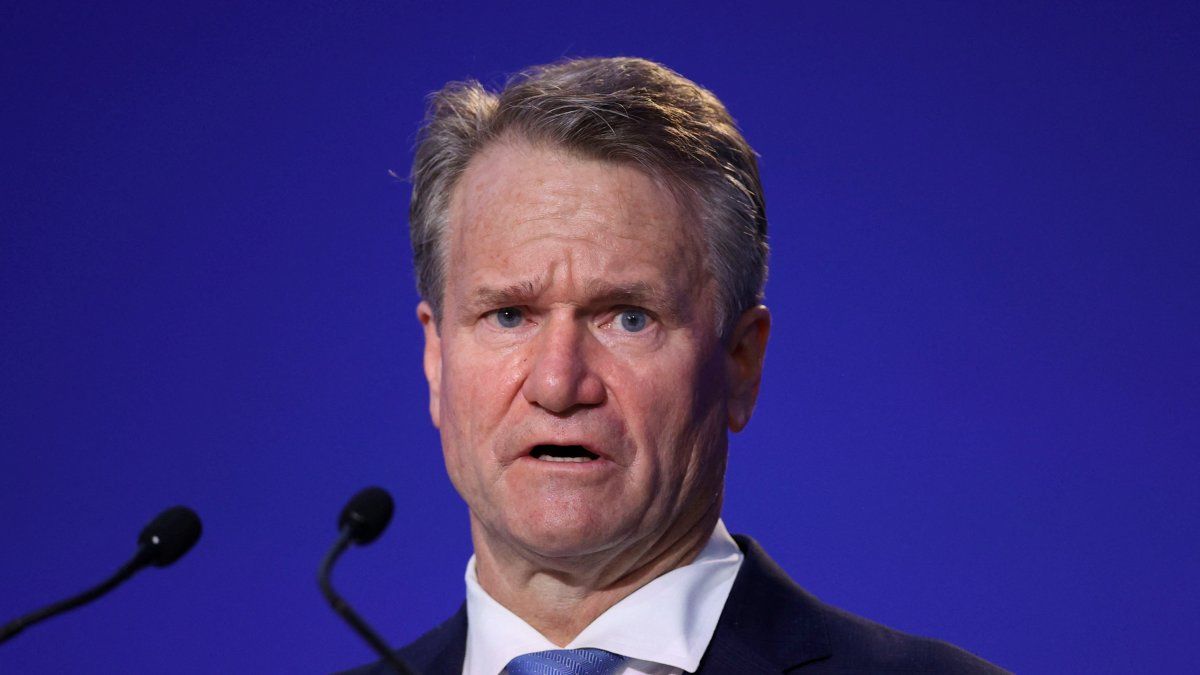
Brian Moynihan, CEO of Bank of America, has stated that a large portion of the recent technological incidents in the U.S. banking sector are not due to theft of funds, but rather to the growing pressure to keep digital systems secure against increasingly automated cyberthreats. His remarks come after a week marked by service outages and federal warnings about potential disruptions as institutions modernize legacy platforms.
AI is changing the rules
For Moynihan, the problem is no longer just the number of attacks, but their speed. Artificial intelligence models make it possible to launch large-scale malicious operations without relying on large teams of people, forcing financial institutions to react almost instantly.
"These new models allow people to do bad things faster than they ever did because it's automated — it doesn't require humans," the executive said on Fox & Friends. "We're doing what they call patching, and that's what's causing some of this activity, because you've got to patch in real time, you've got to patch very quickly".

Society
Delta restores its systems and the FAA lifts suspension of flights to Atlanta: Outage caused thousands of delays
Emmanuel Alejandro Rondón
Bank of America is allocating one-third of its AI budget to defense
To combat automated threats, Bank of America has increased its cybersecurity resources by 30%, according to Moynihan. Of the approximately $250 million the bank is allocating to artificial intelligence this year, about one-third is dedicated directly to cybersecurity.
The executive stated that this investment in AI generates between $600 million and $700 million in efficiency gains.
Moynihan added that the five or six largest banks in the United States collectively employ roughly as many cybersecurity professionals as the entire federal government. The comparison underscores the extent to which banking has had to become, de facto, an information security industry.

The limits of private banking
The executive acknowledged that the banking sector cooperates with federal agencies and the White House, but he warned that attacks attributable to state-sponsored actors exceed the response capacity of a private institution. In such cases, according to Moynihan, the government must intervene to cut off access at its source.
"That's not a good equation," he admitted, though he is confident that using AI to detect and fix vulnerabilities will improve the situation over time.

A zero balance does not mean lost money
One of the most widespread concerns among users is opening the banking app during an outage and finding a balance of $0. Moynihan explained that these errors are usually due to the system temporarily failing to load account data, not because the money has been withdrawn.
The CEO emphasized that deposits remain protected by federal deposit insurance and banking regulations. Even so, he recommended that customers protect their login credentials, enable transaction alerts, and set limits on certain transactions.
The lesson for Washington
Modernization is necessary, but it cannot become a permanent excuse for recurring disruptions. Protecting the banking system requires investment in cybersecurity, but also accountability: customers must be able to trust that their money will be available even when technology fails.