

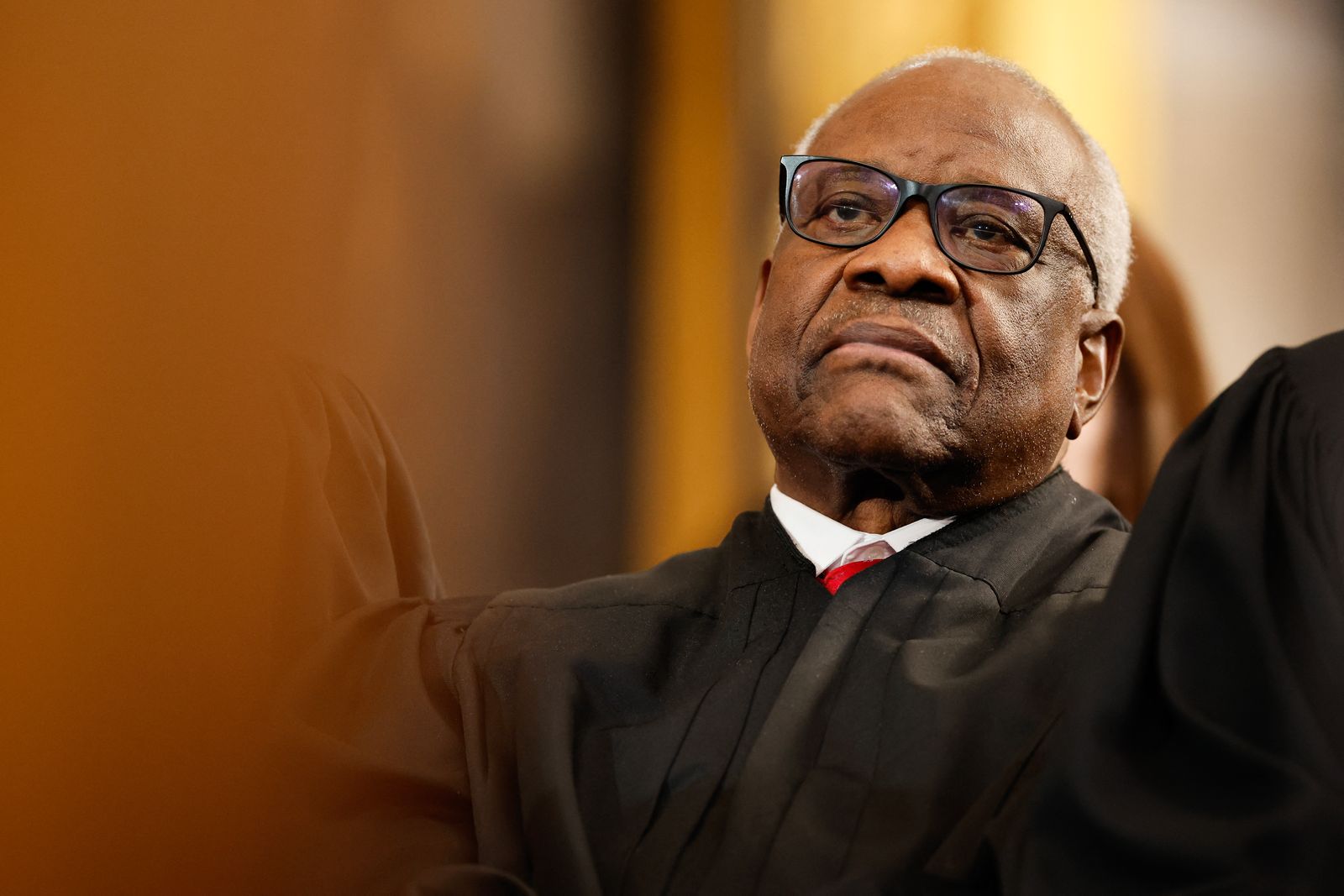
Justice Clarence Thomas issued a strong warning regarding freedom of speech after the Supreme Court refused to review the case challenging the requirement to California requiring "implicit bias’ training" to be included in the continuing medical education courses that doctors must take to renew their licenses.
For Thomas, the state cannot use its regulatory power to compel private citizens to convey the government's ideological messages. In his view, heavily regulating a profession does not authorize California to transform instructors' private speech into "government speech" and thereby evade the scrutiny of the First Amendment.

What the court decided
The Supreme Court declined to hear the case Khatibi v. Yip, filed by ophthalmologist Azadeh Khatibi and the organization Do No Harm. The plaintiffs argue that California law requires private continuing medical education providers to include content on "implicit bias" in their courses as a condition for physicians to renew their professional licenses, which, they claim, constitutes compelled speech and violates the First Amendment.
The Supreme Court did not rule that the law is constitutional. It merely decided not to hear the case, leaving the decision of the Ninth Circuit and California's mandate in effect.
Four votes were needed to take the case. Thomas, Samuel Alito, and Neil Gorsuch wanted to hear it, but one vote was missing. Thomas and Alito filed a dissenting opinion, while Gorsuch said he would have taken the case.

Thomas's warning
Thomas argued that the Ninth Circuit erred in treating courses regulated by California as "government speech." If an expression is government speech, it falls outside the normal scrutiny of the First Amendment; if it is private, the state cannot freely impose it.
The justice wrote that First Amendment protections "do not give way simply because a State heavily regulates speech." His message is that California cannot regulate its way out of constitutional scrutiny.
For Thomas, if any regulated activity can be called "government speech," the state could use licenses, funding, or regulations to enforce ideological conformity.
Thomas also asked to review the precedent Shurtleff v. City of Boston, from 2022, which establishes how to determine whether an expression is government speech. In his view, that test has allowed states to reclassify private speech as government speech and undermine freedom of speech.
A Signal to Conservatives
The dissent by Thomas, Alito, and Gorsuch shows that the debate over mandatory speech remains alive in the Supreme Court. For conservatives, freedom of speech must also must protect those who refuse to parrot the state's ideology.
The First Amendment does not exist solely to protect mainstream speech. It exists, precisely, to protect the freedom of those who refuse to be mouthpieces for those in power.