


The projection by Pew Research that Muslims will surpass Christians as the world's largest religious group by 2035 is, in reality, simply putting a date on something that has been on the horizon for a long time. Moreover, beyond the cold hard numbers, it is very possible that this is, in fact, already happening—without having to wait for the next decade.
The demographic winter in the West, where (still) most of the world's Christians reside (although Africa is now the continent with the largest number) makes it clear that a majority religion in countries with much higher birth rates would eventually lead it to be surpassed. Moreover, this phenomenon will not be limited to religion but will affect all areas.
Society
By 2035, Islam could surpass Christianity as the world's largest religion, thanks to high birth rates among Muslims
Emmanuel Alejandro Rondón
This is the straightforward explanation provided by Pew Research, a shift in the world's dominant religion due to a simple demographic reality. While this conclusion is true, it is by no means the only one.
The main problem for Christianity is, without a doubt, the secularization of the West. A drift away from religion by millions of people in the face of the relativism that Benedict XVI so strongly denounced and fought against. Paradoxically, "political correctness"—one of the offspring of this relativism—is among the factors causing the most damage.
It is a matter of aggressive secularization as well. Especially in countries where the left is in power, they rush to enact laws that, at the very least, hinder religious freedom—particularly when it comes to Christianity—if not directly persecuting it (for example, the ban on praying in front of abortion clinics, which is punishable by imprisonment in many developed countries).
People today, especially young people, are increasingly seeking to distance themselves. They only want to hear what reinforces their pursuit of a hedonistic life, full of pleasure and free from suffering, as if that were possible. If reality—with its pain and its thorns—overwhelms them, how can they take the step of seeking the Truth that lies behind it? How can they even attempt to answer humanity's fundamental questions if they drift from one fiction to the next?
At present, millions of young people born in predominantly Christian countries do not even know the Lord's Prayer or the most basic tenets of Judeo-Christian culture, which is the origin of their own culture. In other words, they are "sociological Christians"—they contribute to the statistics but are, in reality, far from believing in Jesus.
The image presented to them of the church—and of faith in general—is that of a series of moral dogmas that seek to take away their freedom and oppress them. By staying away, they remain trapped in their routine without knowing what makes life worth living. Every problem feels like the end of the world, because they don't know how to cope with frustration, nor do they know that there is something more.
If there's one thing Christians know, it's where Life is. And, although we logically do not understand many of the things happening around us, we are certain that everything has a meaning and that God is the one who will save us.
It will give us a life of fulfillment, facing suffering head-on, because He sustains us, but also with the joy of knowing we are children of a God who loves us and cares for us even in the midst of a hurricane.
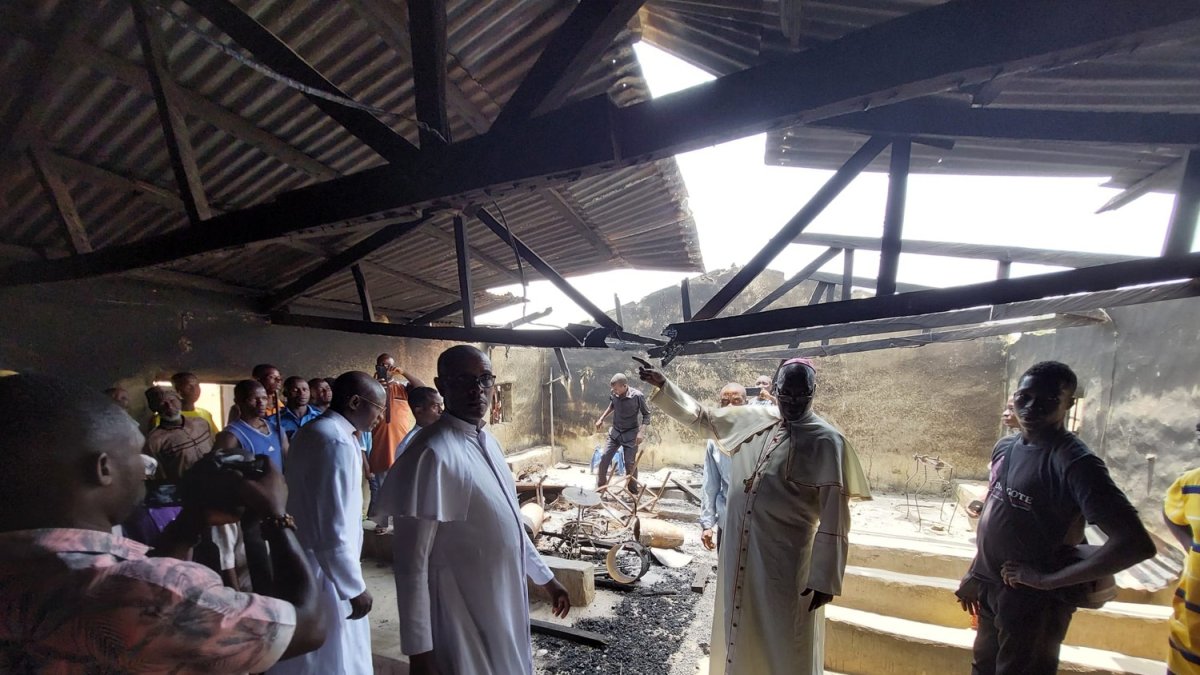
And there are many other factors that must also be taken into account in Pew's projection, but which it overlooks. Extreme persecution, even genocide of Christians in many countries in Africa and Asia in particular, where hundreds of millions of people are murdered, tortured, raped, kidnapped, imprisoned, and forced to abandon everything and go into exile simply for refusing to renounce Christ.
According to Open Doors' World Watch List, 388 million people suffered high or extreme levels of persecution or discrimination because of their faith. Nearly 5,000 Christians were killed, just as many were imprisoned and there were nearly 4,000 attacks on churches. These figures are so overwhelming that they make it impossible to fully grasp the specific tragedy of each of these stories.
To this must be added the abductions of young Christian women by Muslims to rape them and/or force them to marry them in order to produce "Muslim children," or the attempts to displace farmers in order to seize their land, also in Africa.
However, persecution has always been an inherent part of Christianity. The blood of the martyrs has been fundamental to spreading the faith across the globe. Christ himself made it clear that Christians should not aspire to an easy life, but persecution and tribulation.
The fruits of this suffering are evident. It is precisely in Africa and Asia that the number of believers and vocations is growing the most. According to the "Status of Global Christianity 2026" report prepared by the Center for the Study of Global Christianity (CSGC), the regions that for decades were recipients of missionaries—Latin America, Africa and Asia—account for 47% of the world's missionary send-offs.
In fact, many of them are now coming to Europe and North America to revitalize their faith.
In reality, the battle is not so much about numbers as it is about the true conversion of people. What good is boasting about billions of believers if services and churches remain empty and vocations are plummeting? Christ already made it clear that joy in Heaven comes from every person who truly turns to Him, not from a group of people who are called Christians simply for the sake of it.