
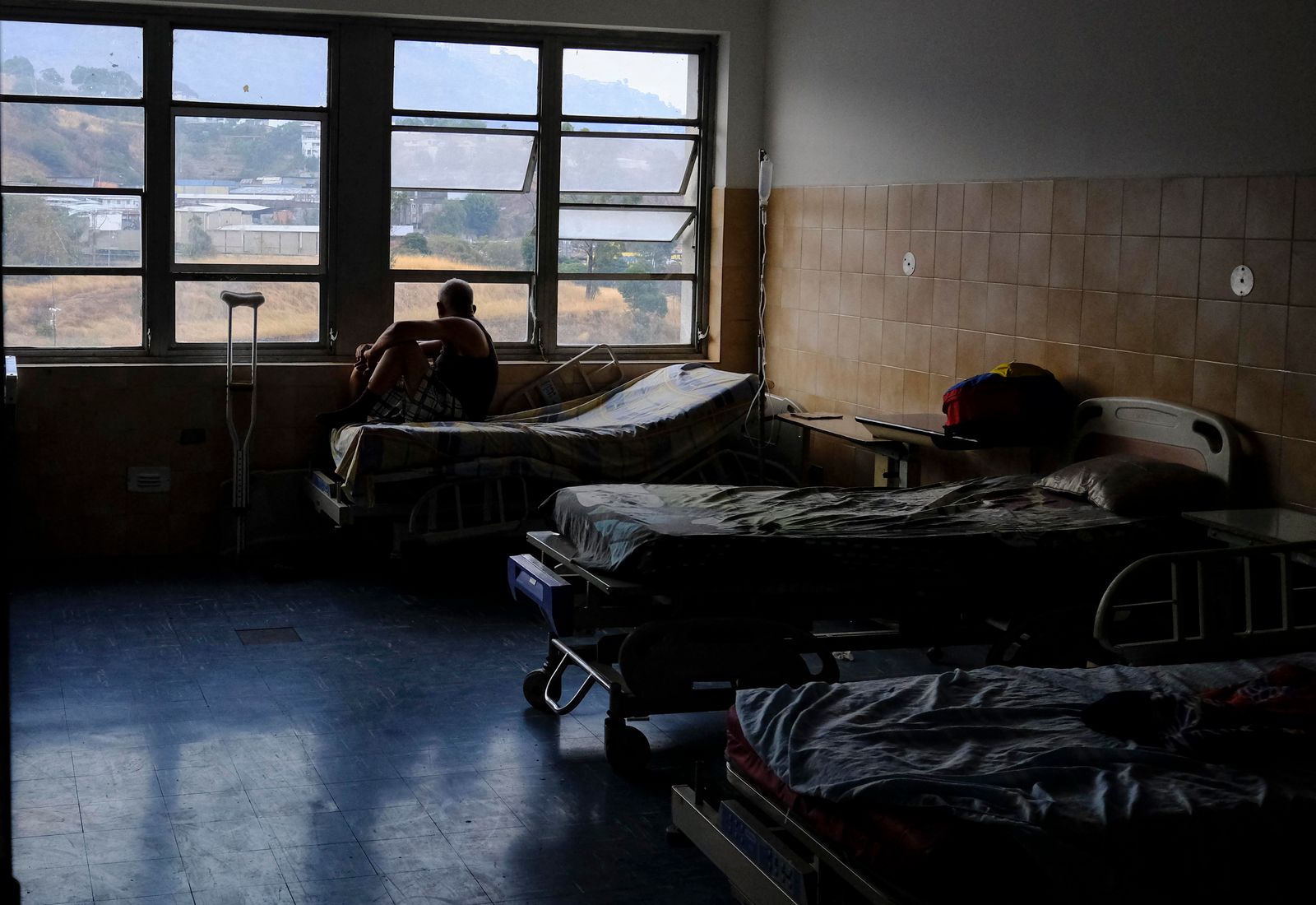
The World Health Organization (WHO) announced this Friday that it will collaborate with the Venezuelan regime to restore its deteriorated healthcare system, amid a hospital crisis that reflects years of neglect, disinvestment, and a lack of transparency on the part of the Chavista dictatorship. The agency's Director-General Tedros Adhanom Ghebreyesus met this Friday with interim President Delcy Rodríguez during the first official visit by a top official of the United Nations agency to the country.
The cooperation aims to boost domestic production of medicines and vaccines, strengthen healthcare infrastructure, and advance scientific research. The initiative seeks to address serious deficiencies plaguing Venezuelan hospitals, where a lack of medical supplies, deterioration of facilities and disruptions to basic services have compromised patient care for years. The magnitude of this emergency is the result of a process of institutional destruction that intensified during the Chavista era and left Venezuela with a hospital network incapable of adequately serving a large portion of its population, causing an almost unprecedented decline in healthcare standards and thousands of deaths that could easily have been prevented.
WHO representatives arrived in Venezuela on Thursday and visited a vaccine plant in Caracas, as well as touring hospitals alongside regime officials. Health Minister Carlos Alvarado described the visit as an unprecedented event and assured that the authorities were satisfied with the agency's presence.
For their part, authorities announced that starting next week, they will add new vaccines to the national immunization schedule and reintroduce others that had been discontinued, in coordination with the Pan American Health Organization (PAHO). Although international cooperation can help restore health services, the magnitude of the disaster that has built up over the years highlights the enormous challenge Venezuela faces in rebuilding a health care system that Chavismo left deeply weakened.
Chavismo devastated Venezuela's healthcare system for years
The collapse of the healthcare system did not happen overnight. According to a report by Human Rights Watch and experts from the Johns Hopkins School of Public Health, the operational capacity of medical services began to deteriorate in 2012, and the situation worsened dramatically starting in 2017. Drug shortages, a lack of water and electricity in healthcare facilities, and the mass exodus of healthcare professionals turned hospitals into places where even receiving basic care could be life-threatening.
Politics
A Capitol Hill report details Washington's plans for the transition in Venezuela
Andrés Ignacio Henríquez
The figures documented during those years reflect the severity of the emergency. A 2018 survey of hospitals in 24 states found that 76% of the facilities surveyed had experienced interruptions in laboratory services and 70% in radiology. Furthermore, 33% of hospital beds were unavailable, while 70% of the facilities reported water supply problems. Another study found that 88% of hospitals were experiencing drug shortages and 79% lacked medical and surgical supplies.
The crisis has also had devastating consequences for public health. A study published in the medical journal The Lancet documented that, between 2012 and 2016, child deaths increased by 63 percent and maternal mortality more than doubled. It also noted the spread of vaccine-preventable diseases, such as measles and diphtheria, as well as a sharp increase in malaria and tuberculosis. The interruption of HIV treatments due to a lack of medications further exacerbated the situation.
This deterioration was compounded by the lack of transparency under Nicolás Maduro's dictatorship, which stopped publishing key health statistics and was criticized by international organizations for downplaying the scale of the emergency. Human Rights Watch documented that, after official figures showing increases in infant and maternal mortality were released in 2016, the government stopped publishing epidemiological bulletins.
For years, Maduro maintained tense relations with the WHO over disagreements about health data and his refusal to acknowledge the crisis the country was facing. Following his capture during a U.S. military operation on January 3, the interim regime backed by the White House has resumed contact with various international organizations.