

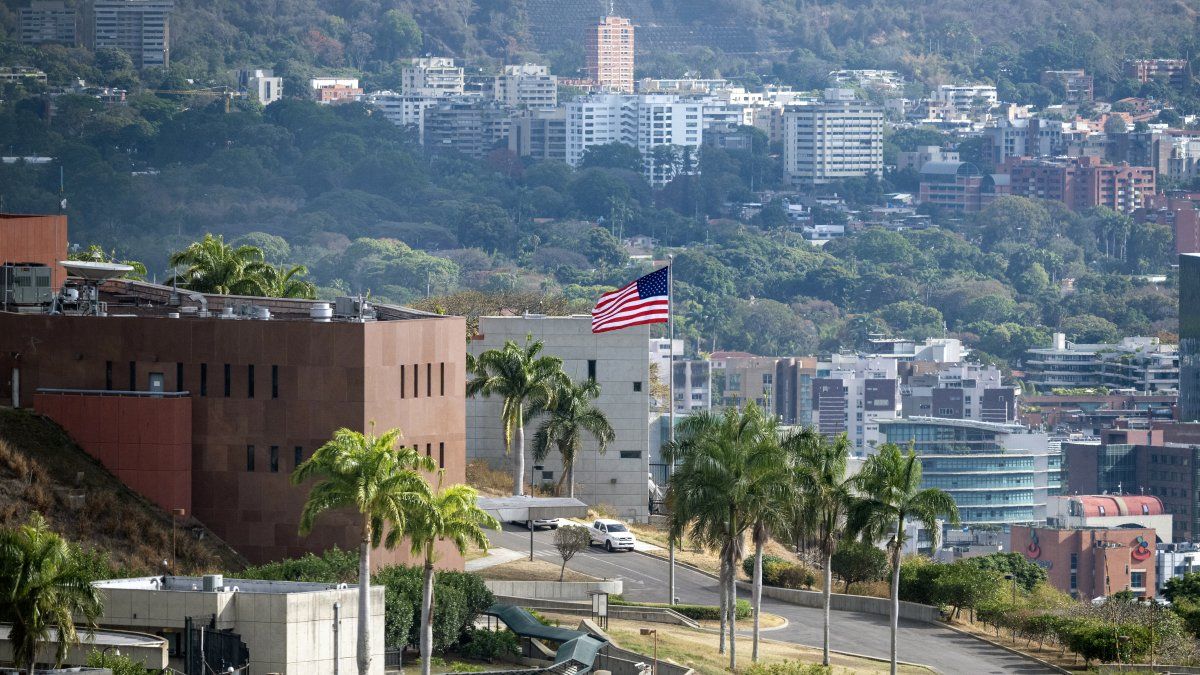
A report updated on November 24 by the U.S. Congressional Research Service (CRS) examines political developments in Venezuela following the capture and arrest of Nicolás Maduro and his wife, Cilia Flores, on January 3, 2026, on charges of narco-terrorism, detailing both the strategy deployed by the White House and the legislative levers that members of Congress are considering implementing starting in January.
Regarding the Venezuelan political landscape, Secretary of State Marco Rubio outlined a three-stage plan: stabilization, economic recovery coupled with political reconciliation, and democratic transition.
According to the legislative document, the powerful earthquakes that struck in June 2026 slowed down the initial stabilization efforts, while Washington prioritized economic and military cooperation agreements with the interim authorities and supported negotiations between Jorge Rodríguez and Dinorah Figuera—head of the National Assembly elected in 2015—to renew the Supreme Court of Justice and the National Electoral Council.
Pressure for elections and scrutiny of energy agreements
The report emphasizes that the surprise return of opposition leader María Corina Machado to Venezuela on October 25, after ten months in exile, has increased pressure on Washington and the interim government to accelerate the political timeline.
Machado advocates holding presidential elections in 2027, while U.S. officials have indicated that the vote could take place in late 2027 or early 2028.
On the economic front, the report highlights the U.S. administration's handling of $12.3 billion from Venezuelan revenues and parliamentary scrutiny of natural resource agreements.
Among these is the agreement announced on August 31 with North American Blue Energy Partners (NABEP), a company led by the "bolichico" Alejandro Betancourt, who assumed operational control of 17 oil fields and shipped its first shipment of one million barrels to Texas in late October, as well as the agreement signed in March by Interior Secretary Doug Burgum with the trading firm Trafigura to purchase up to $100 million in Venezuelan gold.
Congress' tools for shaping policy toward Caracas
The CRS document lists various legislative instruments and bills that Congress could use to shape and oversee the Trump administration's policy toward Venezuela in the coming months:
- Roadmap and verifiable timelines: demand that Secretary Rubio submit a detailed plan with goals and monthly reports on the progress of the democratic transition, resuming the legal framework established in 2020.
- Sanctions enforcement and electoral calendar: legislate to reimpose sanctions if Caracas fails to meet its electoral commitments, review the lifting of personal sanctions against Delcy and Jorge Rodríguez, and make budget allocations contingent on the holding of free and fair elections.
- Oil audit and fund management: investigate commercial contracts—with an emphasis on the agreement with Alejandro Betancourt—restrict public funding for private investments, issue mandatory subpoenas, and modify or close the oil account under U.S. control.
- Military oversight and democratic funding: demand details on the defense agreements negotiated by Secretary Pete Hegseth, limit military assistance in the event of human rights violations, and allocate an additional $50 million in the 2027 budget for democratic support programs in the South American country.
Although these initiatives constitute proposals and instruments of congressional oversight still pending final approval, the report reflects Capitol Hill's growing interest in ensuring transparency in bilateral agreements and linking any economic relief to the full restoration of constitutional order in Venezuela.

Politics
Hegseth’s Historic Speech in Venezuela: An Alliance to Reclaim Territory and Secure Borders
Vanessa Vallejo