

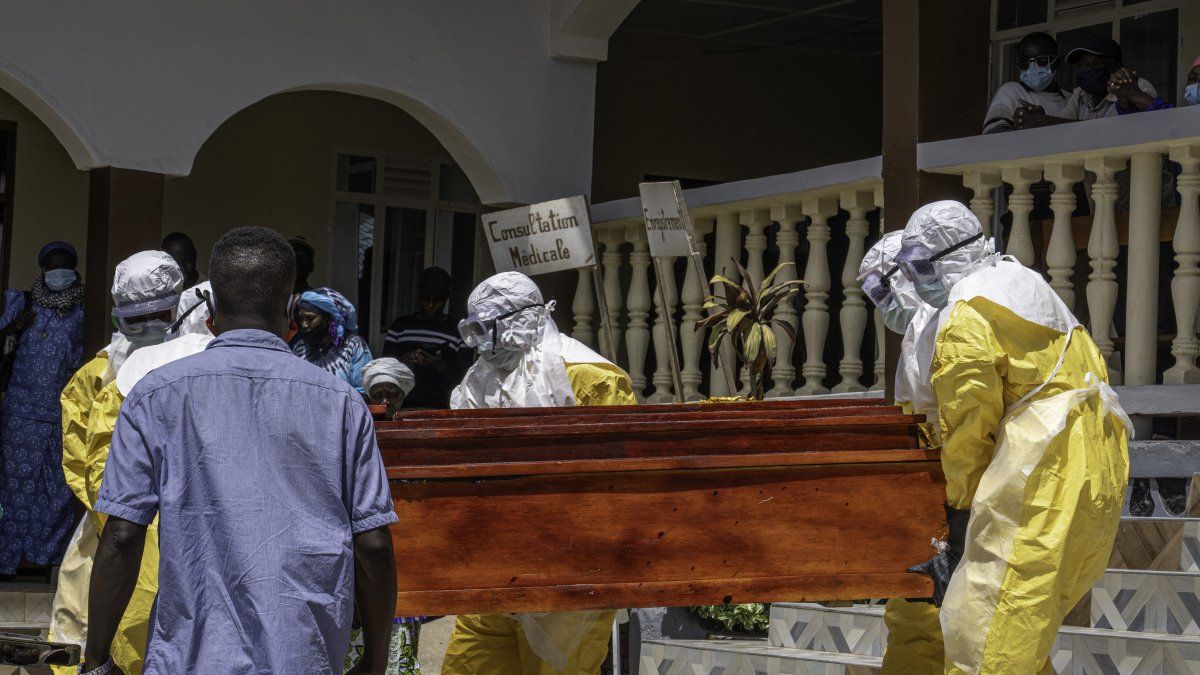
On a dirt road in Bulambo-Isale, a rural community in eastern Democratic Republic of the Congo (DRC), a group of residents tries to block an ambulance. Inside is the body of a neighbor who died of Ebola, which must be buried in accordance with strict health protocols to prevent further infections.
The scene, witnessed by journalist Camille Laffont in an report by AFP, reflects the complexity of combating an epidemic in a region where religious beliefs, funeral customs, institutional neglect and violence have eroded the population's trust in the authorities.
For healthcare workers, containing the spread of the virus has also become a battle against fear and misinformation.
Six months after the outbreak was officially declared on May 15, the health emergency continues to worsen.
According to data published on Nov. 19 by the European Centre for Disease Prevention and Control (ECDC), the Democratic Republic of the Congo had recorded 11,504 confirmed cases and 5,630 deaths as of Nov. 16.
A report by the World Health Organization (WHO), published on Nov. 20, raised that tally to 11,613 cases and 5,678 deaths, with a case fatality rate of 48.9%.
This is now the largest Ebola outbreak ever recorded in the country's history, regardless of the virus variant.
When burying the dead becomes a public health risk
One of the main challenges in containing the epidemic lies in the funeral practices of rural communities.
Ebola is transmitted through direct contact with the blood, secretions and other bodily fluids of infected people. The risk of transmission persists even after death, which is why the handling of corpses during funerals can become a major source of infection.
For this reason, burials must be carried out in accordance with biosafety protocols, using specialized personnel, protective equipment and sealed body bags.
However, in Bulambo-Isale, considered one of the cultural and religious centers of the Nande people, these measures conflict with traditions passed down through generations.
According to their beliefs, the deceased must be buried by their own relatives, and their bodies must come into contact with the soil of their ancestors. Observing these rituals, in accordance with their spiritual tradition, allows communication between the living and the dead to be maintained.
"Our people believe there is life after death, and our customs must be respected when a person is buried. Otherwise, we believe that person has been sacrificed," Pimbo Kakule, the community's traditional chief, explained to AFP.
The community leader believes that health authorities should find ways to involve families in burials, rather than imposing procedures that residents are unfamiliar with or do not understand.
"We are fighting the disease, not the response teams," he said.
The WHO itself recognizes this need. In its international recommendations for combating the outbreak, the organization states that burials must ensure both public health safety and the dignity of the deceased, allowing family members to be present and respecting cultural practices that are compatible with infection prevention.
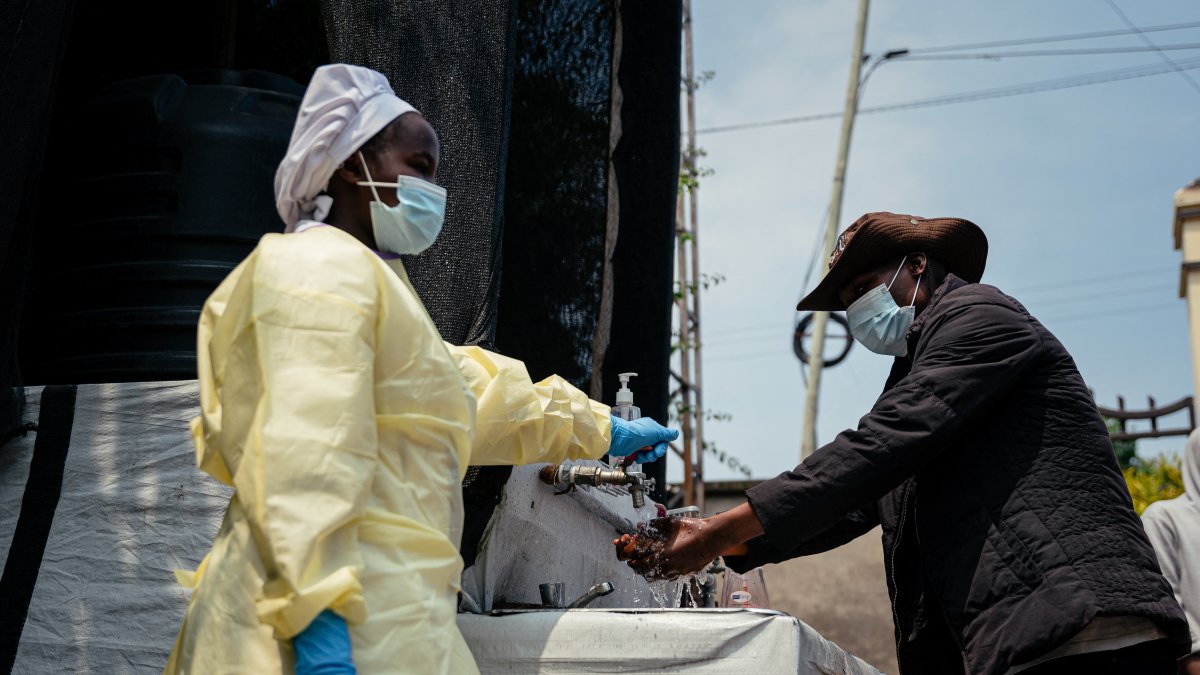
Decades of violence and deep mistrust of the authorities
The public's resistance to public health measures cannot be understood solely in terms of their religious beliefs.
Eastern Democratic Republic of the Congo, a region particularly rich in mineral resources, has been plagued for more than three decades by armed conflict, forced displacement, poverty, and institutional instability.
In this context, the arrival of medical teams from other regions—whose members are not always familiar with local languages or customs—has fueled suspicion among residents.
Patricien Kambale, a cattle rancher interviewed by AFP, explained that transferring patients to treatment centers without providing sufficient information to their families has contributed to the spread of conspiracy theories about the actions of medical staff.
Some residents have come to believe, without any scientific basis, that the medications administered at these centers are responsible for the deaths.
Roland Vivaya, president of the Bulambo-Isale Youth Council, acknowledged that he himself doubted the existence of the virus until he contracted the disease and nearly died.
"How can we explain to the locals—many of whom have never attended school—why there is this sudden focus on this disease, when we've been dying from conflicts here for decades?" he asked.
Memories of past health emergencies do little to dispel these suspicions either.
Between 2018 and 2020, eastern Congo suffered another severe Ebola epidemic, which resulted in 3,470 confirmed and probable cases, according to WHO's historical records.
During that crisis, the presence of military forces to protect healthcare teams reinforced, among some sectors of the population, the perception that the public health response posed a threat.
Doctors threatened and health centers attacked
Hostility toward healthcare workers has led to episodes of violence that hinder the care of the sick and the tracking of transmission chains.
Wilson Kasyani, chief medical officer of the Vuhovi health district, told AFP that attacks against people involved in the epidemiological response occur almost daily.
Among recent incidents, he mentioned an assault on a nurse's son and threats against public health investigators.
Insecurity has also been identified by the WHO as one of the main obstacles to containing the epidemic.
On Nov. 11, the organization's director-general, Tedros Adhanom Ghebreyesus, reported that an attack in the town of Cantine-Aloya had left 66 civilians dead, including three health workers. Three medical facilities were looted and set on fire.
In her address to WHO member states, Tedros warned of the consequences of violence for humanitarian and health operations.
More recently, on November 22, Reuters reported further disruptions to response efforts due to clashes in the vicinity of the affected areas.
Bundibugyo: An Ebola variant with no approved vaccines or specific treatments
Unlike other epidemics recorded in the Congo, the current outbreak is caused by the Bundibugyo virus, one of the orthoebovirus species capable of causing the disease.
Vaccines and specific treatments approved for the Ebola virus of the Zaire strain have not yet demonstrated equivalent efficacy against Bundibugyo.
The WHO and various scientific institutions are conducting clinical trials to identify effective vaccines and treatments against this variant.
According to the WHO fact sheet on Ebola, the main symptoms of the disease include:
- Sudden-onset fever.
- Severe fatigue and muscle aches.
- Headache and sore throat.
- Vomiting and diarrhea.
- Abnormalities in kidney and liver function.
- Internal or external bleeding in some patients.
The incubation period ranges from two to 21 days.
Although there is currently no approved specific treatment for Bundibugyo, early medical care, rehydration, and management of complications can increase the chances of survival.
On Nov. 18, the WHO determined that the outbreak continued to constitute a public health emergency of international concern.
An epidemic that is particularly deadly for children
Minors are among the most vulnerable segments of the affected population.
According to data from UNICEF compiled by the ECDC in its Nov. 19 update, 72% of children under five with a confirmed infection had died.
The difficulty in detecting infections early and transferring patients to appropriate facilities is exacerbating the situation.
Of the 720 deaths recorded during the three weeks examined in the WHO report of Nov. 20, 452 occurred outside specialized facilities and 268 within these facilities.
This means that nearly two out of every three deaths recorded during that period occurred within the communities themselves—a circumstance that hinders both medical care and the prevention of new infections.
The lack of resources is exacerbating the emergency
Added to the violence, misinformation, and cultural barriers is a shortage of material and human resources.
Salama Mwengesyali, coordinator of Ebola awareness campaigns in Vuhovi, explained to AFP that her team lacks sufficient funding to travel to the most remote farming communities, maintain constant communication with residents, and organize training activities.
It also considers it necessary to involve young people and community leaders in prevention strategies.
For her part, Kasyani denounced the precarious state of health facilities—some built with wooden planks—and the shortage of essential supplies needed to handle deaths safely.
"We've reached the point where we have to go door to door begging for body bags," he lamented.
Conditions at treatment centers also do little to convince patients that they should seek care there. According to the doctor, two patients had left the facility in recent days.
"People tell themselves that if they go there, they're going to die."
Six months after the start of the emergency, the fight against Ebola in the Congo highlights the limitations of a purely medical response. The availability of treatments, early diagnosis, and health protocols are essential, but their effectiveness also depends on security, community trust, and the ability of institutions to ensure dignified care.