

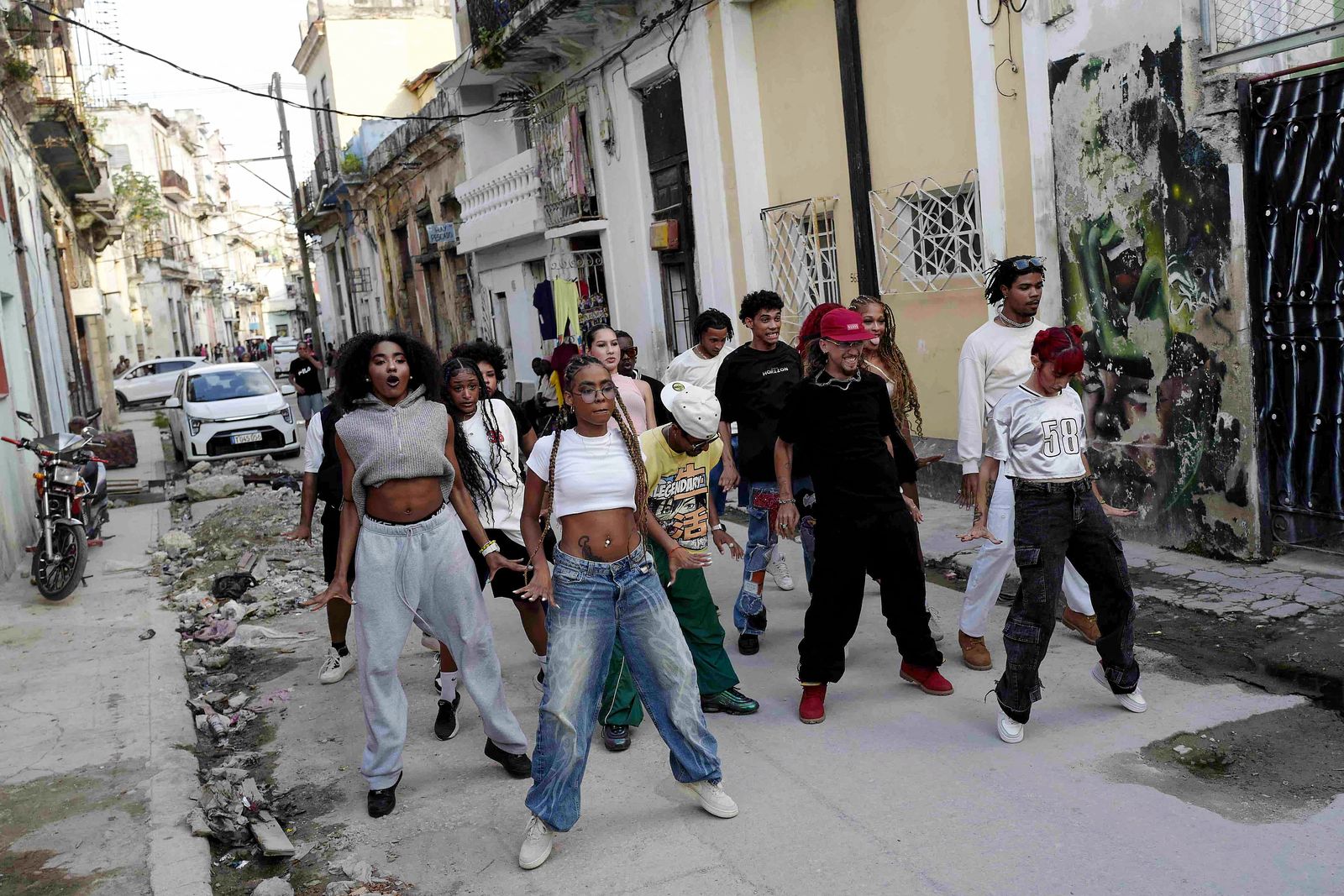
The Cuban reparto, a genre that emerged about two decades ago in the working-class neighborhoods of Havana, is beginning to establish itself in the Latin American music industry. What for years was a marginalized musical expression on the island itself has become a phenomenon racking up millions of streams on digital platforms.
Spanish singer Rosalía has declared herself a fan of the genre, while Puerto Rican Daddy Yankee has incorporated elements of this style into his latest album, according to an AFP report.
Influenced by Cuban timba and reggaeton, the genre is characterized by its fast-paced rhythms, catchy choruses, choreography, and a distinctive street slang.
Artists such as Bebeshito, Charly & Johayron, Ja Rulay, and Helabusador are among its leading exponents.

Entertainment
2026 Latin Grammys: Rosalía sweeps six awards and Milo J surprises on a night of major triumphs
Diane Hernández
Miami, the international springboard for the Cuban "reparto"
The expansion of mobile internet in Cuba, the growth of platforms like TikTok, and the emigration of numerous artists to the United States have been decisive factors in the genre's internationalization.
Miami, home to the largest Cuban community outside of Cuba, has become one of the main centers for the production, promotion, and marketing of "reparto."
"Once we Cuban artists managed to establish ourselves in Miami and began to understand this (the music industry), that's when everything took off," Carlos Eduardo Pérez, known by his stage name Helabusador, told AFP.
Although no representatives of the genre were among the nominees for the latest Billboard Latin Music Awards, several of its artists walked the red carpet at the event, held in late October in Miami.
One of the genre's biggest hits this year, "Dichávate," a collaboration between Helabusador, Rey Tony, and Ya Ice Dilan, has racked up some 170 million views on YouTube, according to the French agency.
An affordable alternative amid the Cuban crisis
On an island marked by a deep economic crisis, low wages, and a lack of professional opportunities, "reparto" also represents a chance for economic prosperity for many young people.
AFP features the story of Maykol Blanco, a 24-year-old industrial engineer who left his profession to pursue a career in music.
Other young artists are trying to make a name for themselves from small independent studios set up in private homes, where a recording session can cost up to $100—a considerable sum compared to Cuban government salaries.
The phenomenon has led to the emergence of a network of music producers, audiovisual producers, promoters, and influencers who operate outside the traditional structures of the Cuban music industry.
However, the difficulties in monetizing their content from the island force many artists to rely on collaborators abroad to distribute their songs and manage the revenue generated on digital platforms.

TikTok and dance are driving its global expansion
The genre's success isn't limited to music. The choreography associated with its songs has become another driving force behind its international popularity.
The dance challenges on TikTok and Instagram enable songs produced in modest Havana studios to reach audiences in different countries.
Its cultural influence has even reached the religious sphere, with the emergence of the so-called Christian reparto, a variant that incorporates messages of faith into urban rhythms.
The genre's growth also reflects a shift in its social acceptance within Cuba.
"Being a 'repartero' used to be frowned upon. But not anymore—now everyone dances it, everyone feels it," Paloma Duarte, a member of the urban dance company Los Datway, told AFP.