El Rodeo I: Venezuelan prison where political prisoners are held, 'designed to drive you crazy'
Some inmates released this year are putting their fear aside to describe the inhumane conditions and torture inside the prison—a reality far removed from the image that Delcy Rodríguez's interim government wants to project to the world.
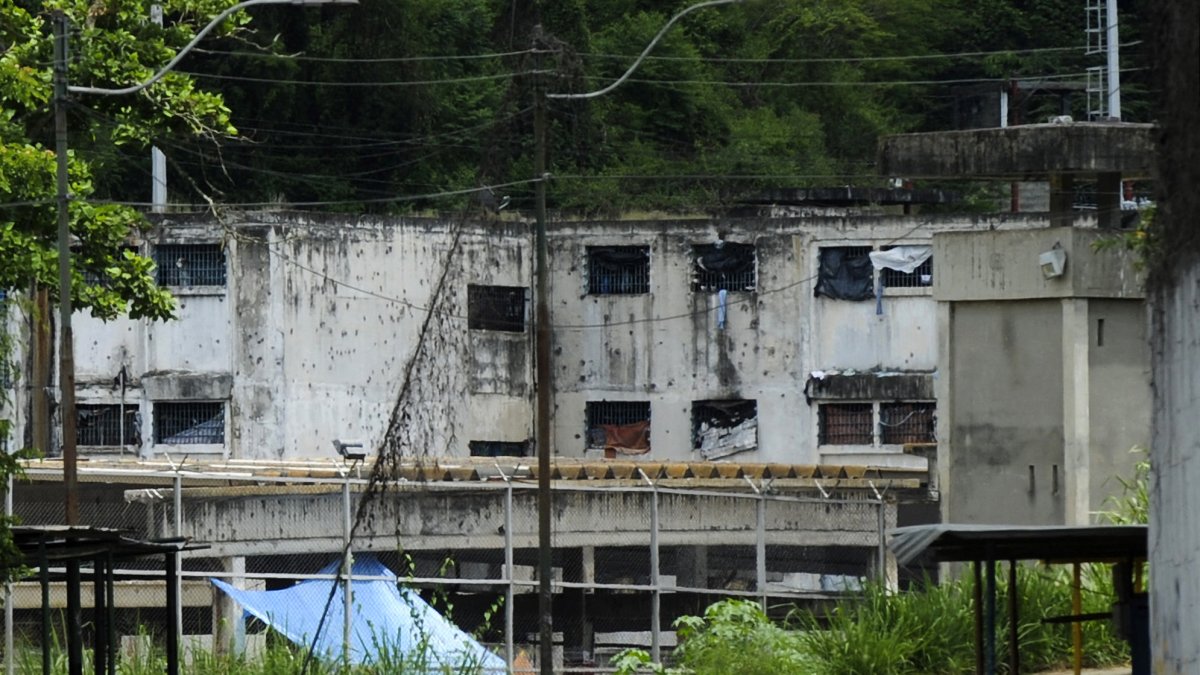
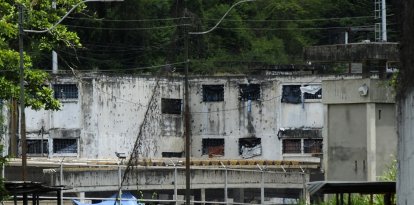
Image of El Rodeo I

Black bars, hooded guards, dark uniforms and punishments in the "time capsule" are some of the memories carried by political prisoners who passed through El Rodeo I, the most feared detention center in Venezuela.
Some inmates released this year are putting their fear aside to recount the inhumane conditions and torture inside the prison—a reality that is a far cry from what Delcy Rodríguez's interim government wants to project to the world.
Under pressure from Washington, Rodríguez pushed through an amnesty that benefited hundreds of political prisoners, but many others are still living through hell behind the bars of Rodeo I.
Whillfer Piña thought he would die when he arrived at that prison. Blindfolded and hooded, he was forced to wait in front of a white wall surrounded by armed guards. "Nothing. That was it. The movie's over," recalls this 47-year-old opposition activist.
The prison warden, alias Tiburón, greeted him with a threat: "No one gets out of there alive." He said, "We're only going to leave here feet first."
Piña was a math teacher, but in 2024 he was accused of planning an attack against then-dictator Nicolás Maduro and was imprisoned. He was released from prison in February of this year.
The NGO Foro Penal has documented at least 20 political prisoners who died while in state custody, one of whom was incarcerated at Rodeo I.
"A world of terror"
El Rodeo, located 50 kilometers from Caracas, consists of four numbered towers. One of them, Rodeo I, serves as a maximum-security prison housing political prisoners, including opposition figures and foreigners.
Its suffocating cells, six feet wide and 12 feet long, have only a concrete bunk and, just a few centimeters away, a shared space for a shower and toilet. A tiny barred window is the only connection to the outside world.
The limited access to water turns the space into a breeding ground for insects and disease. Piña humorously notes that he set a "record" among his fellow inmates one day when he killed 34 flies in his cell.
Less cheerfully, he recounts that due to these unsanitary conditions, he suffered from high fevers for 21 days without medical care.
"There was a moment when I prayed so hard to God. 'If I have to go, please let it be with dignity,'" he recalls asking.
Inmates who have been through that prison say they lost track of time inside and remained in a constant state of alert.
Freddy Superlano recalls distracting himself by watching birds, the moon or the stars through his cell's narrow window. Superlano is a political leader arrested in August 2024 and a member of Comando Con Venezuela.
"What can you do?" he asks himself. This prison, "I think, is designed to drive you crazy."
He describes Rodeo I as "a world of terror; it's completely black (...) the bars are black, the colors are dark—the atmosphere is very gloomy."
"It's more like a concentration camp than a prison," says the 50-year-old man who was released in February.
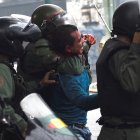
The guards dress in black, cover their faces, and are identified by intimidating pseudonyms such as "Tiburón" or "Candela." Prisoners only leave their cells hooded and restrained. Human contact is practically nonexistent.
Inmates are subjected to very little sleep and hellish heat. They are also forced to listen to pro-Chávez music and endless pro-government television programs.
According to the Penal Forum, more than 344 people are currently imprisoned for political reasons in Venezuela, dozens of whom are still at Rodeo I.
The "time capsule"
The place no one wants to end up is the fourth floor. Piña witnessed several of his fellow inmates being transferred there for any sign of disobedience or defiance.
He says the worst punishment is the "time capsule," a small cell where prisoners can only stand, and where they are kept hooded and handcuffed.
"They give you a little water and a little food once a day," and sometimes, to use the bathroom, "you'll have to relieve yourself right there," Piña recalls being told. "They kept a lot of foreigners there," he emphasizes.
"Human rights violations are systematic"
These cases occurred following the capture of Nicolás Maduro in a U.S. operation in January. "The violation of human rights is systematic. It's not just physical, it's not just psychological, it's not just mental. It's programmed, designed within that prison," Piña reflects.
Human Rights Watch called this week for the immediate closure of Rodeo I following its first visit to Venezuela in nearly two decades.
LATEST