

A powerful coastal storm threatens to disrupt celebrations and travel plans for millions of Americans this Thanksgiving, Nov. 26. The coastal storm has prompted authorities in New York and New Jersey to declare a state of emergency in light of the risk of flooding, destructive winds and prolonged power outages.
More than 80 million people, from Georgia to Massachusetts, are under strong wind alerts, according to ABC News.
The National Weather Service (NWS) warned that adverse weather conditions will persist in parts of the East Coast through Friday, Nov. 27, right in the middle of the peak holiday travel period.
Meanwhile, on the western end of the country, California is experiencing coastal flooding caused by exceptionally high tides, heavy swells and recent Pacific storms.
New York and New Jersey have declared a state of emergency
Authorities have stepped up preventive measures ahead of the storm's arrival, known as nor'easter, a weather system characteristic of the U.S. Northeast coast.
- New York: Governor Kathy Hochul declared a state of emergency for New York City, Nassau, Suffolk and Westchester counties. Authorities anticipate wind gusts of up to 60 miles per hour (97 kilometers per hour), transportation disruptions and coastal flooding, especially on Long Island. The measure was confirmed by CBS News.
- New Jersey: Governor Mikie Sherrill officially declared a state of emergency in the state's 21 counties, effective as of 6 p.m. on Wednesday. The coastal counties of Cape May, Atlantic and Ocean are among those most vulnerable to flooding.
The state of emergency in New Jersey does not imply a travel ban, although authorities urged the public to avoid traveling during the storm's peak intensity.
In New York, Mayor Zohran Mamdani also issued an official travel advisory for this Thursday, given the possibility of widespread flooding in coastal areas and dangerous road conditions.
Governor Hochul's office also reported that some 5,780 utility workers are on standby statewide to respond to potential power outages.

Macy's Parade postponed for the first time in its history due to weather
One of the storm's main consequences has been the postponement of the traditional Macy's Thanksgiving Day Parade in New York, for the first time in its 100-year history, due to weather conditions.
The event, which draws millions of spectators annually, was rescheduled for Saturday, Nov. 28 at 8:30 a.m. Eastern Time, according to ABC News.
The National Weather Service issued a high wind advisory for New York City from 10 a.m. Thursday through 1 a.m. Friday, in addition to coastal flooding advisories.
Thanksgiving under threat: The regions most affected by the storm
According to the National Weather Service and forecasts from The Weather Channel, the main weather threats during the holiday include:
- New York and New Jersey: coastal flooding, strong wind gusts and possible power outages.
- Delaware, Maryland and Pennsylvania: heavy rain, flooding and hazardous driving conditions.
- Connecticut, Rhode Island and Massachusetts: deteriorating weather conditions as the storm moves toward New England.
- Missouri and parts of the Midwest: snow and mixed precipitation that could make road travel difficult.
- California: coastal flooding, dangerous waves and more rainfall.
- Pacific Northwest: successive storm systems, bringing rain, strong winds and snowfall in mountainous areas.
Authorities warn that the combination of strong winds coming off the ocean and exceptionally high astronomical tides could worsen flooding in coastal communities.
California: Record-breaking tides, flooding and waves nearly nine meters high
On the West Coast, exceptionally high tides flooded numerous residential areas in California on Wednesday, particularly in the San Francisco Bay Area, although the flooding was less severe than initially predicted, AFP reported.
San Francisco recorded its highest water levels for the month of November in more than 40 years on Tuesday, according to the National Weather Service.
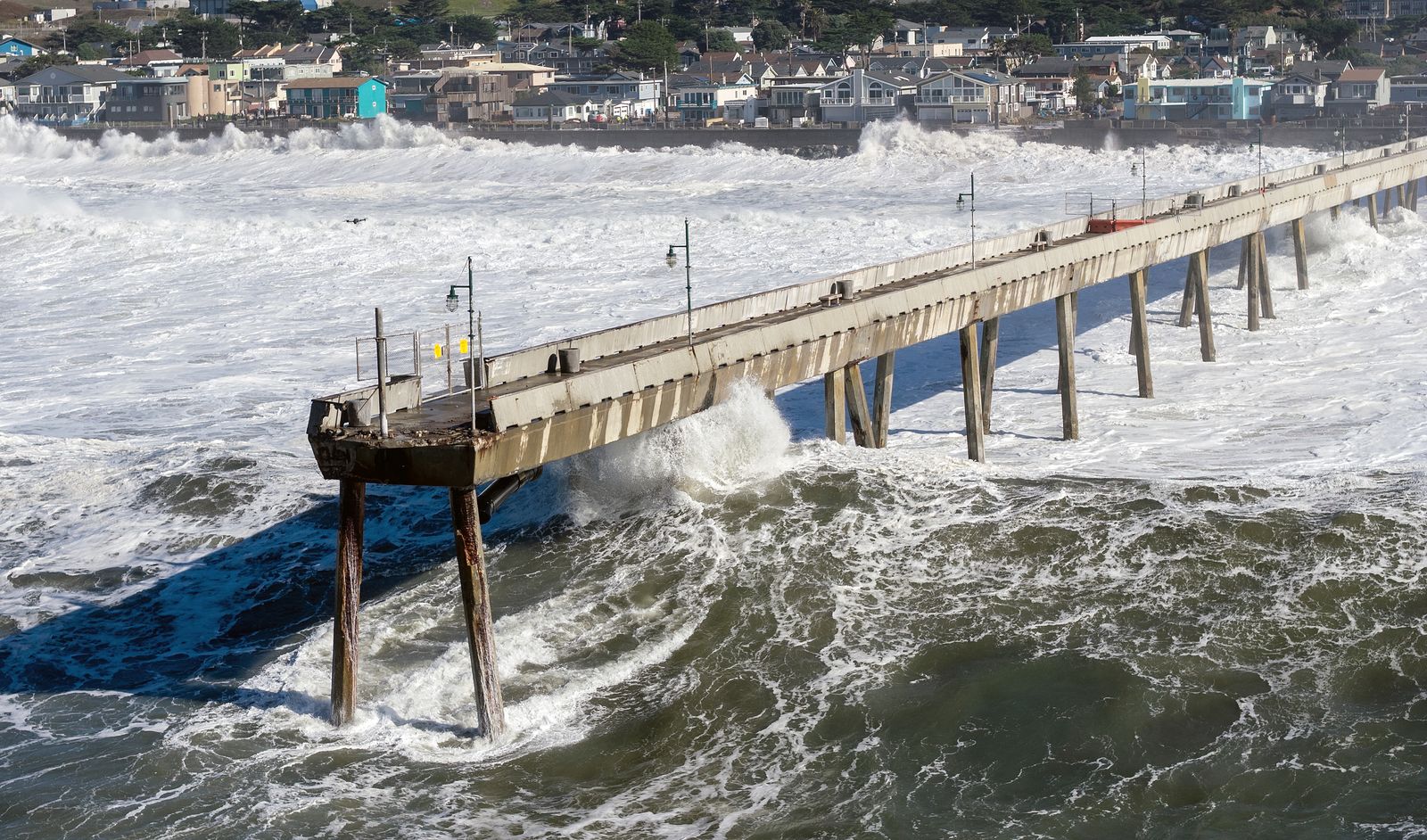
In Pacifica, south of San Francisco, heavy surf caused the partial collapse of a pier and flooded several neighborhoods. In Ocean Beach, waves reached heights of nearly 30 feet, according to an AFP reporter.
In Stinson Beach, some homes had to be evacuated due to rising water levels, although Marin County authorities later lifted the evacuation warnings, according to the San Francisco Chronicle.
"San Francisco has weathered the worst of this round of high tides," said Mayor Daniel Lurie, who urged residents to remain cautious in areas near the coast.
In Southern California, meteorologists also warned of so-called "sneaker waves,” sudden waves capable of sweeping people out to sea and flooding parking lots and roads.

Flight delays during the Thanksgiving holiday
However, on Wednesday morning, approximately 62% of arriving and departing flights were delayed, nine percentage points above the average for the previous two weeks, according to the San Francisco Chronicle.
The Federal Aviation Administration (FAA) reported average delays of 54 minutes for arriving flights due to weather conditions.
The situation is causing concern during one of the busiest periods of the year for air travel in the United States.
Why are the coastal floods so severe?
The so-called king tides, or exceptionally high astronomical tides, are a natural phenomenon associated with the relative positions of the Moon, Earth and Sun.
However, their combination with storm surges, heavy rain and strong winds can significantly increase the risk of flooding.
In California, the effects of El Niño and high Pacific water temperatures are also contributing to worsening coastal conditions.
Authorities in San Francisco anticipate further episodes of exceptionally high tides throughout December and January.