

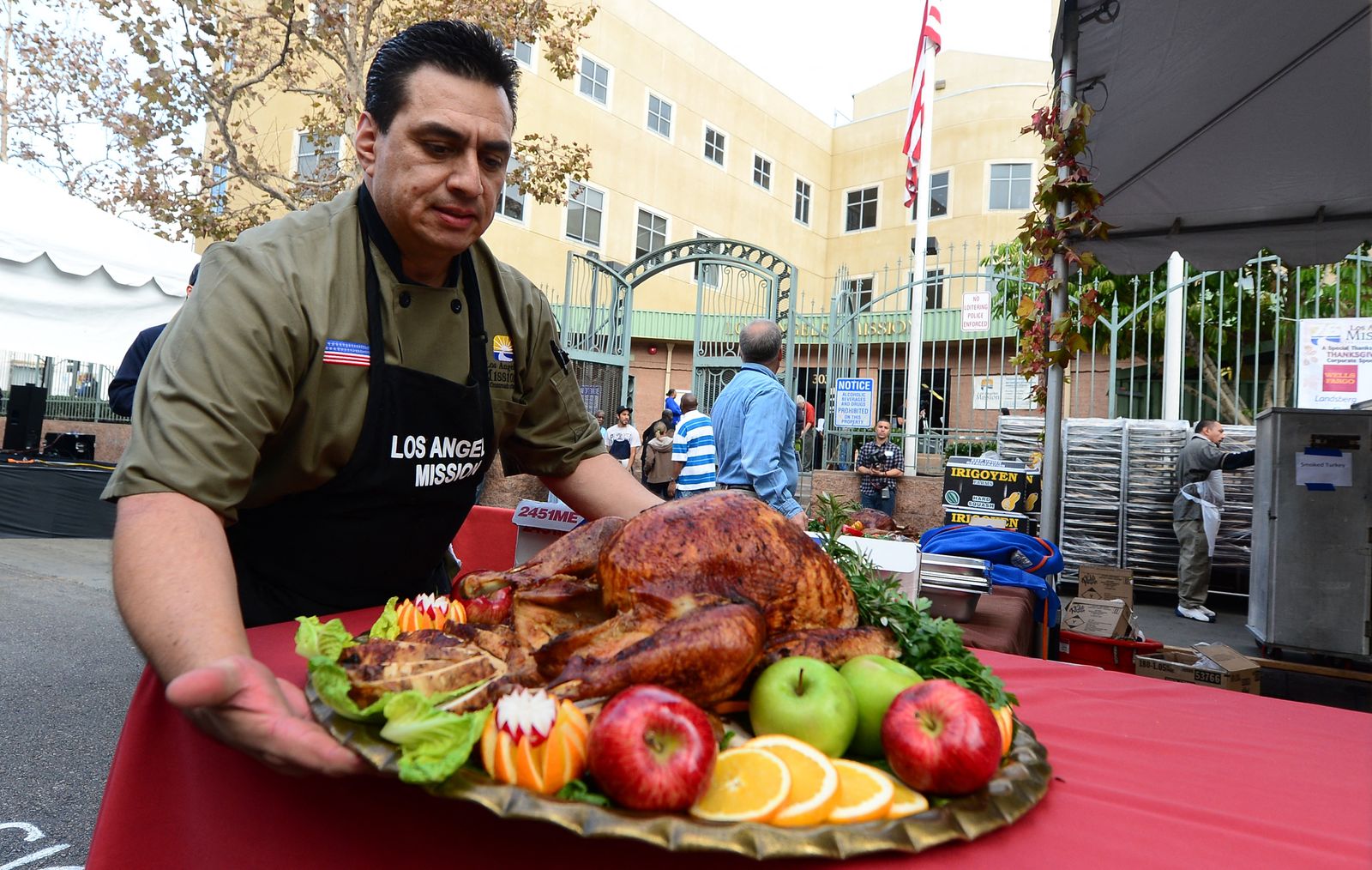
Americans will have to spend more money this year to prepare the traditional Thanksgiving dinner, which will be celebrated next Thursday, Nov. 26. The increase in prices of several of the most commonly consumed foods during this holiday, as well as rising production and transportation costs, have driven up the cost of the basket.
According to the 41st annual survey by the American Farm Bureau Federation (AFBF), preparing a traditional Thanksgiving dinner for ten people will cost, on average, $58.63, or $5.86 per guest.
The figure represents an increase of more than 6% from the $55.18 recorded in 2025 and marks the first increase in the cost of dinner since 2022, when it reached an all-time high of $64.05.
Despite the uptick, the price of the basket remains 8.5% below that record high.
The study, which has been conducted since 1986, compiles supermarket prices from all 50 states and Puerto Rico. Volunteers from the organization conducted the survey during the first week of November, both at brick-and-mortar stores and on online retail platforms.

Turkey: Main factor behind rise in cost
Turkey, the undisputed star of Thanksgiving tables, saw the largest percentage increase among the items in the traditional basket.
A 16-pound frozen turkey costs an average of $23.68 this year, which is equivalent to $1.48 per pound and represents a 10.1% increase from the previous year.
The price increase is due, among other factors, to strong demand, pressure on inventories and higher production costs in the poultry industry.
Prices also increased for fresh cranberries (8.8%), whole milk (8.6%) and rolls (7%), according to the agricultural federation's report.
However, about one-third of the products included in the survey saw price decreases, including carrots, celery, frozen pie crusts and whipped cream.
How much does each item in the 2026 Thanksgiving dinner cost?
Frozen turkey, 16 pounds: $23.68 (+10.1%)
Fresh cranberries, 12-ounce bag: $2.48 (+8.8%)
Whole milk, 1 gallon: $4.05 (+8.6%)
Rolls, one dozen: $3.81 (+7%)
Additional ingredients for cooking: $3.84 (+6.4%)
Turkey stuffing mix, 14 ounces: $3.91 (+5.4%)
Sweet potatoes, three pounds: $4.20 (+5%)
Pumpkin pie mix, 30 ounces: $4.24 (+1.9%)
Whipping cream, half-pint: $1.84 (-1.6%)
Frozen peas, 1 pound: $1.99 (-2%)
Frozen pie crust, two: $3.28 (-2.7%)
Carrots and celery, 1 pound: $1.31 (-3.7%)
The federation also considers an expanded menu that includes boneless ham, potatoes and frozen green beans. In that case, the average cost of the dinner rises to $81.72, which is $23.09 more than the basic menu.
Where is it most expensive to celebrate Thanksgiving?
The cost of preparing a Thanksgiving dinner varies by region of the country. The South remains the most affordable region, while the Northeast has the highest prices.
- Northeast: $61.57
- West: $58.74
- Midwest: $56.89
- South: $54.33
Differences also persist in the expanded menu, with prices ranging from $76.91 in the south to $86.62 in the northeast.
Fuel and production costs put pressure on prices
The rise in the cost of dinner is not solely due to higher food prices in grocery stores. Behind the increase are also the costs faced by farmers, producers and distributors.
High prices for diesel, fertilizers, electricity and labor have put pressure on various stages of the supply chain, from agricultural production to the transportation of food to retail establishments.
As also reported by Telemundo 62, the rising fuel costs has driven up the costs associated with processing and transporting some Thanksgiving staples.
Furthermore, the rise in milk prices is partly related to increased demand for protein powder, while the higher cost of rolls reflects increased processing, packaging and distribution expenses.
The agricultural federation also warns that the rising supermarket prices do not necessarily translate into higher profits for farmers, whose margins are also affected by rising operating costs.
Cost of Thanksgiving dinner exceeds overall increase in food prices
The rise in the cost of a Thanksgiving dinner exceeds general forecasts for increases in the price of food for home consumption in the United States.
According to the U.S. Department of Agriculture (USDA) Economic Research Service, prices for home-cooked meals will rise 2.3% in 2026, while food prices overall are projected to increase by 2.8%.
Meanwhile, the latest report on the Consumer Price Index from the Bureau of Labor Statistics (BLS) revealed that food prices rose 0.5% in October compared to the previous month, while prices for household goods rose 0.4%.
As explained by Infobae, the agricultural federation's survey is not an official inflation indicator, but rather a specific reference point for price trends of the products most commonly consumed during this holiday.
How much has the price of a Thanksgiving dinner changed?
2019: $48.91
2020: $46.90
2021: $53.31
2022: $64.05
2023: $61.17
2024: $58.08
2025: $55.18
2026: $58.63
Last-minute deals could reduce spending
Although the figures reflect a general increase in the cost of the basket, consumers may still find prices lower than those reported in the study.
The survey was conducted in early November and does not include certain coupons, special discounts or promotions contingent on the purchase of other products.
Data from the USDA's Agricultural Marketing Service already showed a decline in the average promotional price of frozen turkeys during the second week of November.
In fact, some participants in the AFBF study found turkeys for as little as 69 cents per pound—less than half the national average price.
Comparing prices among supermarkets, taking advantage of seasonal promotions and purchasing store brands can help American families reduce their final bill without giving up the traditional dishes of one of the country's most important celebrations.