

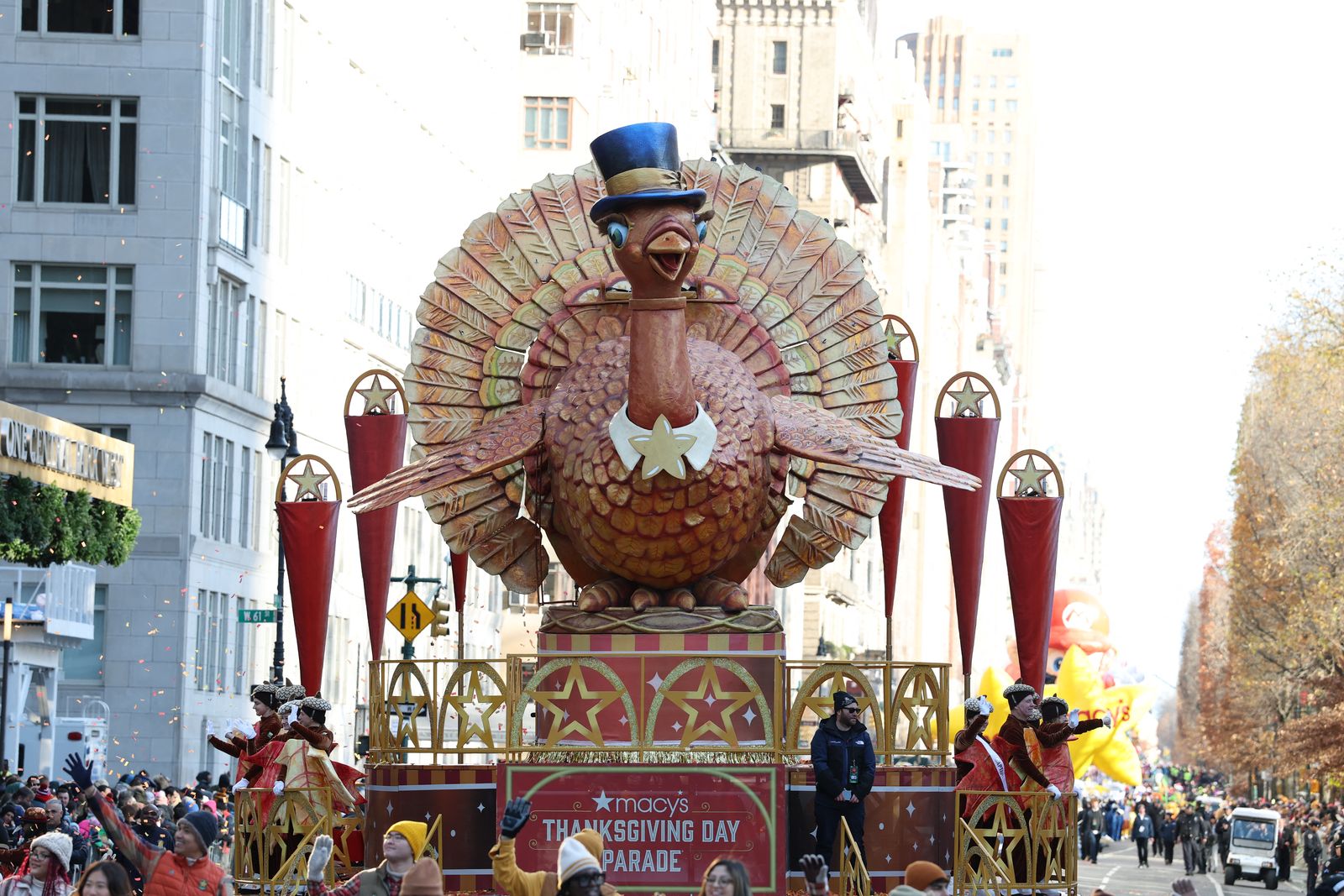
Thanksgiving is one of the country's most deeply rooted celebrations. Every fourth Thursday in November, millions of families gather around the table to share a dinner featuring turkey and cranberry sauce usually take center stage. But behind this tradition lie statistics, historical facts and some geographical curiosities.
In honor of the celebration, the U.S. Census Bureau published a compilation of interesting facts about this holiday, ranging from its origins to the states that lead in turkey production and the towns named after traditional dishes.

Society
Thanksgiving under alert: Severe storms threaten flooding, high winds and travel delays
Diane Hernández
A tradition that began in 1621
The history of Thanksgiving dates back to the fall of 1621, when the Pilgrims, the first settlers of the Plymouth Colony, held a three-day feast to celebrate a bountiful harvest. This event is considered by many to be the first Thanksgiving in the United States.
The celebration officially became a national holiday on Oct. 3, 1863, when President Abraham Lincoln proclaimed the last Thursday in November as a national day of thanksgiving.
Years later, President Franklin Roosevelt designated the celebration to take place on the fourth Thursday of November, rather than the last one. The decision was intended to bring forward the holiday shopping season, since some years have five Thursdays in November.
The six states that account for the majority of turkey production
The turkey is one of the main stars of the Thanksgiving dinner. According to the Department of Agriculture's projections for 2026, six states will account for 68% of all turkeys produced in the United States.
Minnesota tops the list, with an expected production of 34 million turkeys. It is followed by North Carolina, with 29.5 million and Arkansas, with 21 million.
The list continues with Indiana, which is expected to produce 20 million turkeys; Missouri, with 16 million; and Virginia, with 14.5 million.
Towns named Turkey and Cranberry
The Census Bureau also compiles some interesting facts related to the names of U.S. towns.
There are four places named Turkey or Turkey Creek, in reference to the turkey, one of the most iconic foods of Thanksgiving.
This is Turkey Creek, in Louisiana, with 401 residents; Turkey, Texas, with 316; Turkey, North Carolina, with 227; and Turkey Creek, in Arizona, with 351 residents.
Cranberries, another common side dish at the dinner, are also found throughout the United States. There are five census-designated places named Cranberry.
The most populous is Cranberry Township, in Butler County, Pennsylvania, with 35,244 residents. The second-most-populous is located in Venango County, also in Pennsylvania, and has 6,241 residents.
The population figures for these towns are based on five-year estimates from the American Community Survey for the 2020–2024 period.
How many stores are there to help prepare the big dinner?
According to 2023 data from the Census Bureau, the United States had approximately 63,000 supermarkets and other food stores, excluding convenience stores.
They were joined by some 2,600 bakeries and 4,300 fruit and vegetable markets.
And one last fun fact: the Census Bureau also poses a question about the Thanksgiving table: What is the item that makes you the sleepiest during dinner? The answer is a play on words in English: napkins.
Thus, between production figures, towns with unique names and centuries-old traditions, Thanksgiving offers much more than just a family dinner in the United States.