

The country is preparing for a Thanksgiving marked by bad weather. A series of storm systems threatens to bring heavy rain, coastal flooding, dangerous winds, and snowfall in mountainous areas, just as millions of Americans are set to travel to celebrate Thanksgiving on Thursday, November 26.
The Weather Prediction Center (WPC), part of the National Oceanic and Atmospheric Administration (NOAA), warned that a severe storm will develop in the southeastern part of the country and move northeast between Wednesday and Thursday, bringing heavy rainfall and gusts capable of causing property damage.
The storm could complicate travel along major transportation corridors, especially along the Atlantic coast, from the Carolinas to New England.
According to AccuWeather, the adverse conditions could last until Friday, November 27, in some areas of the eastern United States.
New York, New Jersey, and the East Coast: Heavy rain and dangerous winds
One of the main areas of concern is the northeastern United States, where a coastal storm could intensify rapidly as it moves northward.
The National Weather Service (NWS) in Philadelphia warned of possible wind gusts exceeding 40 miles per hour (64 km/h) inland and more than 50 miles per hour (80 km/h) near the coast.
These conditions could cause falling trees, power outages, and coastal flooding, especially in New Jersey, Delaware, and areas near Delaware Bay.
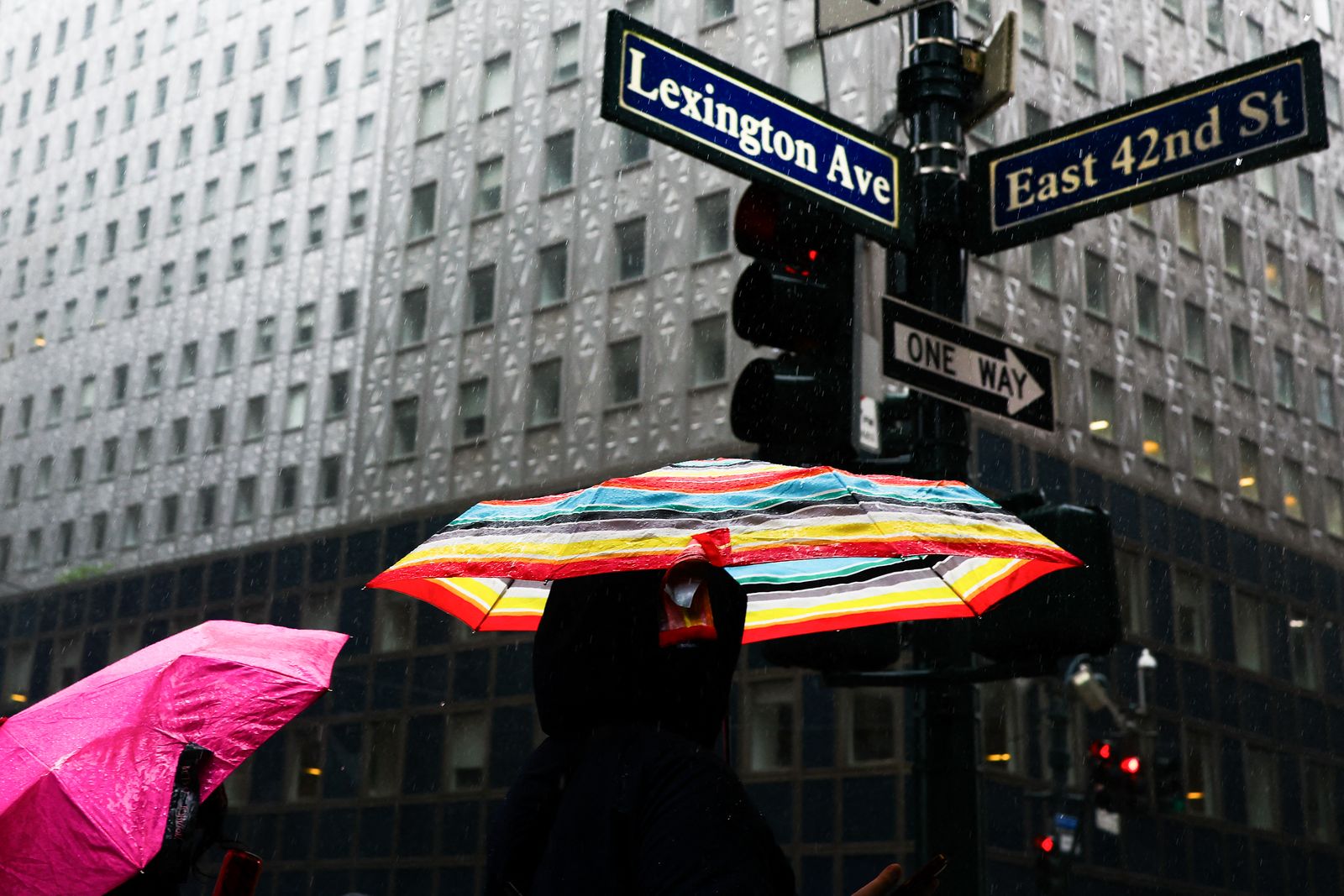
In New York, forecasts call for widespread rain on Thursday, with periods of heavy rainfall and winds that could disrupt outdoor activities, including the traditional Macy's Thanksgiving Day Parade.
According to the New York NWS, the combination of rain, wind, and high tides could cause flooding in vulnerable coastal areas.
However, the risk is not uniform: in some areas, coastal flooding can pose a greater threat than flooding caused by rainfall accumulation on the mainland.
Florida remains under flood alerts following recent rains
Florida faces a particularly delicate situation because several communities are still reeling from the rainfall of recent weeks.
The NWS in Melbourne, Florida has issued a flood watch from early Wednesday morning through the early hours of Thursday for areas along the state's east coast, including Brevard, Okeechobee, and the Treasure Coast region.
Forecasts call for general accumulations of 1 to 2 inches of rain (25 to 51 millimeters) in the most exposed areas, with higher amounts in some localized areas.
In addition, the St. Johns River continues to experience significant flooding at several points. Further rainfall could worsen the situation in communities where the ground is already completely saturated.
Authorities are also warning of dangerous waves, rip currents, and coastal flooding that could coincide with high tides on Wednesday and Thursday.

Society
California is bracing for a historic El Niño event that could cause billions in losses
Diane Hernández
California: Exceptional tides threaten historic flooding
On the West Coast, the main threat comes from a combination of heavy rain and exceptionally high tides, known as king tides.
As reported by the Associated Press, sea levels in the San Francisco Bay Area could approach historic highs set more than four decades ago.
The National Weather Service has issued coastal flood warnings for San Francisco and San Pablo Bays, as well as dangerous surf advisories for the Pacific coast.
Waves ranging from 20 to 30 feet (6 to 9 meters) are expected on Wednesday, posing a danger to anyone near beaches, piers, and rocky areas.
In Humboldt County, in northern California, authorities have already ordered preemptive evacuations in a coastal community after some buildings were flooded on Monday.
Forecasts indicate that conditions could improve in San Francisco by Thanksgiving Day itself, although the danger associated with high tides will continue for part of the day.
Washington and Oregon are also facing rain, high waves, and snow
The northwestern part of the country will not escape the storm either.
The National Weather Service has issued a warning of possible coastal flooding in Washington and Oregon due to the combination of high tides, strong winds, and new storm systems.
In Washington, several ferry routes have already been canceled due to sea conditions, while snowfall in the Cascade Mountains could make travel difficult through mountain passes, including Interstate 90 east of Seattle.
Weather conditions will remain variable over the holiday weekend, when millions of travelers are expected to return home.

More than 81 million Americans will be traveling for Thanksgiving
The adverse weather conditions coincide with one of the busiest travel periods of the year.
The American Automobile Association (AAA) estimates that 81.5 million people will travel at least 50 miles (80 kilometers) from their homes between Tuesday, November 24, and Monday, November 30.
Of that total, approximately 72.9 million will travel by car, while nearly six million will take domestic flights.
Heavy rain, high winds, and flooding could cause delays at airports and disruptions on highways, especially on Wednesday—one of the busiest travel days—and on Thanksgiving Day itself.
The National Weather Service recommends checking local alerts before traveling, avoiding driving on flooded roads, and staying away from coastal areas with dangerous waves.
NOAA warns that conditions could change as the storm progresses, so forecasts will need to be updated over the next 48 hours.