

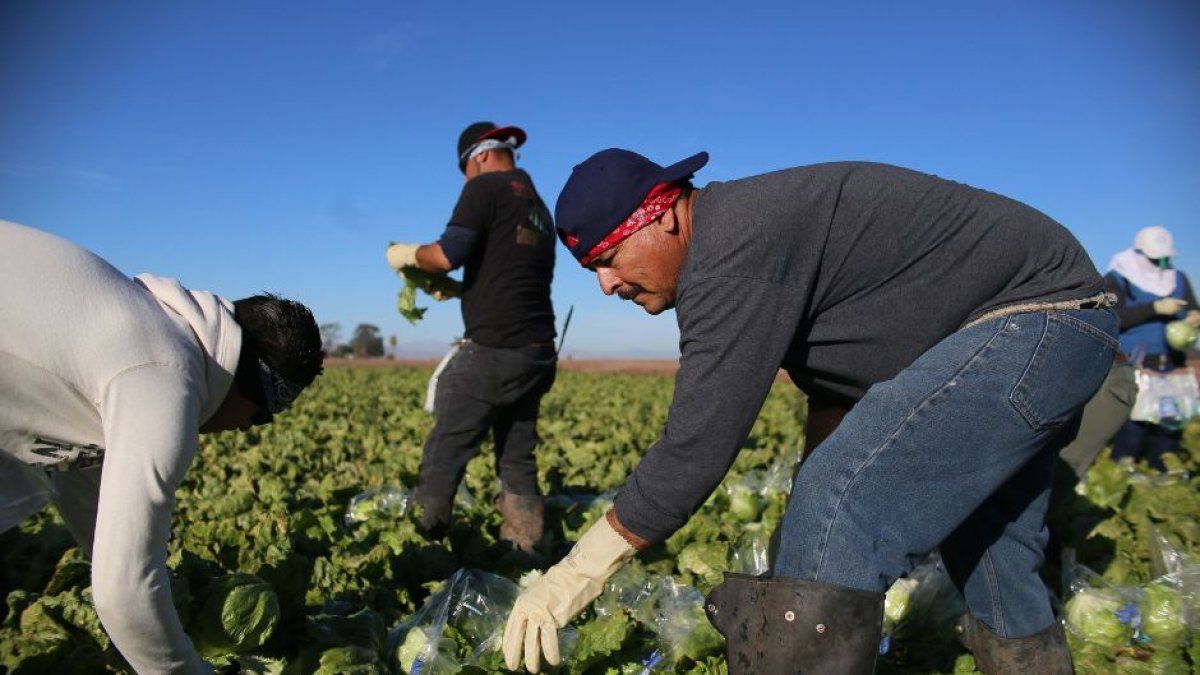
The official poverty rate for the Hispanic population in the United States fell to 13.9% last year (2025), the lowest level on record, according to a report published in 2026 by the Census Bureau.
Data from the Current Population Survey and Annual Social and Economic Supplement (CPS ASEC) show that the poverty rate among Hispanics decreased by 1.2 percentage points compared with 2024.
The decline occurred even after taking into account methodological and survey changes applied to the CPS ASEC, the Census Bureau's longest-running survey.
The decline was also reflected in the country's overall figures. The official national poverty rate fell from 10.7% in 2024 to 10.2% in 2025.
The Census Bureau establishes the official measure of poverty by comparing pre-tax monetary income to a national threshold that is adjusted according to family size, the number of children, and the age of the head of the household.
Economy
Retail sales rise 0.2% in October, but gas prices and inflation account for part of increase
Carlos Dominguez
Hispanics remain overrepresented among the population living in poverty
Despite the decline in the poverty rate, the Hispanic population continues to be proportionally overrepresented among those living in poverty compared to the U.S. population as a whole.
According to the report, Hispanics accounted for 28.1% of the population living in poverty in 2025, while they made up 20.7% of the total population.
This difference translates into a representation index of 1.4, indicating that the proportion of Hispanics among those living in poverty is higher than their share of the general population.
The Black population had an index of 1.7, while that of American Indians and Alaska Natives Alaska was 1.6. Both groups were also overrepresented among the population living in poverty.
In contrast, the non-Hispanic white population had an index of 0.7 and the Asian population had an index of 0.8, meaning that both groups were underrepresented in the poverty figures.
Meanwhile, the index for people who identified as two or more races was 1.1, a figure that, according to the Census Bureau, did not differ statistically significantly from 1.0.
A historic decline since 1973
The 2025 figure of 13.9% represents the lowest level in the entire historical series.
The CPS ASEC publishes its results every September and serves as the source for the official poverty measurement in the United States. The survey collects information on income, health insurance, government benefits, migration and child care.
The report Poverty in the United States: 2025 includes estimates of poverty levels for various demographic groups and household types.