

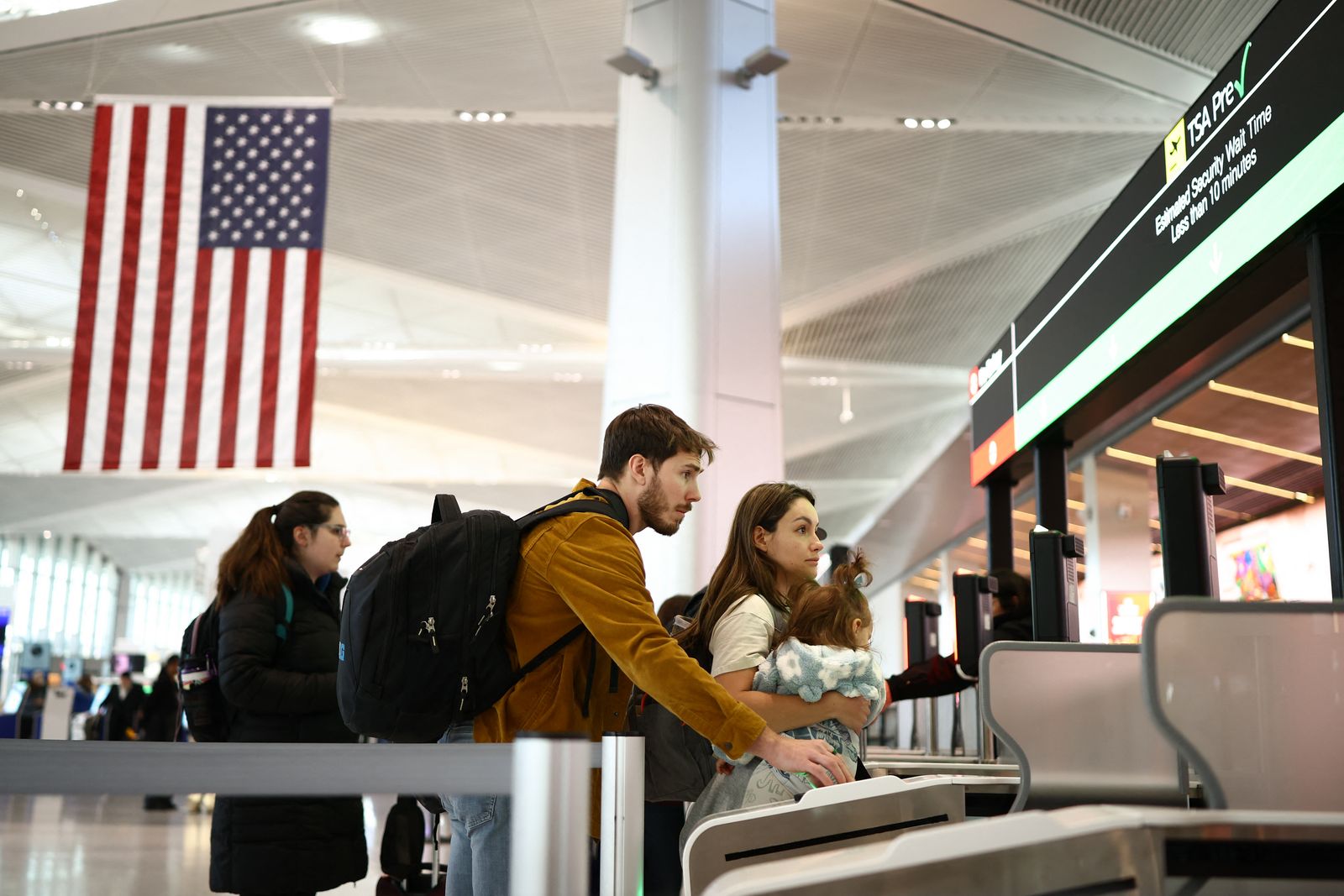
The country's air traffic largely returned to normal on Monday after a communications failure at the Federal Aviation Administration forced a nationwide suspension of takeoffs for approximately four hours last Friday.
According to the flight-tracking website FlightAware, just over 320 flights originating, bound for or transiting through the United States had been canceled as of Monday morning. The figure represents a significant reduction from the 9,200 cancellations recorded after the nationwide grounding of flights was ordered.
President Donald Trump blamed "old, broken" equipment and the previous administration for the problem. He made these remarks on Monday morning, before departing for China.
"We've been trying to get the money for two years to fix it," Trump told reporters, while shifting the responsibility for funding to Congress.
The Wall Street Journal reported on Saturday that outdated network equipment in Arkansas and possibly in Texas became overloaded, causing a communications failure that spread to 17 of the country's 22 major air traffic control centers.
The suspension was the longest nationwide halt to takeoffs since the Sept. 11, 2001, attacks. Its consequences quickly spread throughout the airline industry: numerous planes were stranded at airports where they were not needed, while crews reached the limits of their work shifts.
Administration rules out cyberattack
The Trump administration has insisted that the incident did not pose a threat to aviation safety and that the disruption was not the result of a cyberattack.
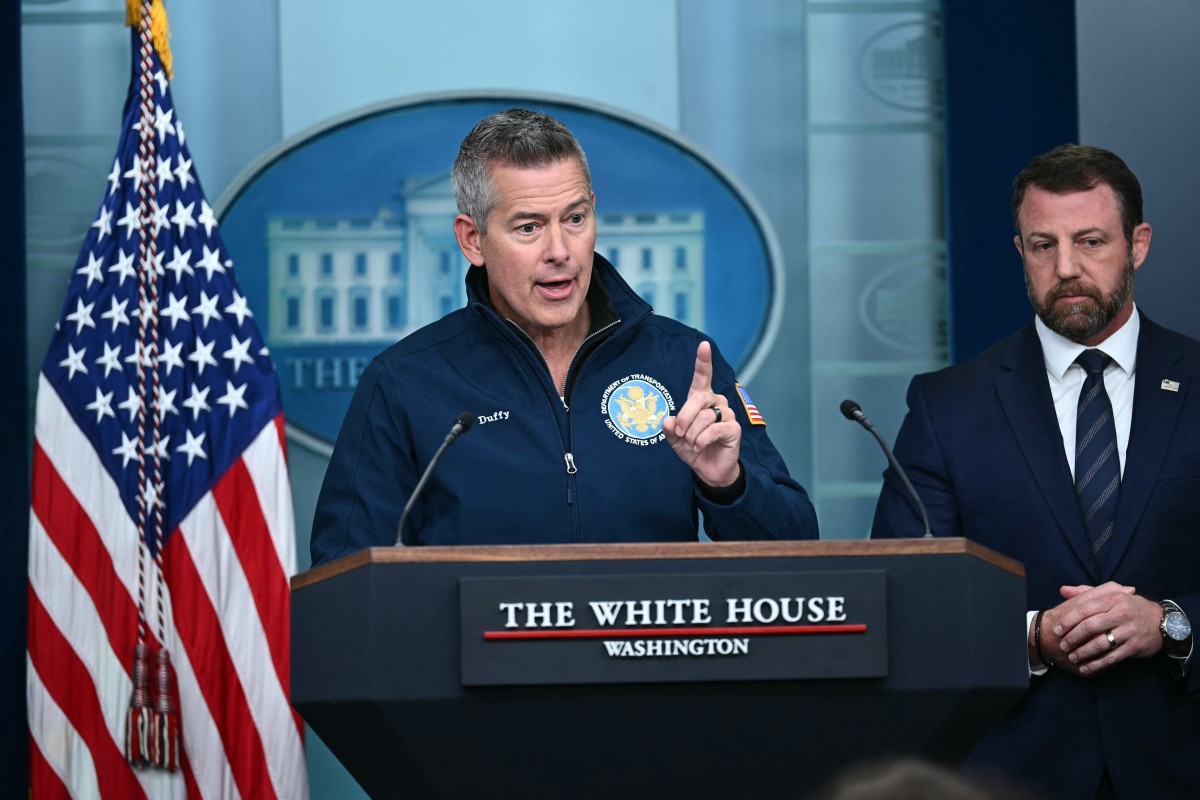
Secretary of Homeland Security Markwayne Mullin stated during a briefing at the White House that his department had found no evidence of a cyberattack.
The Federal Aviation Administration (FAA) explained that the nationwide suspension was adopted as a preventive measure.
The nationwide suspension was lifted at 8:15 p.m. E.T. on Friday after approximately four hours. However, the re-scheduling of flights and crews, along with the rebooking of thousands of passengers who needed new reservations, was still ongoing on Monday.
Some travelers even considered traveling by car. Joseph Anderson, 72, expressed his doubts about that possibility: "If the whole country is stopped, that means the highways are going to be jammed too."
Duffy asks Congress for $50 billion
Duffy called for $50 billion on Friday night to modernize and upgrade the infrastructure—an amount higher than the more than $30 billion he had requested from lawmakers earlier in the week.
"This is an emergency. I want Congress to give us emergency funding," he said during a press conference at the White House. "This is bipartisan. This is American. I want $50 billion."
Congress is the body responsible for approving federal government funding.
The last major failure in the U.S. aviation system occurred in January 2023, when all departures from the country were suspended due to a problem in the NOTAM (Notice to Air Missions) system's communications network, which is responsible for transmitting important notices for air operations.
At that time, the FAA attributed the incident to a software issue and noted that it was likely caused by a "damaged database file." The suspension of takeoffs lasted just under two hours.