Demographic paradox or successful assimilation? Why fewer Hispanics speak Spanish at home despite language's nationwide boom
As part of Hispanic Heritage Month, demographic data confirm the language's deep roots in the country. At the same time, a decline in its use within Latino households highlights the success of integration and cultural assimilation into English.
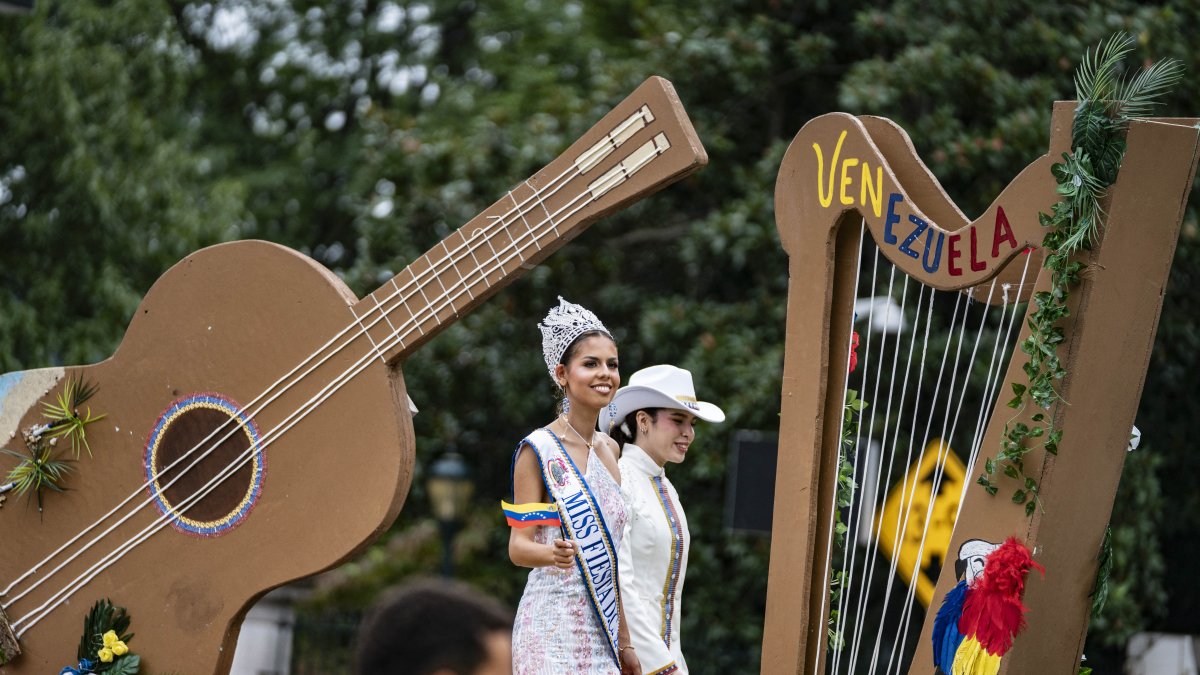
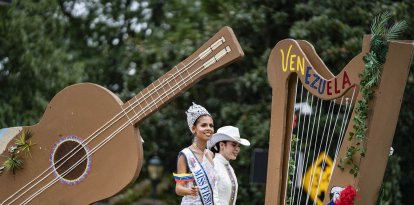
A Venezuelan float during a Hispanic Heritage Month parade in Washington, D.C.

Spanish is no longer a linguistic rarity or a strictly foreign language but has become an everyday reality within the United States. In the context of Hispanic Heritage Month celebrations, official data reflects the community's profound demographic impact, as well as its ability to integrate organically into the nation's social and economic fabric.
An undeniable statistical presence
According to recent estimates from the Census Bureau, compiled and analyzed by the data platform USAFacts, approximately 14% of the U.S. population aged 5 and older speaks Spanish. This figure amounts to tens of millions of people, establishing Spanish as the second-most-widely-spoken language nationwide.
The sustained growth of the Hispanic population has taken the language far beyond the traditional southern border states, penetrating labor, commercial and service markets across the country, where proficiency in both languages increasingly serves as a competitive advantage in the free market.
The paradox of cultural assimilation
Despite the undeniable overall expansion of Spanish on American streets and in businesses, the data reveals an internal trend that challenges certain political narratives about a lack of integration: Hispanics themselves are speaking Spanish less and less in the privacy of their homes.
Statistics show that the proportion of Latinos who communicate predominantly in Spanish at home has decreased significantly, falling from 78% in 2000 to 68% in 2024.
This phenomenon reflects a clear and successful process of natural assimilation. As families put down roots and move into the second or third generation, proficiency in English becomes a priority as an indispensable tool for education, professional success and full integration into the "American Dream."
The balance between heritage and national unity
Far from representing a barrier to the country's cohesion, the figures show that the Hispanic community is achieving a functional balance. Spanish remains alive as a tool for family heritage and business connections, but it does not replace English as the unifying language of civic life.
This linguistic dynamic demonstrates that new generations preserve their cultural contributions while adopting the primary language to thrive. The decline of Spanish in the home disproves the idea of isolated enclaves and reaffirms the validity of the American model of integration.
This year's Hispanic Heritage Month reveals a dual reality. Spanish is already an inseparable part of the country's commercial and social landscape, while the Latino community itself reaffirms its adoption of English as the key to its development and definitive belonging to the United States.

Politics
Trump pays tribute to Hispanic community as pillar of faith, family in US
Andrés Ignacio Henríquez
Politics
Neither Democrat nor Republican: Why the Hispanic voter remains the ‘swing voter’ who decides US elections
Emmanuel Alejandro Rondón

LATEST