The Department of Education is accelerating its restructuring and transferring functions to other agencies
Secretary of Education Linda McMahon stated that she is transferring responsibilities to other federal agencies as part of President Donald Trump's plan to reduce federal education bureaucracy and return more authority to the states.
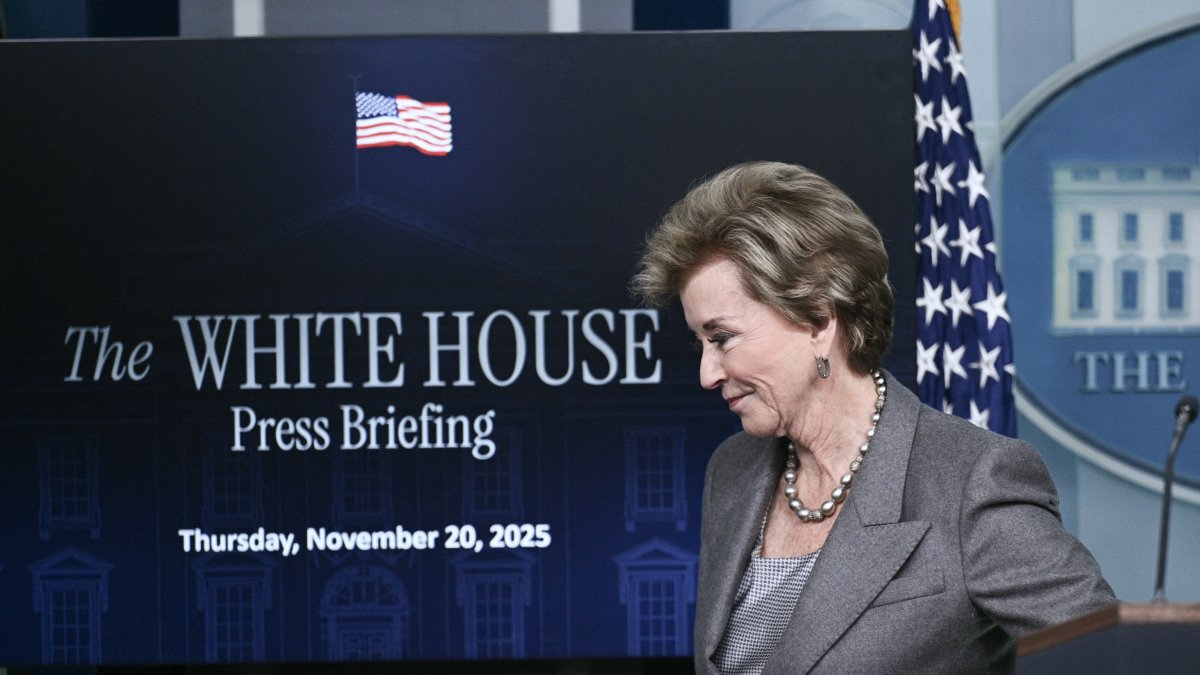
Secretary of Education Linda McMahon / Brendan SMIALOWSKI

The Trump administration continues to streamline the structure of the Department of Education by transferring programs and functions to other federal agencies, a strategy aimed at gradually reducing the agency's role in Washington.
Secretary of Education Linda McMahon explained in an interview with Just the News that she has transferred areas of responsibility to other agencies when she believes they can manage them more efficiently or are already performing similar tasks.
"I have removed areas of responsibility from the Department of Education and transferred them to other agencies where it will be more efficient to do so," McMahon told the outlet. The official maintained that some tasks were duplicated and that the reorganization would reduce costs.

Politics
Tax credits and school scholarships: How Trump’s federal program will expand school choice
Joaquín Núñez
A process initiated by Trump in 2025
On March 20, 2025, Trump signed an executive order instructing McMahon to take, "to the fullest extent appropriate and permitted by law," the necessary steps to facilitate the closure of the Department of Education and return educational authority to the states and local communities.
The order also requires that the provision of federal programs, benefits and services established by law continue effectively and without interruption.
However, the White House cannot single-handedly eliminate the Department of Education, which was created by Congress in 1979. Its formal dissolution would require legislative action. For that reason, the administration has opted in the meantime to reduce its staff and transfer the day-to-day management of numerous programs to other agencies.
From more than 4,100 employees to about 2,200
One of the first major measures came in March 2025, when the Department announced a staff reduction that affected nearly half of its workforce.
According to data published by the agency itself, there were 4,133 employees when Trump took office. After the voluntary separations and announced layoffs, the projected number stood at approximately 2,183 employees. The department maintained at the time that it would continue to administer the mandatory programs established by law, including student loans, Pell Grants and funds for students with special needs.
The reduction faced legal challenges. In July 2025, the Supreme Court temporarily allowed the administration to proceed with the cuts by suspending a lower court order that had blocked them while the litigation continued.

Work transferred to Labor, Treasury and other agencies
The process has not been limited to reducing staff.
In November 2025, the Department announced six interagency agreements with the departments of Labor, the Interior, Health and Human Services and State so that those agencies would assume greater responsibilities in the management of certain educational programs.
For example, the Department of Labor began to play a greater role in the administration of elementary, secondary and higher education programs. The agreement includes grant management, technical assistance and coordination of educational programs with federal training and employment initiatives.
The Department of Education, however, retains the legal and policymaking authority that Congress has assigned to it regarding these programs.
The administration expanded the strategy in March 2026 by announcing a partnership between the Department of Education and the Department of the Treasury to manage the federal student aid system.
Among other operational responsibilities, the Treasury assumed tasks related to the collection of delinquent federal student loans and the return of borrowers to the repayment system. The federal student loan portfolio was then around $1.7 trillion, according to the Department of Education.
In June, the Department of Education also announced new agreements with the Department of Health and Human Services and the Department of Justice, covering areas such as programs for people with disabilities, civil rights protection and student privacy.
McMahon's goal
In an interview with Just the News, she stated that the plan involves gradually eliminating the education bureaucracy concentrated in Washington through interagency agreements.
According to the Trump administration, the strategy seeks to transfer greater authority over education to states, local communities and parents, while other federal agencies administer those programs that the government is legally required to maintain.
LATEST