

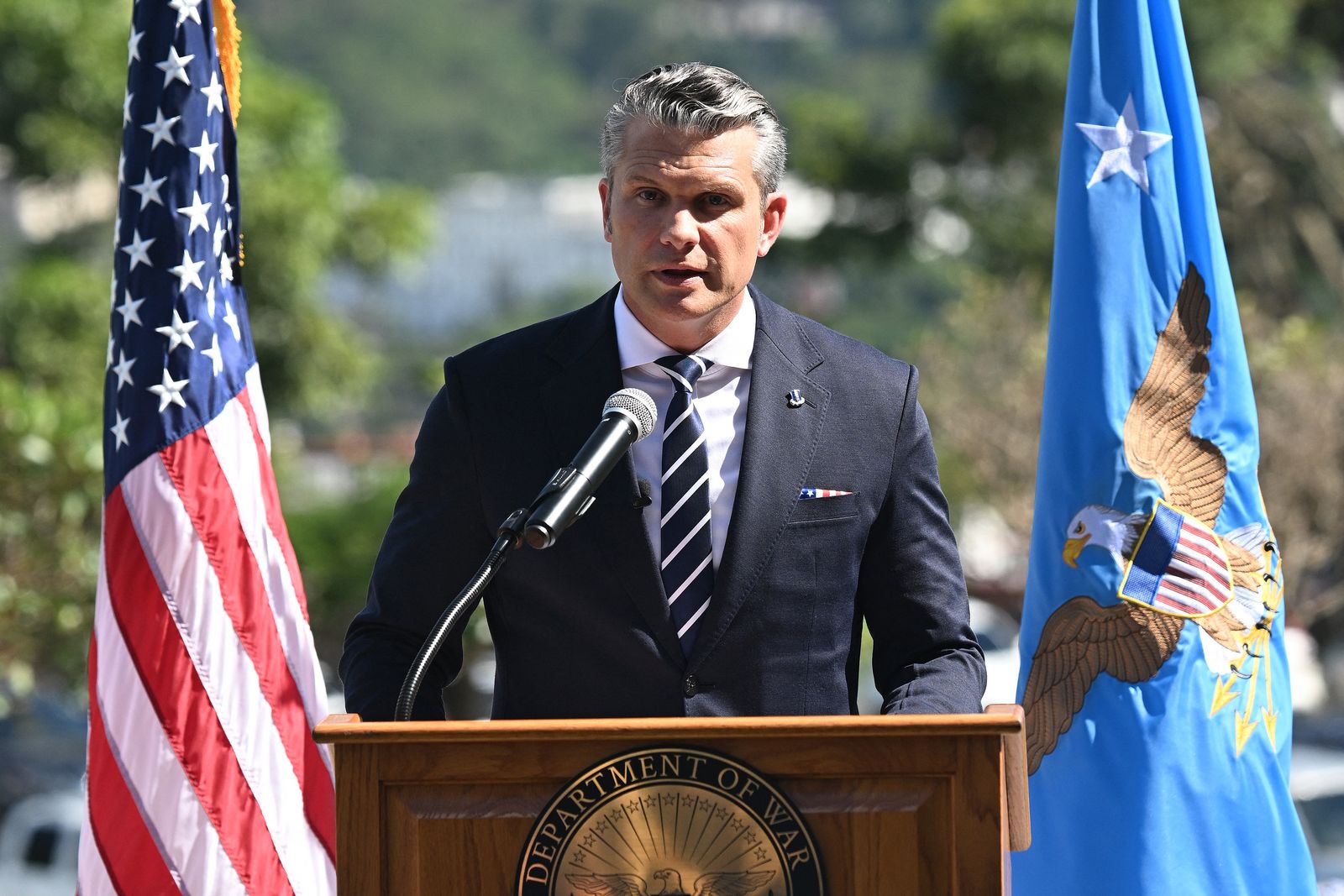
In a historic speech in Caracas, Secretary of War Pete Hegseth announced a military alliance with a decisive objective for Venezuela: reclaim territory seized by narco-terrorists and secure its borders once again. The agreement includes joint training, intelligence sharing, and additional defense equipment and capabilities. The United States is committing its military power to a task Venezuela could scarcely accomplish alone after 27 years of criminal infiltration and the presence of foreign actors hostile to America.
Control of Venezuelan territory must be wrested from narco-terrorists. That was one of the central arguments of Hegseth’s speech at Miraflores. For Venezuela, restoring territorial integrity means expelling the organizations that spent decades turning parts of the country into safe havens, trafficking corridors, and operational bases. The announced cooperation aims to give Venezuelan forces the tools to move faster and maintain control. That task would be impossible without American help.
Hegseth presented the agreement as the restoration of a historic military partnership. Venezuela has gone from being one of America’s most aggressive regional threats to becoming a security partner, the secretary said. The next step is to translate that cooperation into a force capable of stabilizing the country, securing its resources, and dismantling the remaining networks threatening Venezuelans and Americans.
Hegseth’s visit marks a new stage in Venezuela’s transition. The agreement paves the way for joint operations, with the two countries’ armed forces working together to reclaim territory that narco-terrorists turned into a sanctuary. With American backing, Venezuela has an opportunity to secure its people’s liberation and become a crucial ally in protecting the hemisphere. Dismantling those networks will help restore peace to Venezuelans and reduce threats that spread across the region and reach American soil.
The agreement commits both governments to a mission requiring difficult decisions and sustained effort. Territory occupied by criminal organizations for years must be reclaimed through operations, intelligence, and an effective military presence.
The secretary cited cooperation with the United States to eliminate “Niño Guerrero,” the leader of Tren de Aragua. According to his account, Venezuela became the first Latin American country to openly partner with Washington to eliminate a major cartel leader. That example illustrates the scope of the new relationship. Cooperation already has concrete objectives and must expand until narco-terrorists are stripped of every safe haven.
Rebuilding the military partnership is part of President Trump’s three-phase plan for Venezuela. The Department of War is working with other agencies to accelerate its implementation, modernize and professionalize Venezuelan forces, and expel hostile foreign actors. Joint training, intelligence sharing, and improved equipment will help confront organizations with the resources and connections to operate across borders.
Economic recovery also has a place in this alliance. Hegseth recalled that Americans and Venezuelans built much of the oil industry that sustained a century of development. American investment also helped build roads, railways, water systems, power grids, and aluminum and steel industries.
Security, territory, and prosperity are therefore part of the same undertaking. Venezuela must regain control over its borders, industries, and resources. The United States provides the backing to make that recovery possible. After decades in which Venezuela served as a base for regional threats, this alliance offers a path toward becoming a partner capable of defending itself and contributing to hemispheric security.
Hegseth also made clear that only the United States has the power to help Venezuela break free from the control narco-terrorists have exercised for decades.
“America is no better friend and no worse enemy. But we prefer the no better friend part,” Hegseth said. The statement captures the purpose of his visit. America is committing invaluable resources to keep enemies from controlling Venezuelan territory and acting as the best friend its partners could have. But it stands ready to strike criminals and anyone who obstructs the effort to liberate Venezuela.
The problems accumulated over 27 years will take time to resolve. Hegseth acknowledged that expecting an immediate solution would be a fantasy. But he also made clear that the announced cooperation means action. The secretary of war closed his speech with a message to the narco-terrorists who made Venezuela their sanctuary:
“Your choice is simple: either you submit and turn yourselves in or face the deadly consequences of U.S. and Venezuelan combined military might.”