

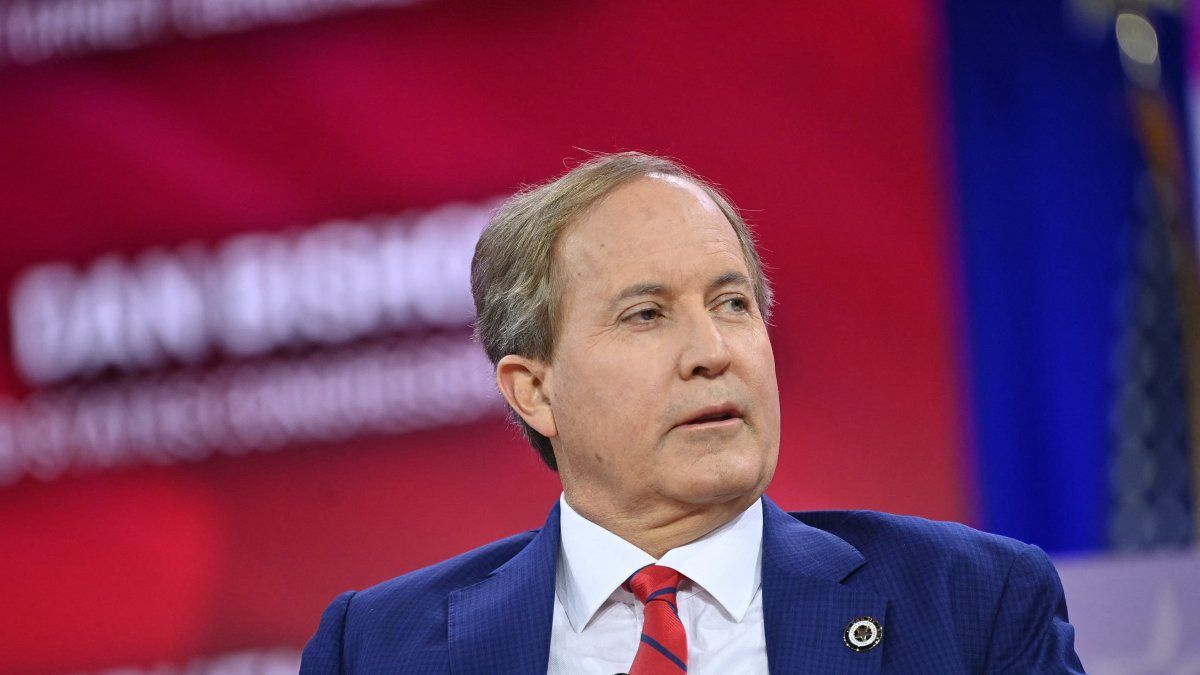
Texas Attorney General, Ken Paxton, is withdrawing some of his most high-profile lawsuits just weeks before leaving office, after losing his Senate race to Democrat James Talarico. The dropped cases include lawsuits against two Dallas doctors for providing care to transgender minors, providers of abortion pills, and the Muslim group CAIR, the Democratic platform ActBlue, the NCAA and several immigrant organizations.
The wave of dismissals began in early November and intensified during the week of the 20th of this month, when his office filed "nonsuit" notices, the equivalent of dismissing a lawsuit, in several Texas courts. Paxton, who led the state attorney general's office for nearly twelve years, will be replaced in January by Democrat Nathan Johnson.

The abandoned cases
According to The Texas Tribune, the lawsuit against Drs. May Lau and M. Brett Cooper was dismissed on Friday, Nov. 20, in Collin County. Both had been accused by Paxton of violating the state ban on gender-affirming treatments for minors, which has been in effect since 2023. Texas was the first state to take doctors to court over this type of care.
Lau, who surrendered her medical license and moved her practice to Oregon during the litigation, said she was "pleased that Attorney General Paxton has dropped a lawsuit he should never have filed."
That same Friday, Paxton's office dropped two lawsuits against out-of-state health care providers accused of shipping abortion pills to Texas. The cases had been filed in the counties of Galveston and Jefferson. It also withdrew the lawsuit against ActBlue, the main fundraising platform of the Democratic Party, in which he accused the organization of accepting foreign donations.
Days earlier, on Nov. 16, the attorney general's office had dropped its attempt to ban the Council on American-Islamic Relations (CAIR), which Paxton and Gov. Greg Abbott had labeled a "foreign terrorist organization." The lawsuit was dismissed without prejudice, leaving open the possibility of refiling it.
The list is rounded out by the NCAA, which Paxton accused of "false advertising" for calling competitions that could include transgender athletes; the voter registration organization Jolt Initiative; and the cases against the migrant shelters Annunciation House in El Paso and FIEL, in Houston.

With or without prejudice: the key difference
Not all dismissals have the same legal effect. In the Annunciation House and FIEL cases, the attorney general's office dismissed the cases with prejudice, meaning that the state permanently waives its right to pursue the same charges in the future.
In contrast, the lawsuits against the NCAA and CAIR were withdrawn without prejudice, meaning a future conservative attorney general could reopen them. That distinction suggests that Paxton left the door open in some cases, but closed others permanently.

Paxton does not justify the dismissals
Paxton's office did not respond to requests for comment regarding the reasons for the dismissals, and several of the affected groups said they did not receive an explanation either. The law does not require the attorney general to justify his dismissals.
According to the Houston Chronicle, former attorneys general from both parties described the speed and scale of the dismissals as unusual. Rob McKenna, a former Republican attorney general of Washington, said he cannot recall "another example of an attorney general doing that." James Tierney, a former Democratic attorney general from Maine, was more direct: "For the state, dismissing a series of cases is humiliating. The lawsuits have no merit, and he knows it."
McKenna offered other possible explanations, such as that Paxton might prefer to close the cases rather than allow his Democratic successor resolve them on terms favorable to the defendants, or that he does not want Johnson to take credit for dismissing them.
What Paxton leaves behind and what remains pending
Attorney General-elect Nathan Johnson described the withdrawals as "the first tangible and significant result of the election" and said that, regardless of the political motivation, he welcomes the termination of the lawsuits.
Cesar Espinosa, co-founder of FIEL, stated that the litigation "was a huge expense" for them and that "someone should be held accountable for those damages."
The question that remains is whether the next attorney general will investigate Paxton's use of his office or whether the dismissals will close the chapter without accountability. For now, the only certainty is that Paxton is leaving office with fewer lawsuits than he found.