

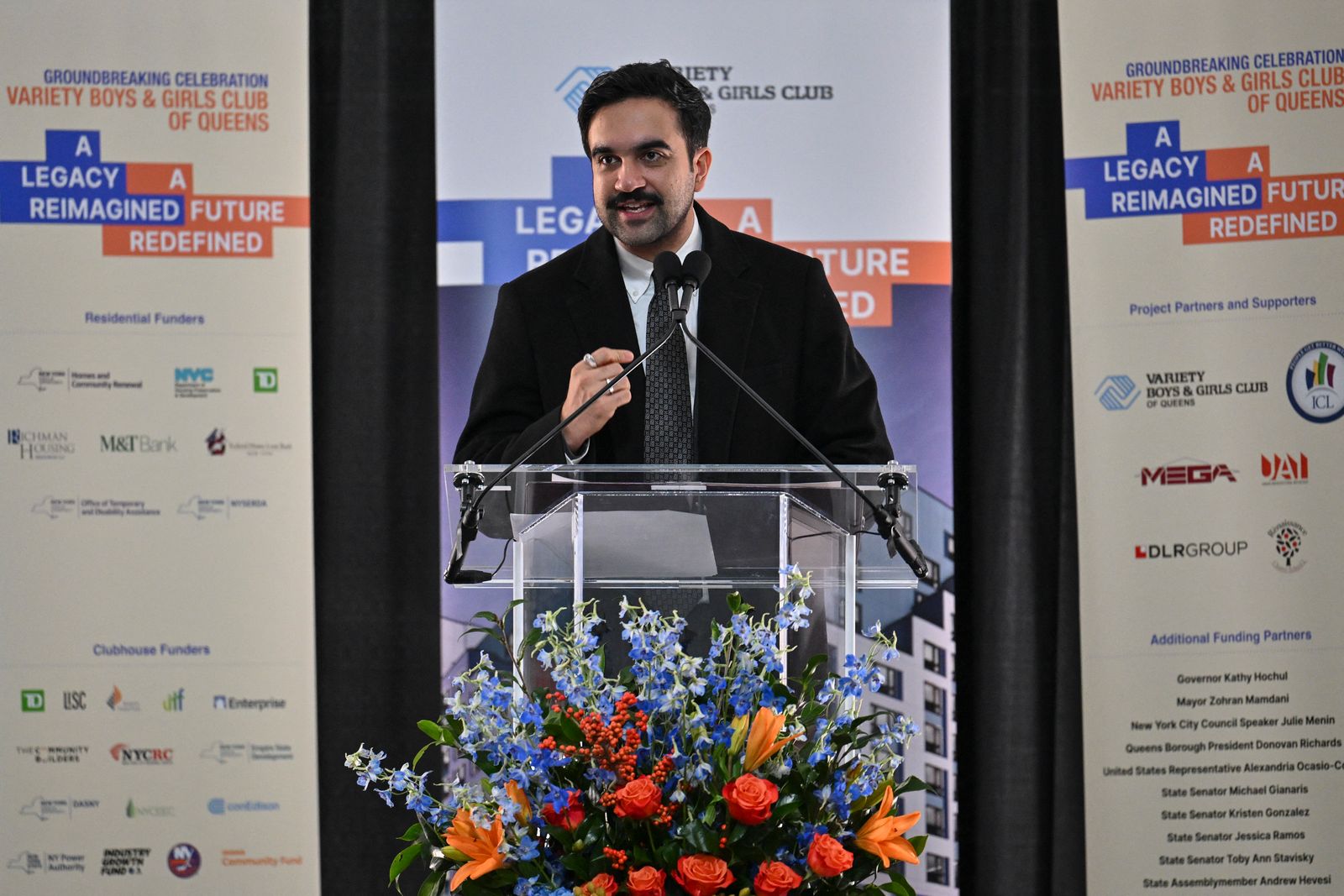
Socialist New York Mayor Zohran Mamdani presented a plan to close the Rikers Island by 2032—five years after the date originally promised by former Democratic Mayor Bill de Blasio. The administration defended the measure as a necessary reform of the criminal justice system.
JNS
Mamdani again accuses Israel of ‘genocide’ in statement about IDF detaining Brad Lander at Judea olive harvest
JNS (Jewish News Syndicate)
Delayed promise
Rikers Island, located between the Bronx and Queens, opened in 1932 and has been the subject of criticism for decades due to unsanitary conditions, violence, drug use, damaged doors and windows, and understaffing. The complex primarily houses people awaiting trial who have not yet been convicted of a crime.
Bill de Blasio pledged to close Rikers by August 2027 after signing a City Council bill in 2019 that legally established that closure date and ordered the complex to be replaced by four smaller jails in the boroughs. However, that deadline cannot be met. The four smaller jails that were supposed to replace the complex are still under construction. The Mamdani administration and several nonprofit organizations attribute the delay to the COVID-19 pandemic and the former Mayor Eric Adams' inaction.
Mamdani stated that the city has a "legal and moral obligation" to close Rikers. However, the new deadline of 2032 demonstrates that the project faces logistical, budgetary and political obstacles that no previous administration was able to resolve in time. Furthermore, Mamdani cannot unilaterally change the legal deadline. He needs the City Council to pass a new law extending the deadline from 2027 to 2032.
Fewer inmates: Most criticized risk
The plan calls for the construction of four correctional facilities, one each in Manhattan, Brooklyn, Queens and the Bronx, with the goal of bringing detainees closer to courts, attorneys and family members. The first facility, in Brooklyn, is scheduled to open in 2029.
The administration aims to reduce the prison population of approximately 6,600 people to about 4,000 by reducing pretrial detention and court delays. It also plans to transfer some individuals with serious mental health issues to hundreds of new beds in medical facilities.
The city will allocate $146 million in the next fiscal year to expand mental health care, substance use treatment, education, job training and victim services. The administration maintains that these measures will reduce recidivism and ensure that fewer people remain incarcerated for periods deemed unnecessary.
System in transition
Commissioner of Corrections Stanley Richards acknowledged that the new facilities represent only part of the challenge. The city must also foster a safer culture within the current jails, protect staff and ensure dignified conditions for those in custody.
The administration maintains that the plan does not seek to eliminate accountability, but rather to address the root causes of violence. However, critics believe the project's effectiveness will depend on concrete data: whether recidivism decreases, whether victims receive real support and whether violent crime declines in neighborhoods.
Future of Rikers
For critics, however, the priority remains clear: New York must ensure that no prison reform compromises the safety of its residents. Closing Rikers may be an administrative goal, but the true test will be whether the city succeeds in reducing crime, protecting victims and upholding criminal accountability without sacrificing public safety.