

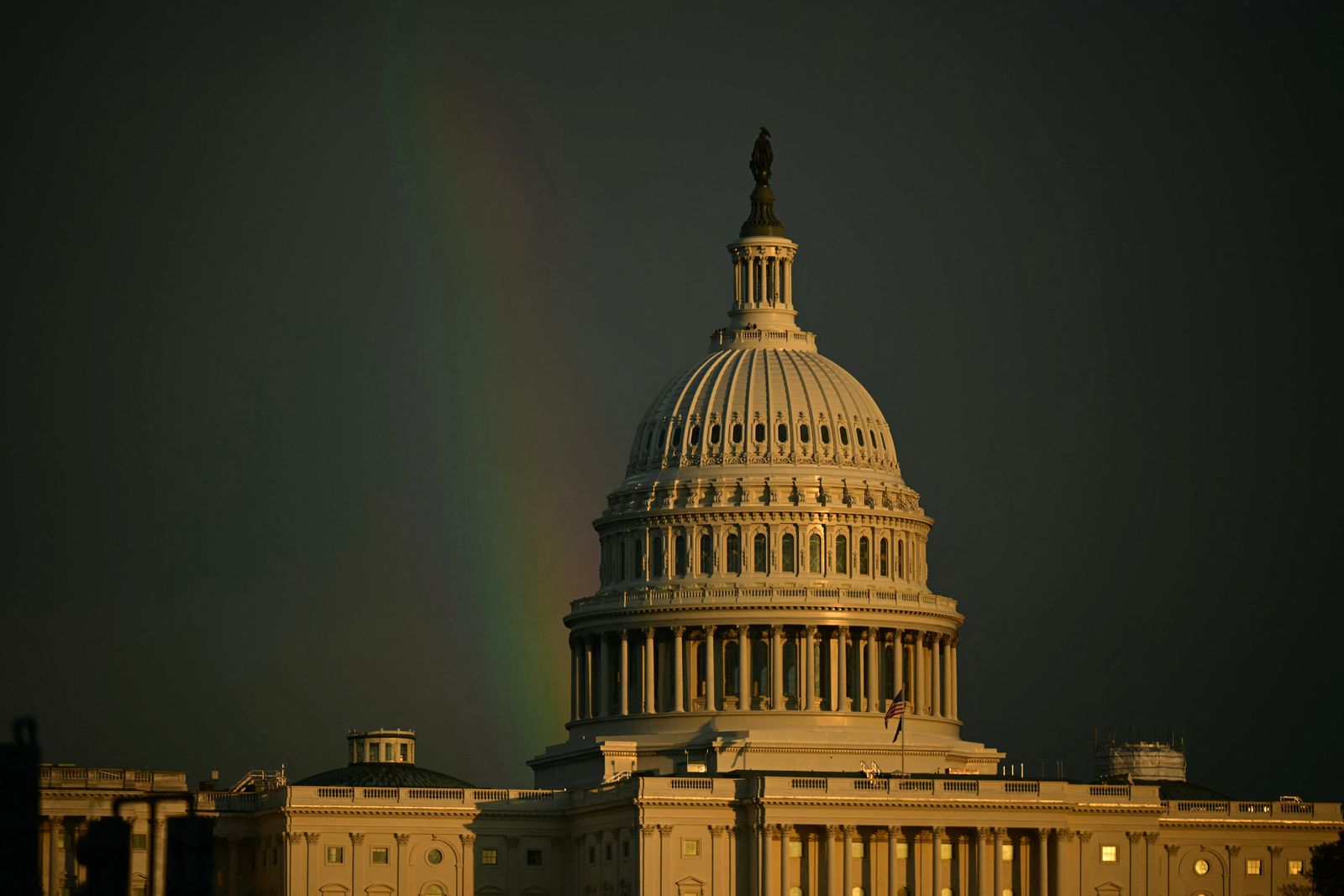
The Senate approved a sweeping reform of the federal permit system for energy and infrastructure projects—a bipartisan initiative aimed at accelerating investments, reducing administrative delays, and facilitating the construction of facilities considered essential to the country's economic development.
The bill, titled the "Bipartisan American Affordability and Jobs Act of 2026," received 62 votes in favor and 33 against, as confirmed by the Senate's official voting record.
The vote was backed by the Republican majority and 15 Democratic and independent senators. Republicans Josh Hawley of Missouri and Mike Rounds of South Dakota voted against the proposal, along with other Democratic lawmakers.
The approval represents a significant step forward for a reform negotiated for months between both parties, according to Just the News.
What would change under the new legislation?
The initiative aims to overhaul the federal system of environmental and infrastructure permits, whose procedures can delay the construction of energy projects for years.
Among its main provisions are the streamlining of environmental assessments and the reduction of barriers to obtaining federal permits, and new restrictions on certain legal challenges that can halt construction projects.
The reform would affect facilities such as power plants, transmission lines, oil pipelines, gas pipelines, mining projects and renewable energy plants.
It also introduces amendments to federal laws such as the National Environmental Policy Act (NEPA), the Clean Water Act and the Endangered Species Act, which regulate environmental assessments, the protection of water resources and the conservation of endangered species.
As explained by Roll Call, the legislation also seeks to provide greater legal stability for project developers by establishing mechanisms to address government decisions that could delay or revoke certain authorizations.

Reducing energy costs: One of the main objectives
The bill's proponents argue that accelerating infrastructure construction will increase the energy supply and help keep electricity prices in check across the country, at a time of rising demand driven, among other factors, by the expansion of data centers and artificial intelligence.
The legislation includes provisions designed to prevent consumers from bearing certain costs associated with the electrical infrastructure needed to power large data centers.
Democratic Sen. Sheldon Whitehouse, one of the lead negotiators, stated that the reform could result in savings of between $60 and $80 per month for American households—an estimate put forward by the senator, not a guaranteed saving.
Whitehouse also presented the initiative as an opportunity to facilitate the expansion of clean energy and strengthen the country's electricity capacity, as reported by Just the News.
White House supports reform
The bill was sponsored by Republican Sens. Shelley Moore Capito and Mike Lee, along with Democrats Sheldon Whitehouse and Martin Heinrich, who introduced the joint initiative on Sept. 30.
In an official statement, Capito defended the need to modernize federal authorization procedures, arguing that the current system is an obstacle to economic growth, job creation and infrastructure development.
President Donald Trump's administration has also expressed its support for the legislation, which it views as a tool to facilitate the construction of strategic facilities and strengthen domestic energy production.
Reform also faces criticism from environmental groups
Despite bipartisan support, the proposal has drawn opposition from some Democratic lawmakers and environmental organizations, which warn that the changes could reduce the ability to challenge projects with negative environmental impacts.
Among the groups that have questioned the initiative are the Sierra Club and the Natural Resources Defense Council, which are concerned about limitations on judicial review and the possibility of facilitating new fossil fuel projects.
Its supporters, on the other hand, believe the reform will allow for progress on both conventional and renewable energy projects without completely eliminating environmental oversight mechanisms.

Bill now moves to House of Representatives
Following its approval in the Senate, the legislation must now be considered by the House of Representatives, where Republican Speaker Mike Johnson has expressed optimism about its chances of passage.
If it receives the House's support, the bill would go to President Trump's desk to be signed into law.
The reform could become one of the most significant changes in recent decades to the system for authorizing energy and infrastructure projects, although its actual impact on energy prices will depend on its implementation and other economic factors.