
Only the third nationwide grounding of flights in U.S. history. System crashes at United Airlines, Microsoft and major banks. Hacks of major municipal water systems.
The last few weeks of harrowing failures have poignantly exposed that America lacks a comprehensive infrastructure protection and upgrade strategy despite trillions spent by Congress during the Obama-Biden years.
And now the man who currently holds the budget purse strings inside the U.S. Senate is proposing a radical idea: privatizing major chunks of federal government responsibilities after decades of futility, starting with a creaky old air traffic control system and investment of Social Security funds in private markets.
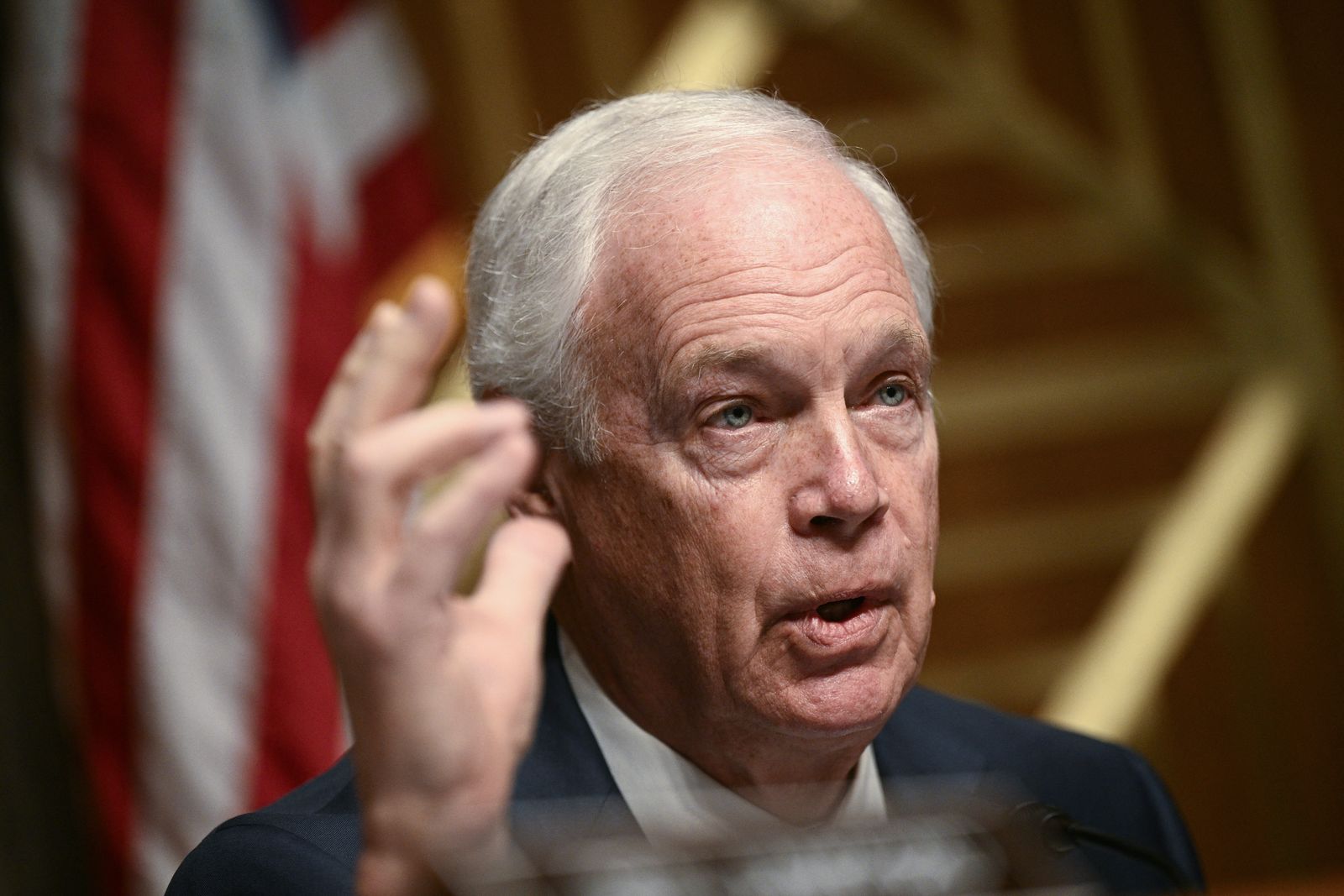
“You have to literally probably privatize or quasi-privatize the air traffic control system, allow those operators to charge fees to the airlines, and then they're going to have every incentive to upgrade their systems and keep them as modern as possible,” Senate Budget Committee Chairman Ron Johnson told Just the News on Monday evening. “What business doesn't continue to operate and update its systems?
“The only incentive in government is to spend more money, get a bigger budget, and then they get it and they waste it. So again, nobody should be surprised at the failure of these organizations of government not being able to do things cost-effectively, or even quite honestly, being able to do things at all,” Johnson added.
The Wisconsin Republican, who will turn over his committee gavel to Democrats on Jan. 3, said he would use his remaining days to push privatization and a major culture change.
“The free market guarantees the best three things: the best possible price, highest level customer service, and highest level of quality. That's what our free enterprise, free competitive market system does. When you don't have it, that all collapses,” Johnson explained in a wide-ranging interview on the Just the News, No Noise television show.
He said the fact that America’s air traffic control system still operates on 1960s-era technology was case No. 1 to make his point.
“They have been trying to upgrade FAA, the air traffic control system, for literally decades. Congress has thrown billions and billions and billions of dollars at it, and they still can't get it right,” he said. “Other countries have recognized this. Canada is light years ahead of us in terms of, you know, working on modernizing an air traffic control system because they separated it out.”
Johnson said regulatory agencies such as the Food and Drug Administration and Centers for Disease Control and Prevention could also privatize some of their work.
He suggested it’s time also to consider allowing the Social Security administration to invest some of its funds in markets to help close budget shortfalls that threaten to make the retirement program insolvent in less than seven years.
“We have to be honest about how Social Security works," Johnson said. "I know people hate hearing this: It's a legal Ponzi scheme. You know the name of it is Old Age Survivor Disability Insurance. It was never set up to be a retirement fund. It was set up as an insurance system."
“All those dollars that went into the Social Security system, they were spent. That money's gone. In its place is an accounting entry, special issue Treasury bills, sitting in four-drawer files in Parkersburg, West Virginia. It has no value to the federal government. None, zero, zip. And so people say, ‘Well, that's my money.’ No, it's not. Your money was immediately spent either on benefits for Social Security recipients or on other government spending, and in its place is just a worthless piece of paper.”
Johnson plans to reveal new details at a committee hearing Wednesday on what privately invested excess Social Security funds could have achieved since the last major revisions of the program in the 1980s.

“One of the calculations that's going to be in our report that I had the Budget Committee perform is if Ronald Reagan and Tip O'Neill ... ended the deception and actually started investing just the surpluses, just the excess of the payroll tax being brought in less the benefits being paid that year. Just take those surpluses. Starting in 1986, we would literally have $14.5 trillion of hard assets of stocks in an ETF fund. That’s $14.5 trillion, but they weren't honest. They continued the fiction.”
The sudden rash of outages and technology failures that Johnson addressed pose more than inconvenience and economic consequences; they also alert America’s enemies to weaknesses that can be exploited in the future, national security experts told Just the News.
“Consider this: that a lot of the folks who work with these (air traffic control) systems now are younger than the technology that is currently being operated,” former CIA operations officer Rick de la Torre said. "They work with floppy disks. You know, most of the people I know that work with me, they've never even seen a floppy disk.
“So, yeah, we're dealing with obviously very antiquated systems that weren't meant for the 21st century,” he continued. “And unless we start making those hard investments in securing these parts of our critical infrastructure, transportation, for example, being one of them, we're just opening ourselves up for more and more of these kinds of episodes.”
De la Torre pointedly warned that such infrastructure weaknesses ultimately affect the ability of industry and the government to fend off an attack from a foreign power.
“We have great defenses, but they're only as good as the last attack,” he said. “And unless we continue to make the investments that we need to in securing our systems, there are always going to be bad players out there that are going to go after them.”
Retired Navy Capt. Brent D. Sadler, a Heritage Foundation national security expert, told Just the News that the Biden administration missed a golden opportunity to upgrade America’s infrastructure with a strategic lens on closing down vulnerabilities but instead focused on targeting its trillions of infrastructure investment on woke ideology, leaving President Donald Trump a mess to dig out of.
“The trillions of dollars the Biden administration spent on trying to combat racist highways and getting the terminology, you know, cockpit out of the air… . I mean, clearly they had the priorities all wrong, and they were not fixing things,” he told the John Solomon Reports podcast. “They were trying to fix words, and quite frankly, people's lives were at risk by their irresponsibility.”
Originally published by the original outlet. Author: John Solomon. Read the original.