

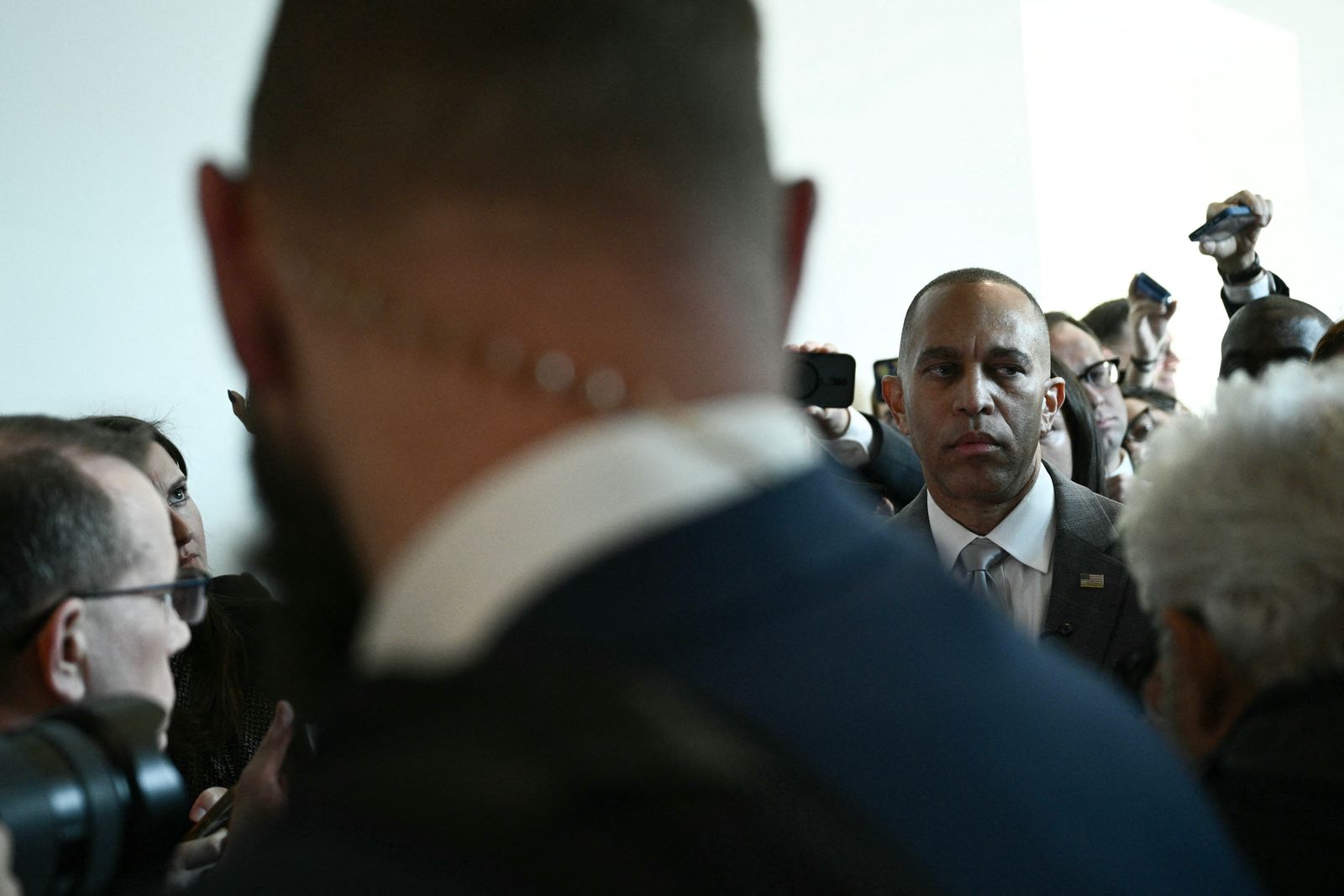
House Minority Leader Hakeem Jeffries secured his party's nomination on Wednesday to serve as speaker of the House starting next January, after winning an internal vote in which a small group of radical Democrats refused to back him. Jeffries now needs the approval of a majority of the House's 435 members in the formal vote on Jan. 3, the first act of the new Congress.
The internal election made it clear that Jeffries will have control of a large Democratic majority following the midterms. As reported by CNN, only 11 Democrats voted against his nomination in the secret ballot—a sign that his candidacy has solid support within the party, despite tensions with the more left-wing faction.
Jeffries, 56, will lead a Democratic-controlled House and face off against President Donald Trump during his final two years in office. His party has promised to reverse the administration's policies and launch investigations into various aspects of the president's tenure and his family circle.

Pressure from the radical left
A group of seven radical new members of Congress stated that they voted against Jeffries because he still seeks concrete compromises on priorities such as Medicare for All and an end to what they call "the genocide in Gaza." Among the signatories are Darializa Avila Chevalier of New York, Adam Hamawy of New Jersey, Frederick Haynes of Texas, Melat Kiros of Colorado, Donavan McKinney of Michigan, Chris Rabb of Pennsylvania and Claire Valdez of New York.
The group had threatened to withdraw its support for Jeffries before the vote, although it did not put forward an alternative candidate.
The preliminary meeting between Jeffries and left-wing lawmakers revealed the party's internal tensions. Rep. Alexandria Ocasio-Cortez backed Jeffries and described the conversation as "productive," though she avoided clarifying whether universal health care should include undocumented immigrants.

Jeffries leans to the left
Jeffries announced on Friday that he supports key elements of a universal healthcare system, including lowering the eligibility age for Medicare, the creation of a program guaranteeing universal coverage for children, and the inclusion of dental, vision and hearing coverage in the program.
This shift represents a significant concession to the demands of the most radical wing, which has pushed for a Medicare for All-style system. Centrist Democrats, on the other hand, had advocated for a public option similar to Medicare, not a full expansion of the program.
Jeffries also announced that Democrats will seek to reverse the Medicaid cuts pushed by the Trump administration, extend the tax credits under the Affordable Care Act, expand the child tax credit and codify the right to abortion.
Anti-Trump agenda
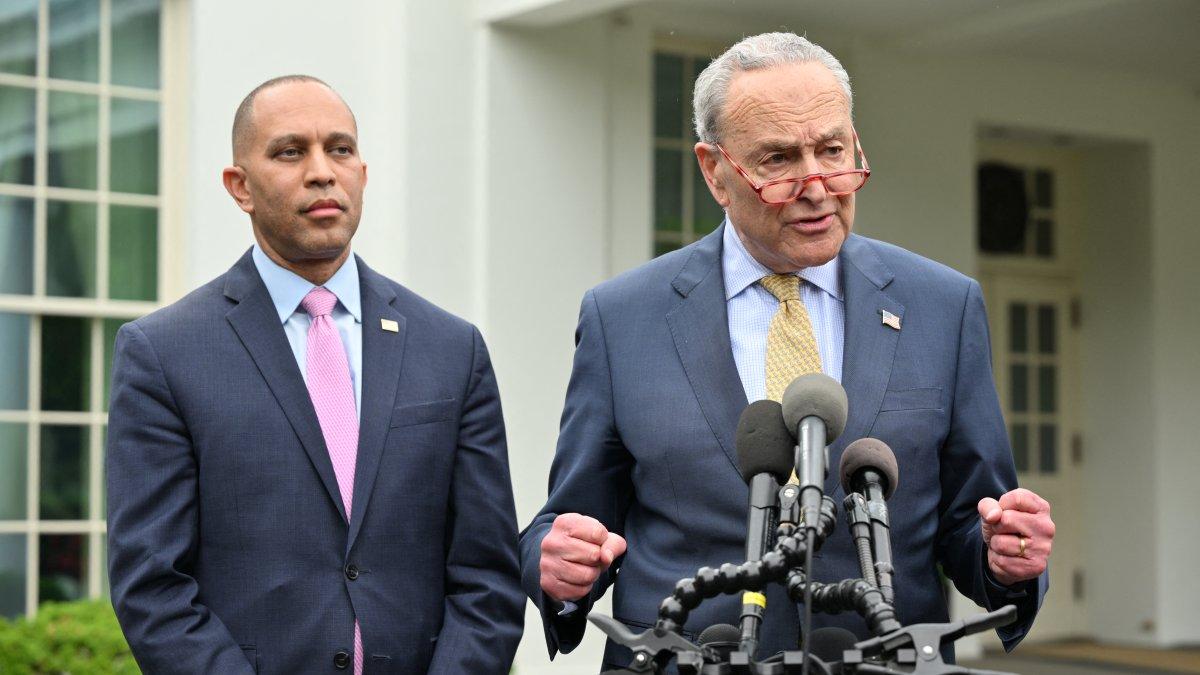
The future speaker of the House has promised that his caucus will focus on the economy and the cost of living. "Folks are drowning in this Republican economy, and House Democrats are committed to turning that situation around beginning on day one," Jeffries told reporters on Tuesday. "We're going to fight hard to make life more affordable for the American people," he added.
But the temptation to launch investigations against Trump is evident. Rep. Robert García (D-Calif.), who will hold a key position in the new majority, threatened to launch several committees and announced that he had sent letters to a dozen people in the president's inner circle, including Trump's children.
For Republicans, the risk is that a Democratic-controlled House will turn the next two years into a campaign of investigations and legislative obstruction against the Trump administration, rather than prioritizing an agenda of growth, border security and spending cuts.
Politics
Jeffries meets with Kushner, faces criticism and vows to take on 'Trump cartel'
Joaquín Núñez
Dispute in the Senate
A contest has emerged for the position of senate majority leader between the veteran New York politician Chuck Schumer and the progressive Chris Van Hollen of Maryland. Van Hollen announced that he will not run for president in 2028 but will compete for the Senate leadership.
The Senate's internal vote is scheduled for Dec. 1. Several Democratic senators and most of the newly elected members have declined to publicly endorse Schumer, although he needs only the support of a majority of his caucus to retain the position.