







250 years after independence, three Supreme Court justices warn that freedom is not guaranteed
The three judges agreed that the rights enshrined in the Constitution and the Declaration of Independence are not guaranteed.
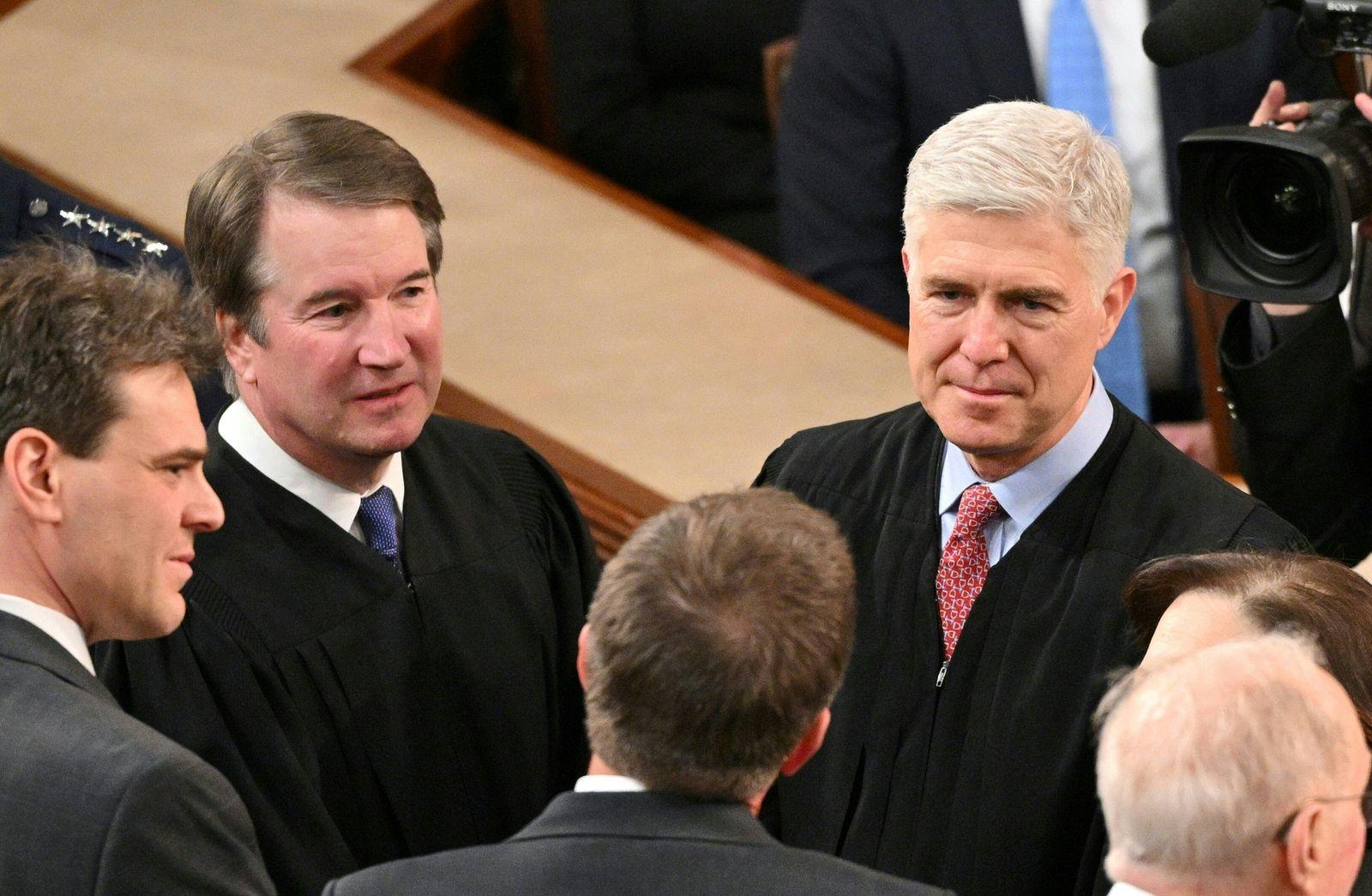

A little more than a week after the midterm elections, three justices of the Supreme Court issued a warning about the future of the United States. In a series of interviews recorded by the Federalist Society and accessed exclusively by Fox News Digital, Neil Gorsuch, Brett Kavanaugh and Amy Coney Barrett argued that preserving the country's freedoms depends on Americans knowing their history and being politically active.
Gorsuch, Kavanaugh and Coney Barrett—all nominated and confirmed during the first Trump administration—recorded their videos on the eve of the Federalist Society's National Lawyers Convention, which is being held this week under the theme "250 Years of American Exceptionalism."
Although their arguments differed, the three justices offered a similar assessment: the rights enshrined in the Constitution and in the Declaration of Independence are not guaranteed, and their survival depends on each generation knowing and defending them.
As for Gorsuch, whom Donald Trump nominated in 2017 to replace Antonin Scalia, he stated that Americans sometimes take certain rights and freedoms for granted that were not common until just a few generations ago.
"They are, for us, a little bit like the air we breathe and the water a fish might swim in. They seem natural to us, but they weren’t in 1776. The ideas in the Declaration of Independence that all of us are created equal, that every one of us has God-given rights — they don’t come from government, they come from God," the judge said.
"The reason why our Constitution and Declaration have survived is because people choose it anew in every generation. You need to know its history. You need to know what you’re preserving. Daniel Webster said it took 6,000 years for us to generate a system of government like this. Don’t expect that to happen easily or again," he added.
Kavanaugh echoed Gorsuch's point about the importance of learning history in order to better defend American values: "Teaching American history, teaching the values of this country, the history of this country, why this country exists, how this country has been preserved, how this country has been improved over time, for example, by our constitutional amendment process and otherwise."
For her part, Justice Coney Barrett drew on the wording of the Declaration of Independence to call for active commitment from citizens: "We’re not passive observers in the American project. We’re participants in it. It is our project."
"I might suggest that people look at the last line of the Declaration of Independence. It ends with a mutual pledge in which the signatories to the document mutually pledge their lives, their fortunes and their sacred honor to the success of the American project. And they made good on that promise. Some lost their fortune, lost their property to loyalists," she stated.
🛠 Do you think there is an error in this article?
Recommendations




LATEST


