

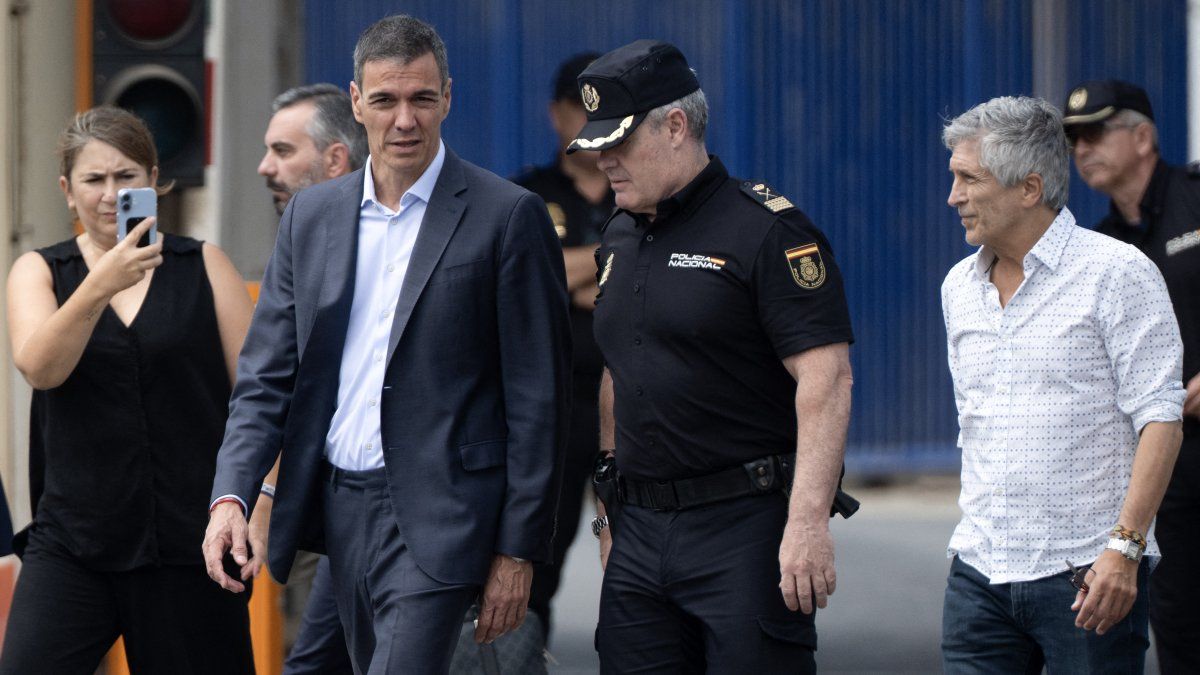
Polling stations across Spain opened their doors for what could be Pedro Sánchez's last election while in office. However, despite the favorable predictions from most polls for the right-wing bloc, the mobilization of the left in the last week and fears of election fraud are keeping the pressure on his continued tenure at the Moncloa Palace of a leader known for his ability to survive.
The leader himself has heightened the uncertainty with his recent appearances, adopting a cocky tone and by challenging his rivals to accept the result at the polls, just as he himself had pledged to do. In the last election, the polls also predicted the downfall of the leader of the Spanish Socialist Workers' Party (PSOE), yet he managed to remain in power thanks to a "Frankenstein" coalition with the radical left and separatist parties.
A campaign marked by provocation and emotional appeals
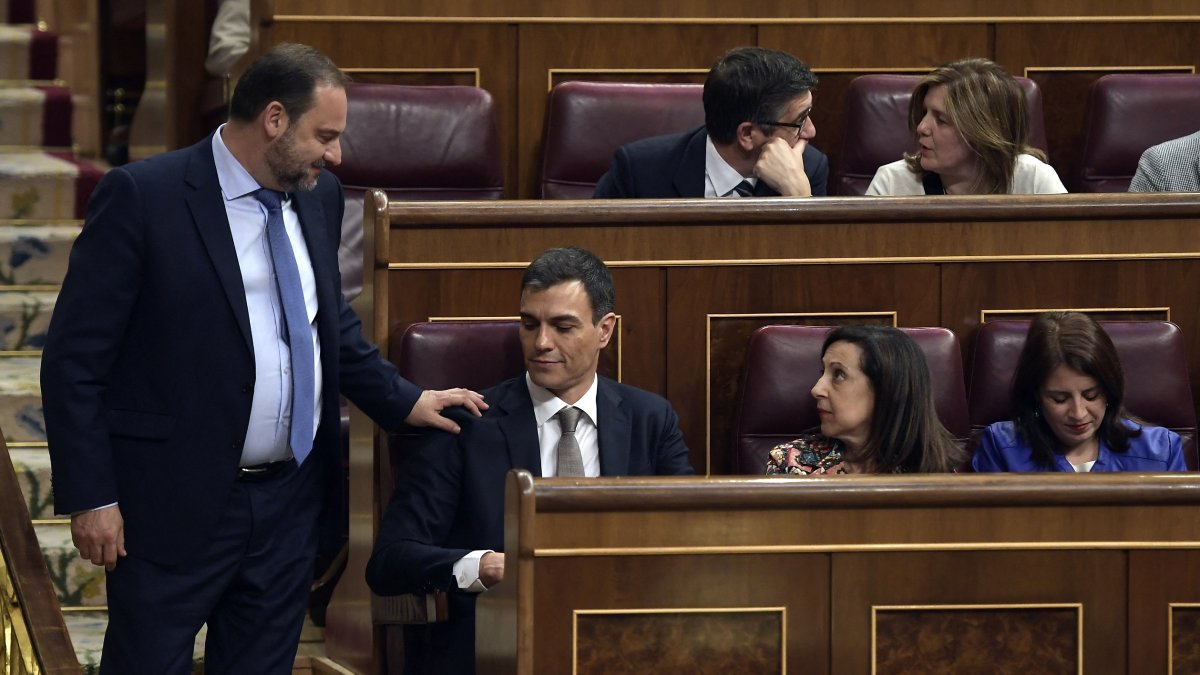
Sanchez's campaign has been marked by provocation, giving a prominent role to his wife, Begoña Gómez, who is under investigation by the courts, and by portraying himself as a victim of conspiracies in the face of the legal scandals surrounding his inner circle. In addition to his wife, his brother David and several of his associates have been convicted by the courts of various crimes, and the PSOE has even been declared a "criminal organization."
His strategy has been based on emotion, with dancing at every party rally, even going so far as to do so at a train station after the Urda accident that claimed the lives of at least 69 people, and kissing his wife to conclude under the slogan "the power of love."
Housing, checks to help young people participate in sports
In addition, they used the approval of the Mari Carmen housing decree in the Permanent Deputation to push through reforms that would harm homeowners in a region of Spain where the housing market is already under significant strain. This is the same decree whose rejection in Parliament triggered the call for elections.
Furthermore, Sánchez has promised 200 euros a year to young people "to play sports" and has used his final days in office to extend bereavement leave and maternity/paternity leave for parents in Spain.
The right, torn between confidence and fear of "electoral fraud"
Opposing him is the right-wing bloc, made up of the Popular Party led by Alberto Núñez Feijoo and VOX, led by Santiago Abascal. The two parties remain confident that they will win between 182 and 195 seats, just as the polls predicted a week ago, the point at which Spanish law prohibits the publication of new polls, though with fears of another dirty trick by Sánchez.
One of the main concerns is the overseas vote and the mail-in vote. The naturalizations under the so-called Grandchildren's Law allow tens of thousands of people to vote in these elections, and permits have been granted without verifying that the requirements established by the law itself have been met.
The courts have blocked more than 190,000 people from voting, but at the same time has allowed more than 160,000 children of those disqualified voters to cast their ballots, given the impossibility of verifying the petitions in time.
More than one million mail-in votes
As for the mail-in vote, the Spanish public company that manages it announced that it has accepted 1,012,033 votes to be cast in the corresponding district. According to the company, 92.03% of the requests were accepted. This figure represents a drop of nearly 60% compared to the 2023 elections, when the fact that they took place during the middle of summer vacation sparked a surge in its use.
Compared to elections under normal circumstances, there has been an increase of nearly 10% (8.86%) compared to those of Nov. 10, 2019. It is worth noting that, for example, in Castile and León 67,000 mail-in ballots were accepted, a figure that exceeds the population of major cities in the autonomous community, such as Zamora, Ávila, Segovia and Soria.