

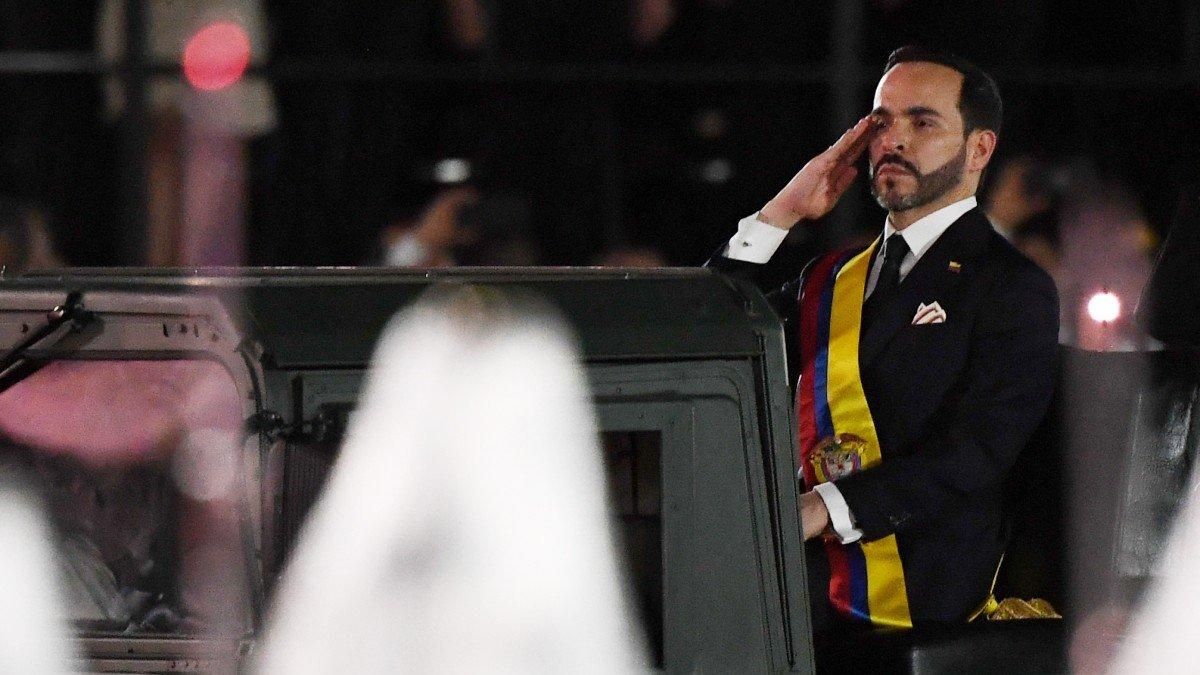
In Colombia, you cannot criticize "woke" culture. This is implied by the order from the country's Council of State, which instructs President Abelardo de la Espriella to retract his criticisms against it, as well as to refrain from making future statements that disparage, discriminate against, stigmatize, or portray it as a threat to the country.
This is the High Court's response to an appeal filed by the former deputy minister of the government of Gustavo Petro, Hector Rondón, against the president over a public event held on Oct. 15, during which De la Espriella described this political movement as "one of the great cancers threatening national unity" and issued several warnings about its dangers.
The Colombian left has long criticized De la Espriella for his frequent references to Christ, his statements against abortion and they accuse him of going too far with his heavy-handed policies, such as walking among corpses after ordering bombings against armed groups (something the courts have also ruled against).
A public retraction of the same scope as his speech
According to the ruling, the president must issue a public retraction with a coverage equivalent to that of his comments from last month. Furthermore, it orders him to remove from his personal and institutional social media accounts the video of his October speech from his personal and institutional social media accounts, all within five days of receiving the court's notification.
For the time being, De la Espriella has neither responded to nor complied with the court order.
Statements that crossed the boundaries of free speech
The court ruled that De la Espriella's statements exceeded the limits of free speech by discrediting ideologies and fostering an environment contrary to the pluralism enshrined in the Constitution.
In this regard, the ruling states that public officials, such as the president, "face stricter restrictions regarding their freedom of expression in the exercise of their duties."
In late October, the courts ordered De la Espriella's government to return a series of artworks addressing sexual diversity, feminism and the peace process, which had been removed from one of Colombia's most important museums.