

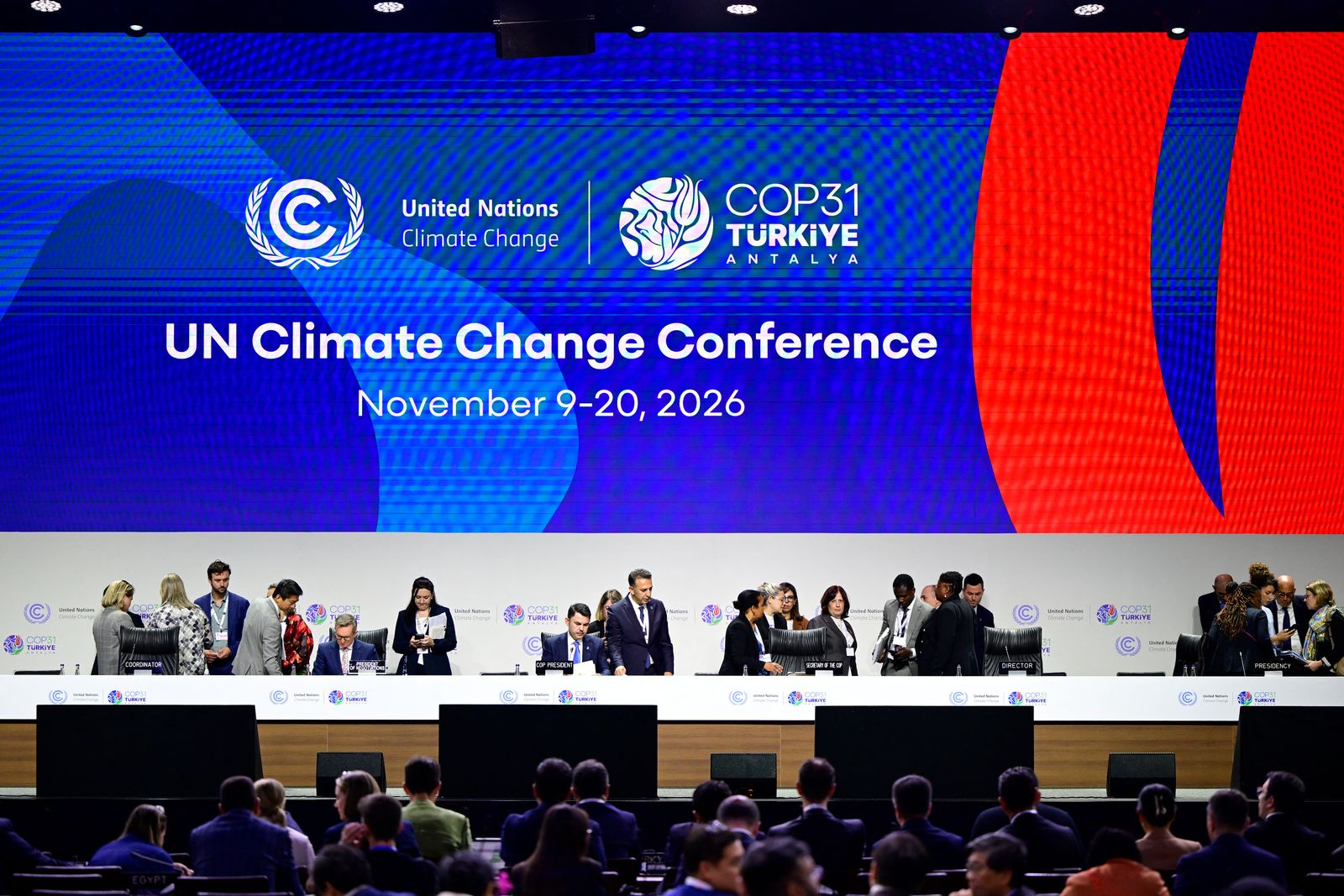
COP31, the latest in a series of climate conferences organized by the United Nations (U.N.), ended in resounding failure after the agreement negotiated among all participants collapsed in the face of opposition from several countries.
Among the nations that firmly rejected the proposed pact at COP31—held in the city of Antalya, Turkey—were all the member states of the European Union (E.U.), the United Kingdom and Panama.
In contrast, India, China, Saudi Arabia, Japan and Venezuela did welcome the agreement, according to AFP.
"Unfortunately, we were unable to reach an agreement on a decision to phase out ... And that is disappointing. Very disappointing," said Chris Bowen, Australia's minister for climate and energy, who led the negotiations.
No mention of phasing out fossil fuels
The reason cited by critics was the absence of even a single mention of phasing out fossil fuels in the text negotiated during COP31.

"We will not approve a decision ... that does not even mention fossil fuels, the main driver of climate change," said Irish Climate Minister Darragh O'Brien, whose country currently holds the rotating presidency of the E.U.
"Panama cannot support this decision," said a delegate from the Latin American country.
After nearly two days of extensions, which made this COP the longest in history, the president and Turkish Minister of the Environment Murat Kurum (host of the event), threw in the towel.
"We did the best we could. This text was not imposed on anyone. I understand there is no agreement on this text. For that reason, these decisions have not been adopted," Kurum stated.
U.N.: "Deeply disappointed"
U.N. Secretary-General António Guterres said he was "deeply disappointed" that an agreement—which, in his view, would have been "satisfactory" for the planet—could not be reached.
"Fossil fuels are driving the climate crisis," Guterres said, while criticizing the outcome of COP31, stating that "those who profit from the destruction of our planet must never dictate the terms of the fight to save it."