

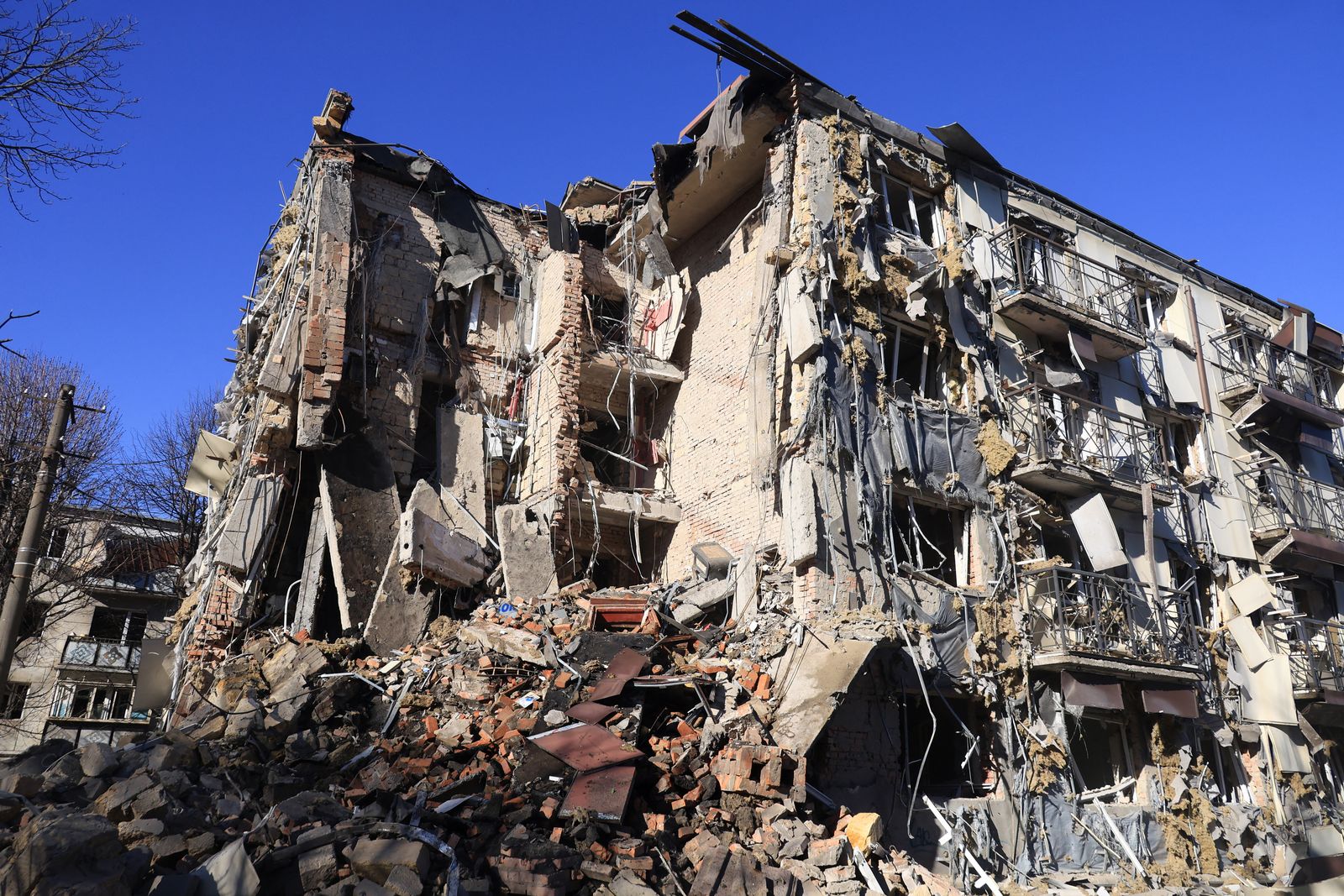
Early Monday morning, Ukrainian forces carried out the largest drone offensive since the start of the war, striking the strategic Crimean Bridge and causing fires at Russian industrial facilities. According to the Russian Ministry of Defense, air defense systems intercepted 1,336 aircraft in 16 regions, surpassing the previous record set in late October.
Sergei Aksyonov, the Moscow-appointed governor of Crimea, confirmed damage to the Kerch Strait Bridge — a key logistics artery connecting the peninsula, which was annexed in 2014, with Russian territory — forcing vehicular traffic to be temporarily suspended to carry out repairs.
At the same time, Moscow Mayor Sergei Sobyanin reported the launch of some 600 drones toward the capital, while the regions of Rostov and Krasnodar suffered fires at industrial plants and refineries that left nine people injured.
"The scale and effectiveness of these drone attacks are remarkable," he told Fox News Digital retired Air Force Lieutenant General Richard Newton. The military analyst noted that Ukraine has developed the capability to strike targets deep inside Russia, warning that "there is simply no way to 100% defend every refinery, airfield and military installation" due to the vastness of Russian territory.
Covert European deployments and signs of a retreat in Moscow
The aerial escalation coincided with two high-impact political revelations. On the one hand, Radio France Internationale (RFI) reported that French military personnel have been operating inside Ukraine since the summer of 2026 as part of a confidential mission called "Volia," dedicated to training personnel and maintaining equipment without prior authorization from the French Parliament.
A source familiar with the deployment confirmed to AFP the rotation of instructors on Ukrainian soil, ruling out direct combat operations.
Meanwhile, the Russian newspaper Vedomosti reported that senior Kremlin officials, led by Sergei Kiriyenko, instructed lawmakers from the ruling United Russia party to prepare for a "victory" and the eventual simultaneous return of soldiers from the front.
Although the report does not specify a timeline or confirm a withdrawal order, the directive reflects internal shifts within Moscow's leadership after nearly five years of a war of attrition.
The diplomatic landscape leading up to the summit in Shenzhen
All these tactical and political moves are taking place just days before the anticipated meeting in Shenzhen, China, between U.S. President Donald Trump, Vladimir Putin and Xi Jinping, scheduled for this Thursday, Nov. 19.
The meeting continues the Washington-mediated talks last week in Abu Dhabi, where a broad prisoner exchange took place but territorial differences persisted.
While Ukrainian President Volodymyr Zelensky claimed that the attacks have reduced Russian refining capacity by more than half — a figure that industry sources cited by Reuters put at around 30% — Kiev seeks to consolidate a position of strength ahead of the White House-led negotiations.
Ahead of the trilateral summit in China, General Newton advised President Trump to maintain a firm stance toward Putin and Xi, emphasizing that the United States will not back down from its support for the defense of Ukrainian sovereignty.