

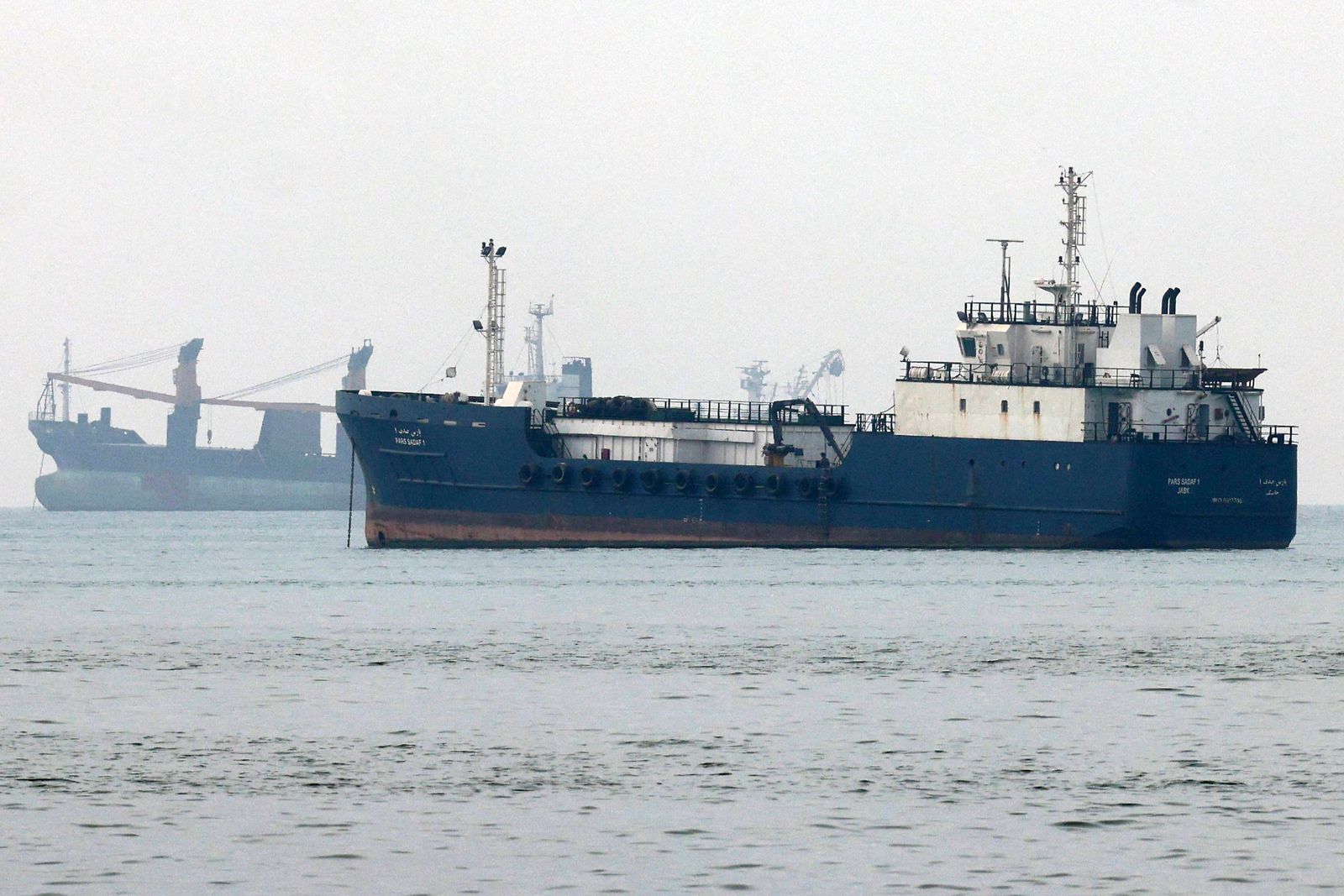
Iranian Foreign Minister Abbas Araghchi said Monday that 10 countries in the region supported Tehran's proposal to reopen the Strait of Hormuz within 48 hours, as part of efforts to reach an agreement to end the war with the United States.
"The meeting responded positively and, by supporting the plan proposed by Iran, specifically the two-day plan, expressed hope that this plan would lead to a definitive and comprehensive ceasefire," Araghchi told reporters in Islamabad.
The Iranian foreign minister arrived in Pakistan on Sunday night to participate in a meeting of the Economic Cooperation Organization, a bloc comprising countries from Central Asia, South Asia and the Middle East.
The meeting in the Pakistani capital was attended by senior officials from Pakistan, Turkey, Azerbaijan, Kazakhstan, Iran, Kyrgyzstan, Tajikistan, Turkmenistan and Uzbekistan. Afghanistan, which is also a member of the organization, was not represented.
Tehran had previously set a one-week deadline to reopen the strait, but now maintains that it can do so in two days if Washington accepts its conditions.
Iran's demands include the release of assets frozen abroad, the lifting of sanctions and an end to the U.S. naval blockade of Iranian ports.

New incidents in the Strait of Hormuz
While diplomatic efforts continue, tensions in the Strait of Hormuz remain high. An oil tanker caught fire on Monday after being struck by a projectile as it was leaving the strait, near the coast of Oman, according to two maritime monitoring agencies.
British agency UK Marine Trade Operations reported that an "unknown projectile" struck the vessel and caused a fire in the engine room. For its part, the maritime security agency Vanguard identified the ship as the ON PHOENIX, flying the Panamanian flag, and noted that it was struck three nautical miles off the coast of Oman.
Both parties confirmed that all crew members were safe.
At this time, it is unclear whether the ON PHOENIX is one of the vessels referred to by Iranian authorities in their statements regarding naval mine attacks.
Previously, Iranian military forces reported that three oil tankers had struck mines while attempting to cross the strait.
"A few hours ago, two oil tankers struck a naval mine while attempting to use the illegal southern maritime route," the Revolutionary Guard said in a statement.
The organization also stated that "several very powerful explosions lit up the sky over the Strait of Hormuz for hours" and confirmed that six oil tankers had caught fire and sunk in the strait since Sunday.
Separately, the Iranian Army reported that a third oil tanker caught fire on Monday and was "immobilized after striking a naval mine in the restricted zone east of the Strait of Hormuz."
Iran maintains several restrictions on maritime traffic in this strategic waterway, through which ships must travel using routes authorized by Tehran. Iranian authorities have regularly attacked vessels sailing without their authorization.
The United States is strengthening its military presence
The deployment was reported by National News and Axios reporter Barak Ravid amid a resumption of fighting.
Iran claimed responsibility on Sunday for a drone attack against Bahrain, a U.S. ally, ending a lull in the attacks. The Islamic Republic also launched drones against that country on Friday, marking the first attacks on energy-rich Gulf nations since September.