

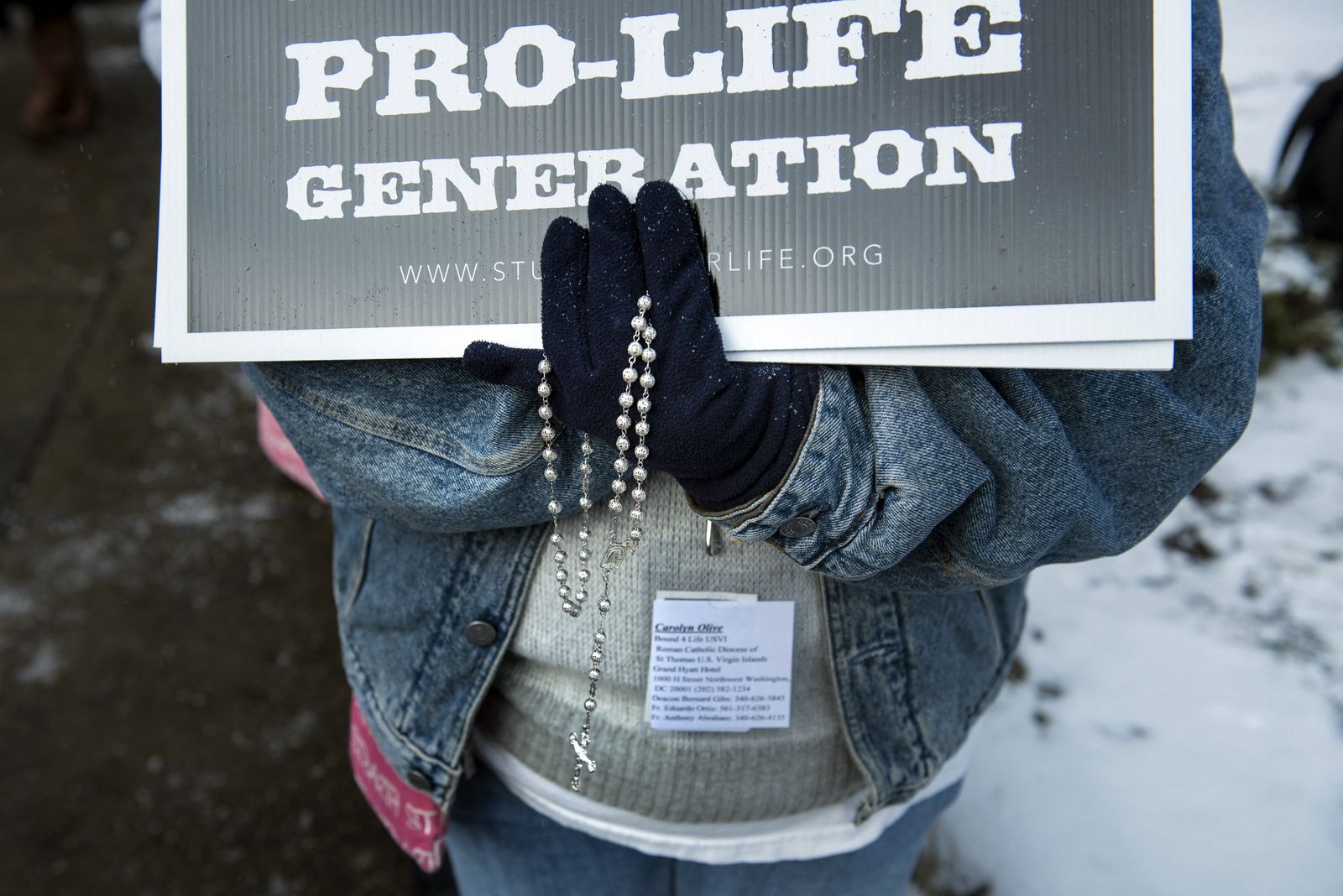
More than 100 pro-life activists gathered Monday night in front of the Rung for Women headquarters, in south St. Louis, to pray, sing and demand the removal of "Witness," an 18-foot-tall golden sculpture they consider a monument to abortion featuring demonic symbolism, as reported by The St. Louis Post-Dispatch. The protest, organized by Students for Life of America, took place a few blocks from a playground and a historic church.
The artwork, by Pakistani-American artist Shahzia Sikander, was installed last month in the Fox Park neighborhood, across from the headquarters of Rung for Women, a nonprofit organization dedicated to professional development of women, as reported by First Alert 4. The female figure has braids that curl like ram's horns and limbs that twist like tentacles.

What does the sculpture represent?
According to the organization, "Witness" was inspired by the spirit of the women who fought for access to abortion following the overturning of Roe v. Wade in 2022. The piece is part of a series by Sikander on what she considers reproductive justice and had previously been exhibited in other cities.
Critics point to several symbolic elements: the figure's neck evokes the necklace worn by Justice Ruth Bader Ginsburg; the skirt bears the word "Hava," which in Hebrew means Eve, the first rebellious woman; and the braids resemble the horns of a ram. For the protest organizers, these details are no coincidence.
"It’s just, you do not need to kill your children in order to breathe life. That’s actually the exact opposite of what that means," said Reagan Barklage, vice president of field programs at Students for Life, during the event, as reported by First Alert 4.
Society
Pro-life orgs urge transparency, accuracy in FDA abortion drug review
Tate Rosentreter | The Center Center contributor | The Center Square
Protest and counterprotest
Protesters gathered at the intersection of Ohio Avenue and Victor Street with signs, rosaries and religious songs. The event was announced on Nov. 19 and described as a "peaceful and prayerful" gathering, according to Students for Life of America.
On the other side, counter-protesters gathered to defend the organization's right to display the artwork. Leslie Zacks, an abortion rights advocate, argued that Rung for Women has the freedom to display whatever art it chooses.
The tension is not new. The sculpture had already sparked controversy in Houston in 2024, when the University of Houston canceled a talk by the artist following complaints from pro-life groups that called the piece "satanic," as reported by the St. Louis Post-Dispatch.

Political reaction
Missouri Attorney General Catherine Hanaway joined the chorus of criticism ahead of the protest. According to Hanaway, neighbors describe the sculpture as a "demonic affront to faith" and complain that it was installed with almost no notice to the community.
"We ask that 'Witness' be removed from this place," stated the attorney general, who has questioned both the symbolism of the artwork and the lack of public consultation prior to its installation.
For the organizers, the issue is not merely aesthetic or religious. They argue that the statue's location, near a playground, a church and a residential area, sends a cultural message about abortion that the community did not choose.