

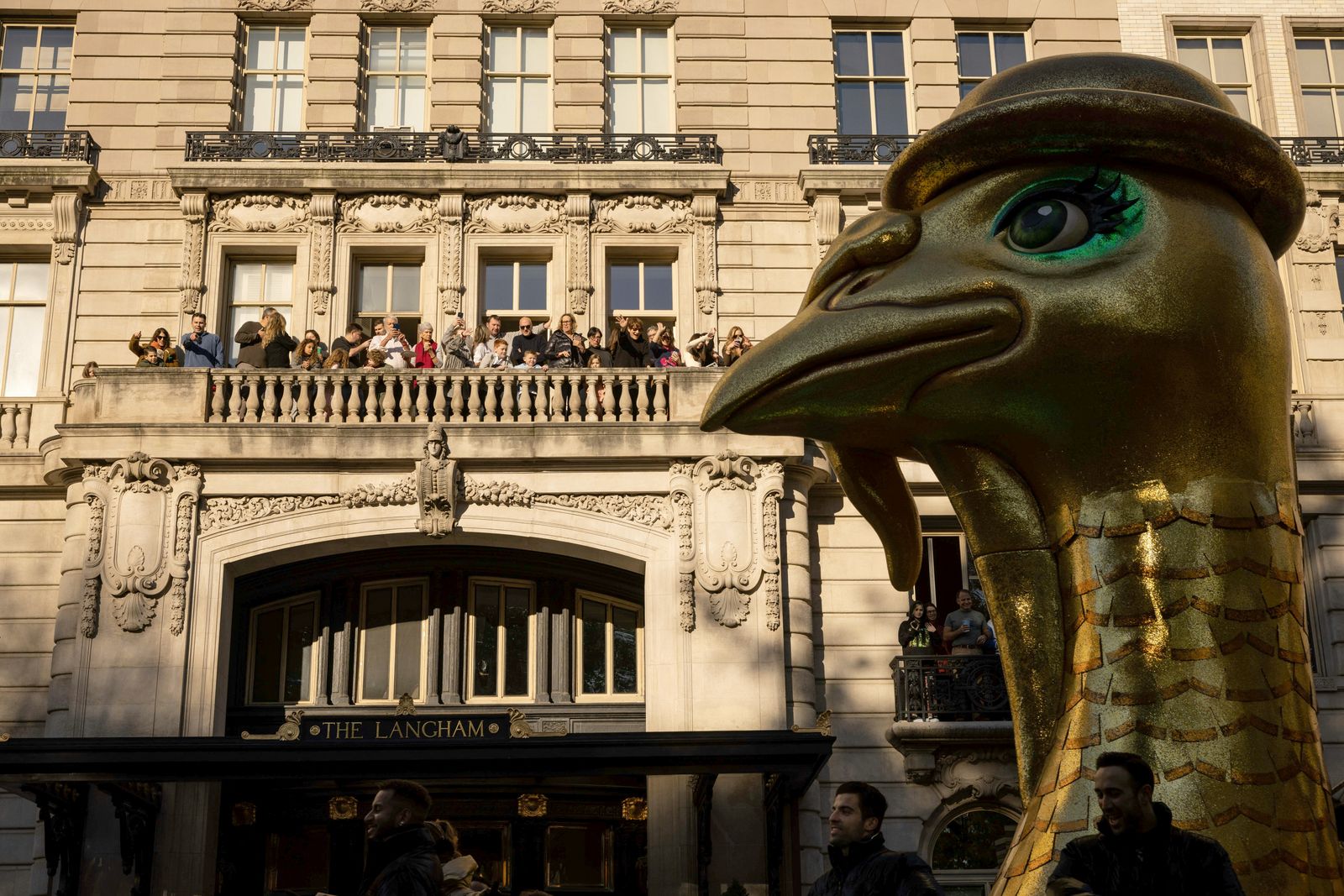
This Thursday marks Thanksgiving, or Thanksgiving Day, one of the most important holidays on the American calendar. Millions of families will gather around a table to share a meal and give thanks for the blessings received throughout the year. However, behind this tradition—usually associated with the first English settlers—there is also a story featuring Spanish protagonists.
According to the most widely accepted account, the origin of Thanksgiving dates back to 1621, when the pilgrims shared a meal with members of the Wampanoag indigenous community in Plymouth, in what is now the state of Massachusetts, to celebrate the end of the fall harvest.
However, 56 years before that gathering, a Spaniard had already organized a thanksgiving celebration on North American soil. He was the Asturian Pedro Menéndez de Avilés, who founded St. Augustine, Florida, in August 1565.
Faced with the advance of the French, whose presence in South Carolina threatened Spanish positions on the new continent, the King and Queen of Spain sent Menéndez de Avilés to defend their territories.
A few days after his arrival, with the help of the Saturiwa tribe, Menéndez attacked Jacksonville—then known as Fort Caroline—and executed more than 50 French prisoners, whom he considered intruders on Spanish territory.
On September 8, 1565, as a sign of gratitude for the indigenous people's cooperation, Pedro Menéndez de Avilés shared a meal and a Mass with some members of the Saturiwa community in St. Augustine. This gathering is considered by those who advocate for the Spanish origins of Thanksgiving to be one of the earliest documented celebrations of thanksgiving on American soil.

Juan de Oñate, another Spanish pioneer
History also mentions another episode linking Spanish explorers to the origins of Thanksgiving.
In 1598, 33 years after the celebration organized by Menéndez de Avilés and 23 years before the gathering in Plymouth, the Spanish explorer Juan de Oñate shared a feast with indigenous people on the banks of the Rio Grande, after traveling more than 500 kilometers through the desert with his expedition.
This event is another of the historical episodes often cited when highlighting the Spanish presence in the origins of Thanksgiving celebrations in North America.
The Hispanic legacy in U.S. history
The legacy of Spanish explorers and settlers is part of the history of territories such as Florida and New Mexico and constitutes one of the historical roots of Hispanic influence in the country.
Thus, while millions of Americans celebrate Thanksgiving every November, there is also reason to remember that this tradition has roots that extend beyond the history of the English pilgrims and that connect to the Spanish presence in North America.