

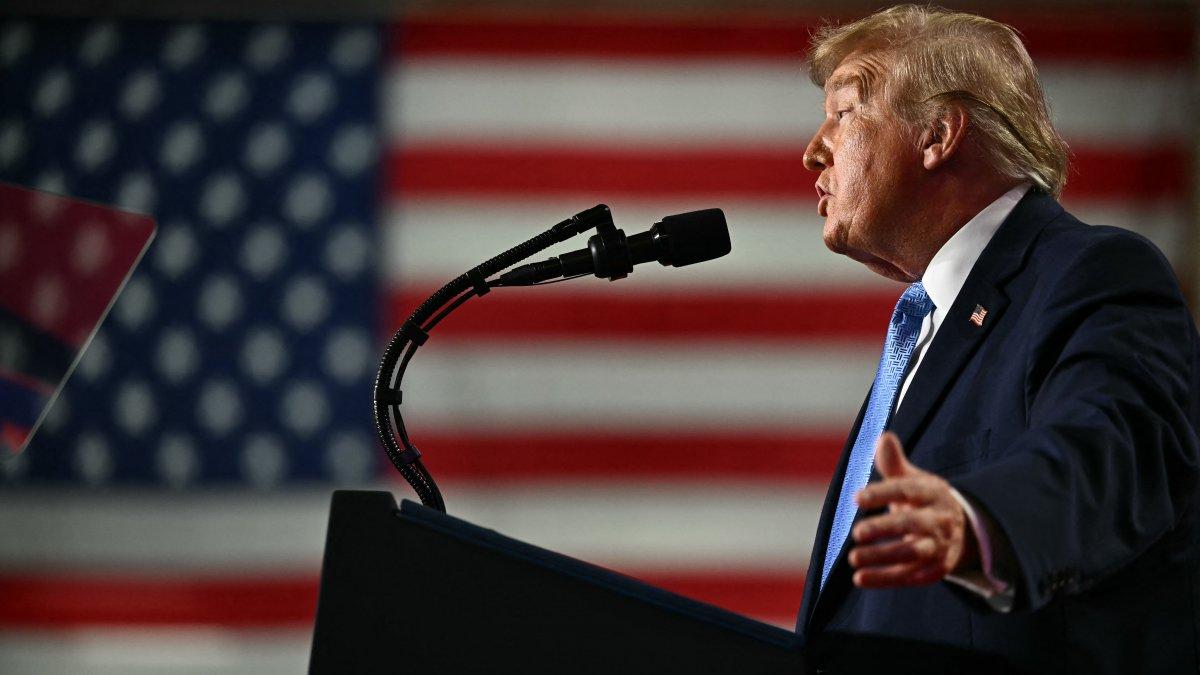
President Donald Trump will travel to Phoenix, Arizona, on December 4 to tour the facilities of Taiwan Semiconductor Manufacturing Company (TSMC) and participate in the groundbreaking ceremony for its latest industrial expansion, a White House official confirmed on Thursday.
The plant manufactures advanced microprocessors, including components designed by Nvidia for the development of artificial intelligence.
According to data released by the federal government, the expansion of the complex—where the Taiwanese firm has been operating since 2020—will create more than 10,000 direct jobs and another 11,000 indirect jobs in the surrounding communities.
A TSMC spokesperson confirmed in a statement to CBS News the president's expected attendance at the event, while it remains unknown whether Arizona's Democratic governor, Katie Hobbs, or Democratic Senators Mark Kelly and Ruben Gallego will attend the official event.
Jensen Huang's Return to Nvidia and the Race Against China
The president's schedule in Arizona coincides with public scrutiny of Nvidia and the White House's intervention to stabilize the leadership of one of the world's most valuable corporations.
Earlier this month, the company's co-founder and CEO, Jensen Huang, submitted his resignation after it was revealed that he had an extramarital affair with Alice Huang, a former executive at the Singaporean technology firm Megaspeed, whom U.S. intelligence agencies identified as an alleged spy working for China—an accusation denied by Beijing.
Faced with the risk of a massive stock market crash that would affect the entire national economy, President Trump actively advocated for the reinstatement of the executive.
As a government official explained earlier this week, the goal of reinstating Huang stems from the need to "preserve the United States' technological edge over China, strengthen our national security," and ensure that the future of artificial intelligence is built on U.S. soil.
Nvidia's board of directors formally announced Huang's return on Monday, a decision that Trump celebrated shortly afterward on social media and which now sets the stage for his visit to Phoenix to strengthen the semiconductor supply chain within U.S. borders.

Tech & Science
Nvidia reinstates Jensen Huang as CEO after ruling out national security risk, stock soars 30%
Carlos Dominguez

