

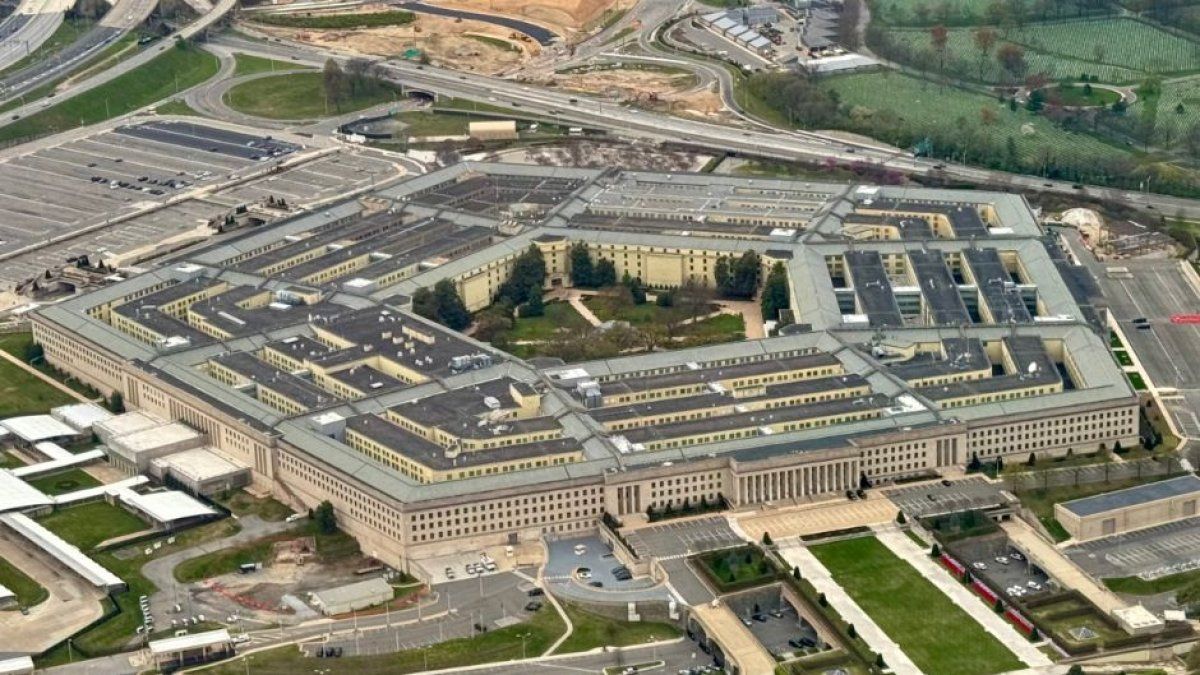
The Department of War released the eighth batch of declassified files on unidentified anomalous phenomena (UAP) on Nov. 20 as part of the Presidential System for the Declassification and Reporting of Encounters with Unidentified Aerial Phenomena (PURSUE).
Among the documents is a 538-page report prepared in 2009 by the contractor Bigelow Aerospace Advanced Space Studies (BAASS), which includes blueprints for constructing a 5,000-square-foot underground bunker in North Las Vegas intended to store "exotic material" or tissue, including recovered hardware and biological samples related to UAPs.
The project was part of the Advanced Aerospace Weapons Systems Applications Program (AAWSAP), also known in Pentagon correspondence as the Advanced Aerospace Threat Identification Program (AATIP), launched in 2008 with $10 million in congressional funding spearheaded by then-Senate Majority Leader Harry Reid (D-Nev.) and Sen. Daniel Inouye (D-Hawaii). The Defense Intelligence Agency (DIA) contracted BAASS, founded by Robert Bigelow, a close ally of Reid.

Politics
Bessent says Iran hasn't loaded a single oil tanker in months: 'A sinking ship'
Alejandro Baños
Underground bunker
The July 2009 plans describe an enclosure buried 15–20 feet deep, with 3-foot-thick reinforced concrete walls, a steel door, and a heavily secured access tunnel. BAASS justified the need for the bunker to acquire and store materials recovered from private companies or individuals, including those in Brazil.
"The need for a highly secure underground vault operated by BAASS became evident in line with a BAASS priority to seek out and acquire recovered hardware and biological samples from the corporate world and/or private individuals and groups located elsewhere, including Brazil," states the report dated July 2009.

Politics
Trump calls on Putin to 'stop all military aggression" against Europe to end war in Ukraine
Diane Hernández
The contract and the classification attempt
The contract totaled $22 million, but it was not renewed after 2010. Reid attempted to classify the program as Special Access Program with a highly restricted access list ("Discriminatory Access List"), but the DIA rejected it.
The agency determined that the reports produced—on advanced propulsion, warp drives, antigravity, etc.—had "limited value" and did not justify such a high level of secrecy.
Other findings from the eighth installment
In addition to the BAASS report, the eighth installment of the PURSUE system includes a total of 43 files: 40 PDF documents and three videos from military sensors. The three videos, submitted by U.S. Central Command (CENTCOM) to the All-Domain Anomaly Resolution Office (AARO), correspond to encounters recorded in 2020, 2023, and 2026 in the Middle East and show "areas of contrast" or unidentified objects in the images.
The Department of Defense clarifies that the archived materials pertain to "unresolved" cases, meaning that the government cannot definitively determine the nature of the observed phenomena due to a lack of sufficient data.
Much remains to be clarified
If the Pentagon funded a $22 million program to study advanced propulsion, warp drives and antigravity, why did it take so long to publicly acknowledge it?