

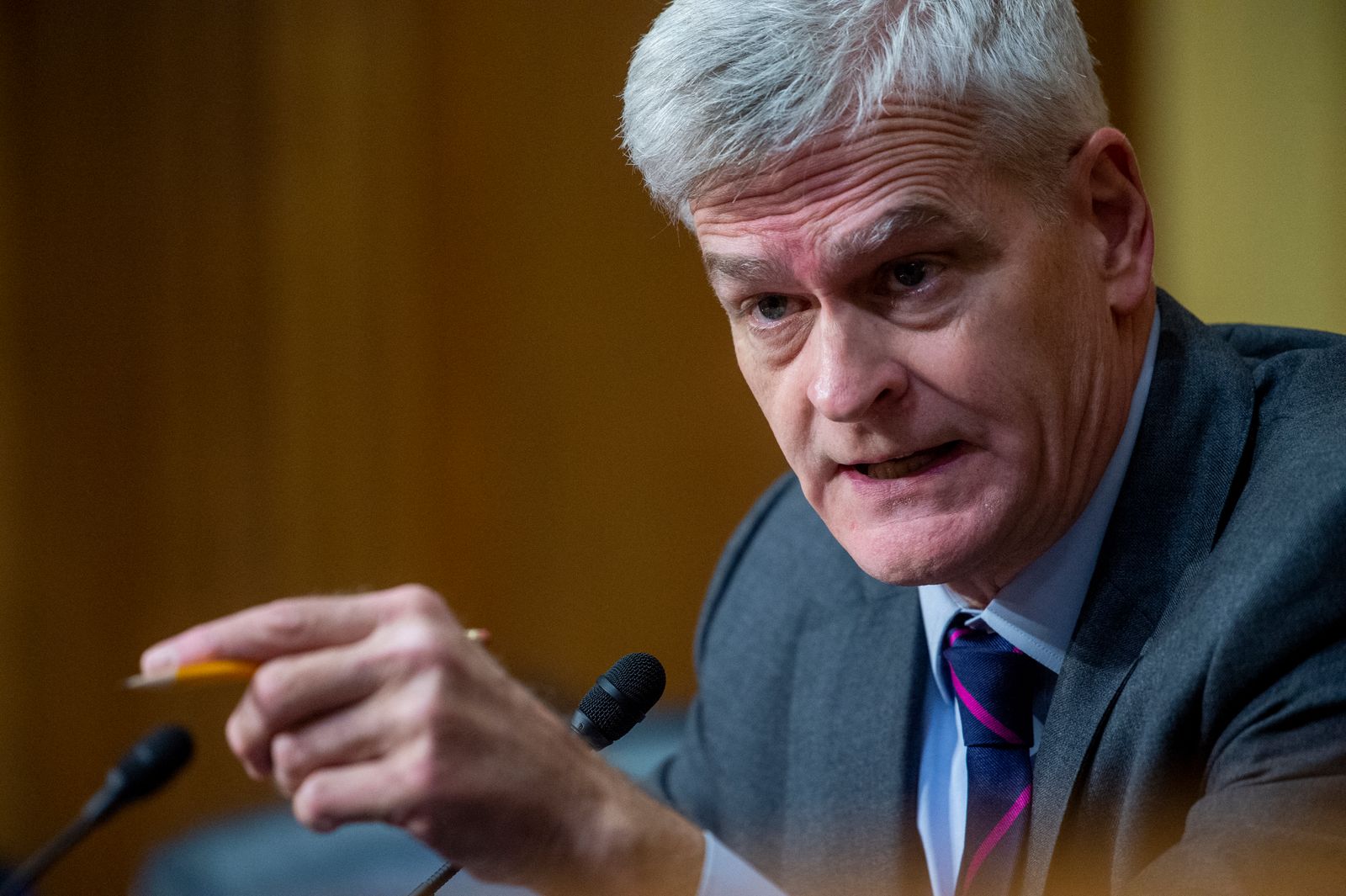
In six years, more than 70 million Americans could see their social security suddenly shrink by 22%. To avoid this scenario, Senator Bill Cassidy (R-LA) is pushing a proposal that recently gained the unexpected backing of his biggest political rival in Washington, D.C.: President Donald Trump.
According to The Washington Sun, the president asked the Treasury Department to provide technical assistance for the bill. "The president actually has given me personal commitment that he would support it," Cassidy said on the program Face the Nation.
The Louisiana senator is working against the clock, since he will leave the Senate in January 2027. Therefore, he has little time to explain his proposal and secure enough support before the new Congress convenes. And what does the plan? In short, it involves the federal government borrowing $1.5 trillion and investing it in the market.
How does social security work today?
Social security is a federal program that, since 1935, has paid retirement and pension benefits for Americans, as well as disability benefits and benefits for the families of deceased workers.
It is funded primarily by a federal payroll tax. Workers and employers each contribute 6.2% each, up to an annual cap of $184,500 in 2026.
In practice, the contributions of those currently working pay for the benefits of those who have already retired. Any surplus goes into trust funds that, by law, may only invest in special Treasury bonds. These are safe and offer a low return.
Why is it running out of money?
The problem with the current system is mathematical. In 1960, there were 5.1 workers contributing for every beneficiary, whereas today that number is 2.6. Consequently, the program already spends more than it collects. In fact, in 2025, $1.45 trillion came in and $1.61 trillion went out. The difference is covered by reserves, which are shrinking year after year.
According to the program's latest report, the retirement fund will be depleted in the last quarter of 2032. From that point on, it will only be able to pay 78% of benefits, resulting in an automatic 22% cut.
Cassidy's proposal to "save" social security
In this context, both Republicans and Democrats have made recommendations on what needs to change. However, one of the few concrete proposals is that of Senator Cassidy. The main change the Louisiana Republican is seeking is where to invest the money. Currently, the money can only be invested in government bonds, whereas most pension funds invest in stocks and other higher-yielding assets to grow their savings.
In practice, it aims to model itself after the railroad workers' pension system. Until 2001, that program operated just like Social Security, since its reserves could only be invested in government bonds. That year, Congress passed a law creating the National Railroad Retirement Investment Trust, a fund independent of the federal government that can invest in stocks, bonds, and other assets, just like private retirement plans.
Since then, the returns on those investments have helped pay for the sector's pensions. According to the Railroad Retirement Board, the system's assets grew from $20.7 billion when the fund was created to $31.1 billion by the end of 2025.
"We know this model can work because it already has. it's remained stable, profitable, and reliable," the senator noted the senator in an opinion column.
"Every year we wait, it becomes harder and harder to fix Social Security," he added.
How would the new system work?
The proposal, presented by Cassidy alongside Virginia's Democratic Senator, Tim Kaine, calls for the federal government to take out a loan of $1.5 trillion.
That money would not go to Social Security, but rather to a new, separate fund, which would invest it in stocks, bonds, and other assets for 75 years without touching it. "Kind of what you do with your own 401K," Cassidy explained.
As that fund grows, Social Security would continue to pay 100% of benefits. When its reserves are depleted in 2032, the Treasury would lend it whatever is needed to cover the shortfall.
After 75 years, the fund would sell its investments, and with that money, Social Security would repay everything the Treasury lent it over those decades.
In practice, the bet is that, over 75 years, that $1.5 trillion—if well invested—will grow enough to pay off the debt incurred. If the fund earns, for example, 7% per year and the government pays 4% on its bonds, that difference would help sustain the program. According to Cassidy, it would be enough to cover up to 70% of the program's shortfall.
In addition, the Louisiana senator points out that one of the benefits of his proposal is that the risk does not fall on retirees: "Under our plan, all risk is borne by the investment fund. No risk is borne by the individual".
Cassidy also promises that no one who is already receiving benefits or is about to retire will see any changes to their benefits. To strengthen oversight and accountability, the program would include annual audits and rules to prevent a future Congress from using the funds for any other purpose.
In addition to Trump and Senator Tim Kaine, the proposal has the backing from Larry Fink, chairman of BlackRock, the world's largest investment management firm.
Cassidy says he can build enough bipartisan support to reach 60 votes in the Senate, although approval from the House of Representatives would still be needed. Speaking with CNN, he summarized his idea with the following statement: "The time is always right to do the right thing."