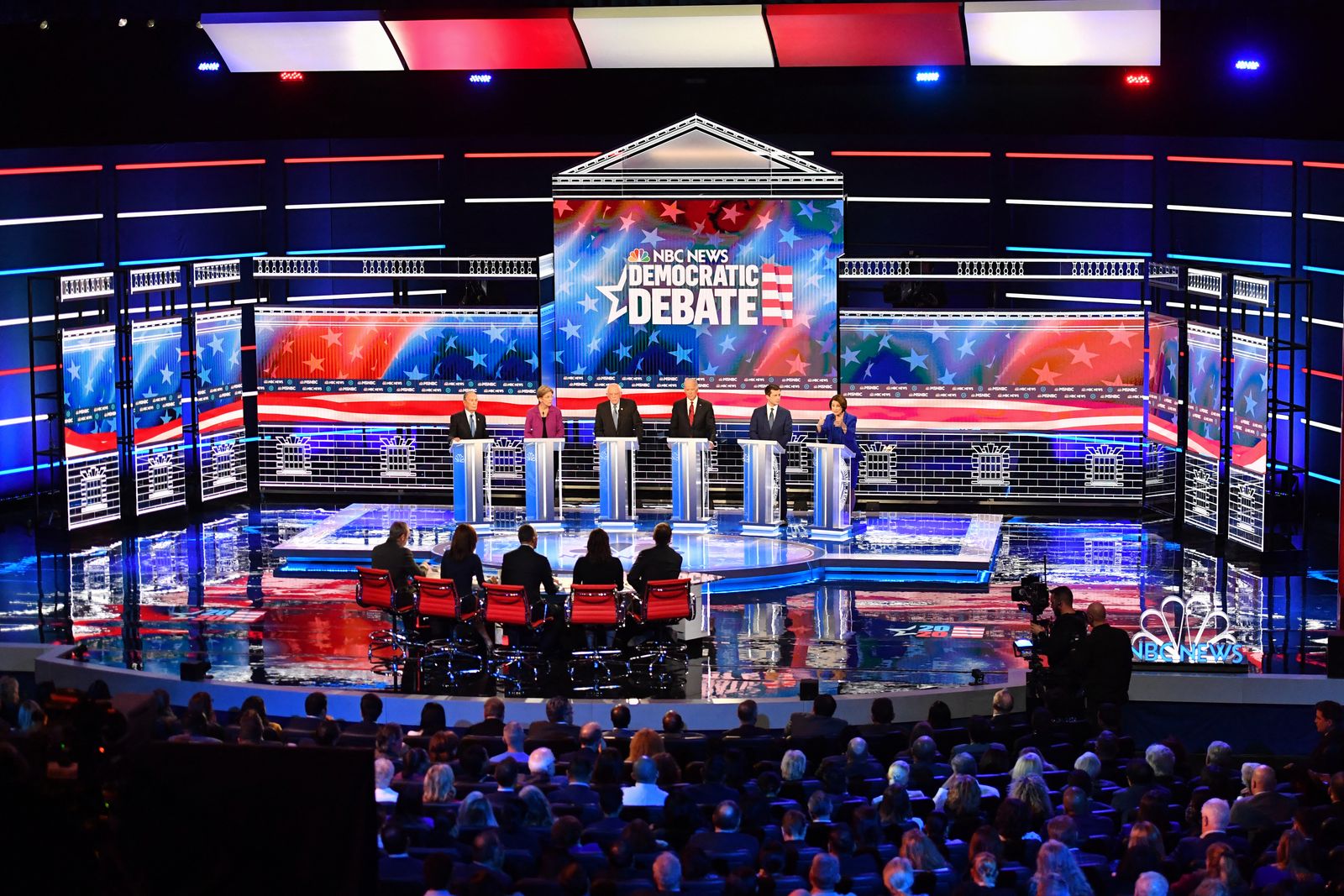
The Democratic National Committee (DNC) presented on Monday the official debate schedule for the 2028 presidential primaries, establishing a schedule of 12 debates that will begin in June 2027 and will run through March 2028.
The plan calls for five debates over the coming year and seven in the first few months of the election cycle, in a race that so far has no officially registered candidates but is expected to feature a long list of contenders.
DNC Chair Ken Martin reported that the maximum number of participants per debate will be 20 participants; if that number is exceeded, the event will be split into two consecutive nights with participants assigned at random.
The exact dates, participating television networks, and poll and fundraising thresholds will be announced in January, following a format similar to that used in the 2020 primaries.
The announcement comes just a few weeks after the Democratic Party consolidated a wide lead in the midterm elections—securing 258 seats in the House of Representatives and 56 in the Senate—and after modifying its electoral calendar to make South Carolina the first stop on the primary circuit, displacing the traditional Iowa caucuses.
Commitments against super PACs and restrictions on the party structure
As an essential condition for taking the stage, the DNC will require all candidates to sign a pledge to publicly condemn advertising expenditures made on their behalf by super PACs and nonprofit organizations linked to so-called "dark money."
However, the Democratic leadership itself acknowledges that it lacks the legal authority to prohibit these outside groups from spending money on the race, and the rule requires the candidate to distance themselves only once even if the spending continues.
Beyond the symbolic gesture regarding external financing—backed by figures from the progressive wing such as Senators Bernie Sanders and Elizabeth Warren—the most far-reaching change lies in the ban on joint fundraising agreements between presidential campaigns and party committees during the primaries.
Furthermore, any coordinated spending with state or local party structures of the party for the benefit of a specific candidate.
These neutrality clauses aim to dispel the accusations of favoritism that marked recent primary cycles: from allegations of institutional bias toward Hillary Clinton over Sanders in 2016, to the controversial 2024 process, when Joe Biden advanced without real competition before withdrawing in July and paving the way for Kamala Harris' direct nomination without an open primary.
In addition, the new rules allow campaigns to file formal complaints against their rivals before each qualification period, foreshadowing recurring regulatory disputes in the race toward 2028.

Politics
Hakeem Jeffries sparks a wave of criticism by refusing to rule out a federal government shutdown to push the Democratic agenda
Andrés Ignacio Henríquez