
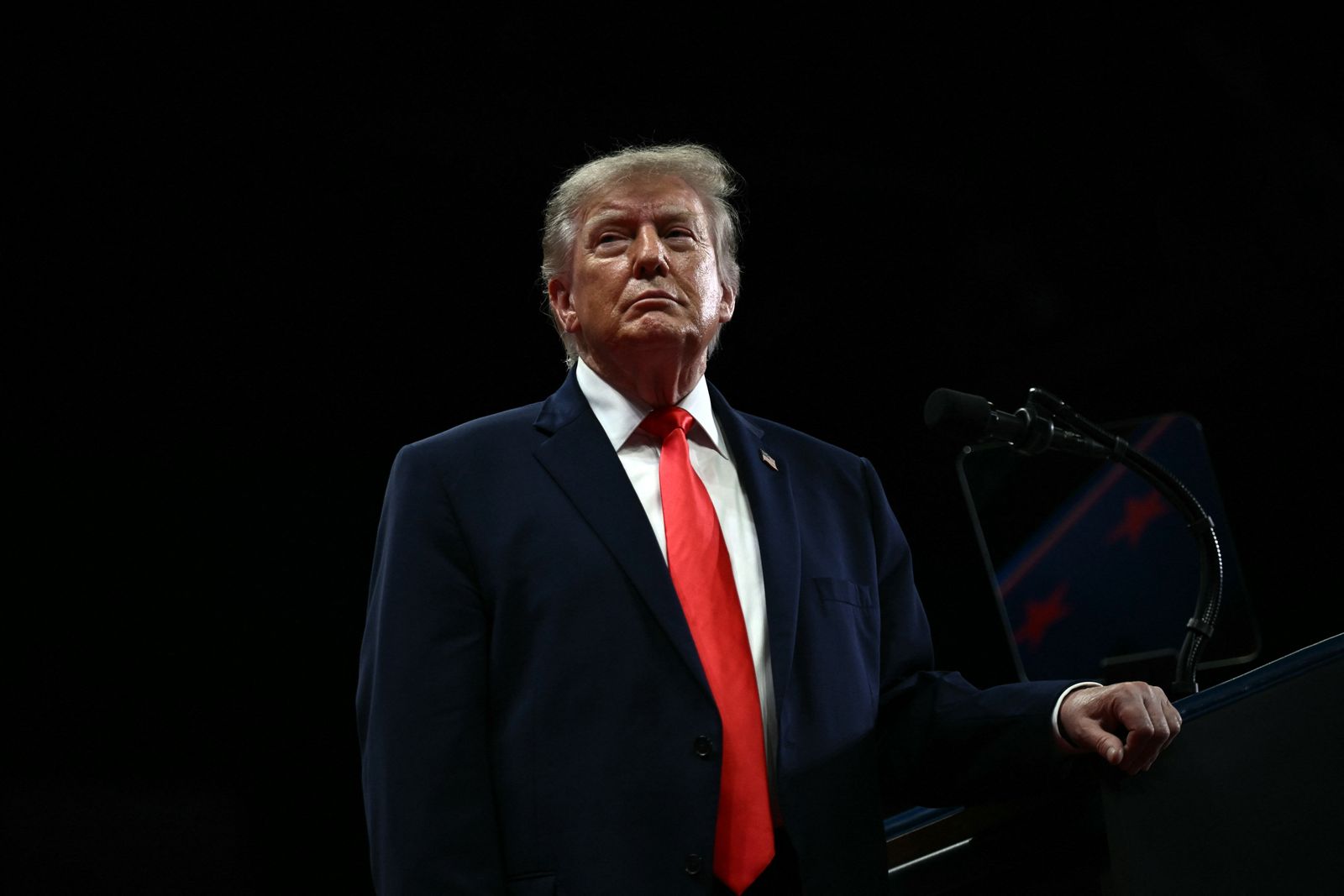
A federal appeals court opened a new avenue on Monday a new avenue for President Donald Trump to attempt to overturn the criminal conviction he received in New York in the case related to the payment to adult film actress Stormy Daniels. A three-judge panel of the Second Circuit Court of Appeals ruled that a lower court erred in categorically rejecting the president's request to transfer the case from state courts to federal jurisdiction.
In their ruling, the justices questioned the criteria previously used by Federal Judge Alvin Hellerstein, who had rejected Trump's petition. The panel explained that it was not appropriate to automatically rule out the transfer of a state criminal proceeding to federal jurisdiction simply because the defendant had already been convicted. "We disagree with the district court. First, the court erred in holding that transfer is categorically unavailable in a state criminal case after a defendant who is a federal official has been convicted," the judges noted in an unsigned opinion.

The ruling remands the case to a lower court, which must promptly determine whether the case can remain under federal jurisdiction. If the transfer is ultimately authorized, Trump will have the opportunity to present new arguments before a federal judge based on presidential immunity, with which he seeks to have the verdict against him overturned. The decision also puts the president's appeal in the New York state court system on hold.
The case stems from a $130,000 payment made during the 2016 presidential campaign to Daniels—whose real name is Stephanie Clifford—to prevent her from going public about an alleged extramarital affair with Trump. In May 2024, a jury found the then-former president guilty on 34 counts of falsifying business records related to the payment. Trump has denied any wrongdoing and did not receive a sentence in the proceedings.
The new decision represents a step forward for the president's legal strategy, who had previously attempted to transfer the case without success. His central argument rests on the Supreme Court's ruling on presidential immunity—issued after the trial—which established certain protections for a president's official acts. Trump's attorneys contend that this precedent should allow him to challenge, in federal court, the evidence and proceedings that led to his conviction.