Trump administration begins transferring deportees to Liberia under new immigration agreements
Although Liberian government officials did not specify the exact nationalities of the newly arrived group, authorities confirmed the predominant geographic origin of the deportees.
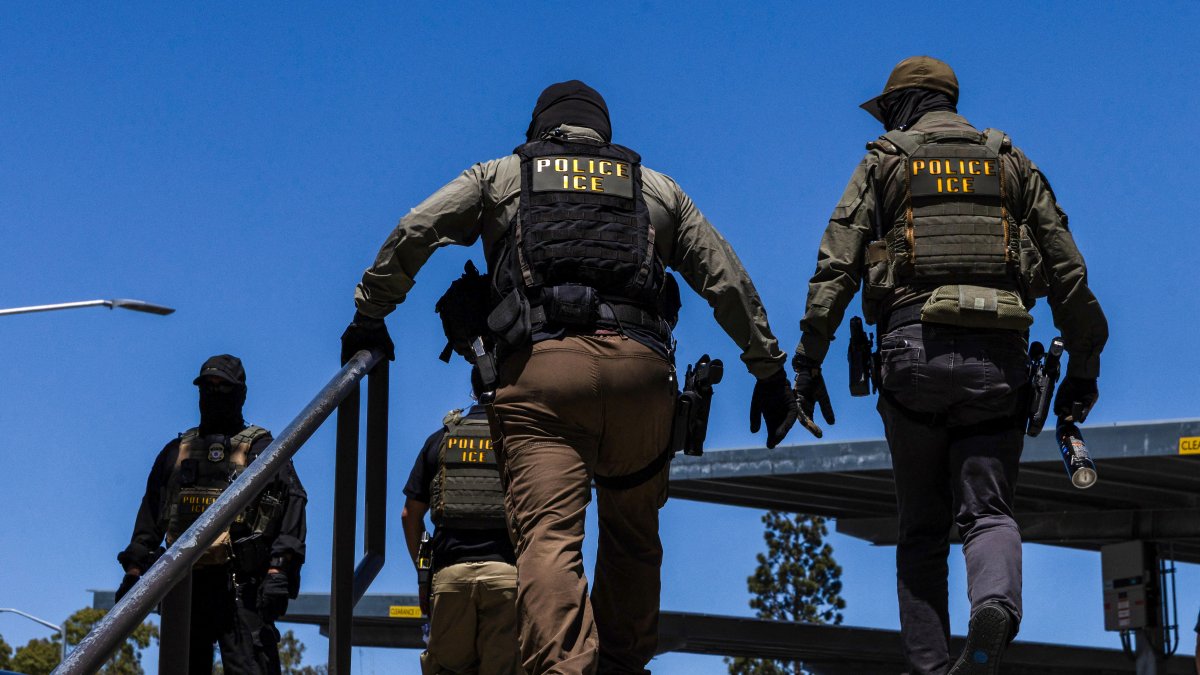
An official from U.S. Immigration and Customs Enforcement.

The U.S. government began implementing a new deportation scheme for unauthorized immigrants through transfers to third countries. A first flight carrying approximately 20 people landed last Thursday, Aug. 20, at Roberts International Airport, located on the outskirts of Monrovia, the capital of Liberia.
This operation is part of an agreement recently formalized by the African country's executive branch, which provides for the reception of up to 1,200 deported individuals over the next 12 months.
The measure is part of the Trump administration's plan to expedite the departure of individuals facing legal barriers or judicial protections that prevent their direct repatriation to their countries of origin.
Regional scope and legal framework of the transfers
Although the Liberian government delegation did not specify the exact nationalities of the newly arrived group, authorities confirmed the predominant geographic origin of those being transferred.
Liberian Minister of Information Jerolinmek Piah specified that the majority of those scheduled for deportation under this program come from the Latin American region, noting that the list includes citizens "from Venezuela, Cuba, Colombia and others."
The agreement's guidelines stipulate that the individuals transferred will not be confined as detainees nor considered criminals.
The administration of Liberian President Joseph Boakai indicated that the foreigners will remain in the country as "guests" or "visitors," with the option to file asylum applications locally or leave the African nation of their own free will.
The government in Monrovia described the measure as an "entirely humanitarian" effort and denied that it was in exchange for direct financial compensation.
However, the strategy has U.S. technical and infrastructure support to strengthen the host nation's immigration system, with funding estimated at around $5 million.


Economy
Trump announces he will raise tariffs on Canadian cars and steel to 50% starting in 2027
Diane Hernández
LATEST