
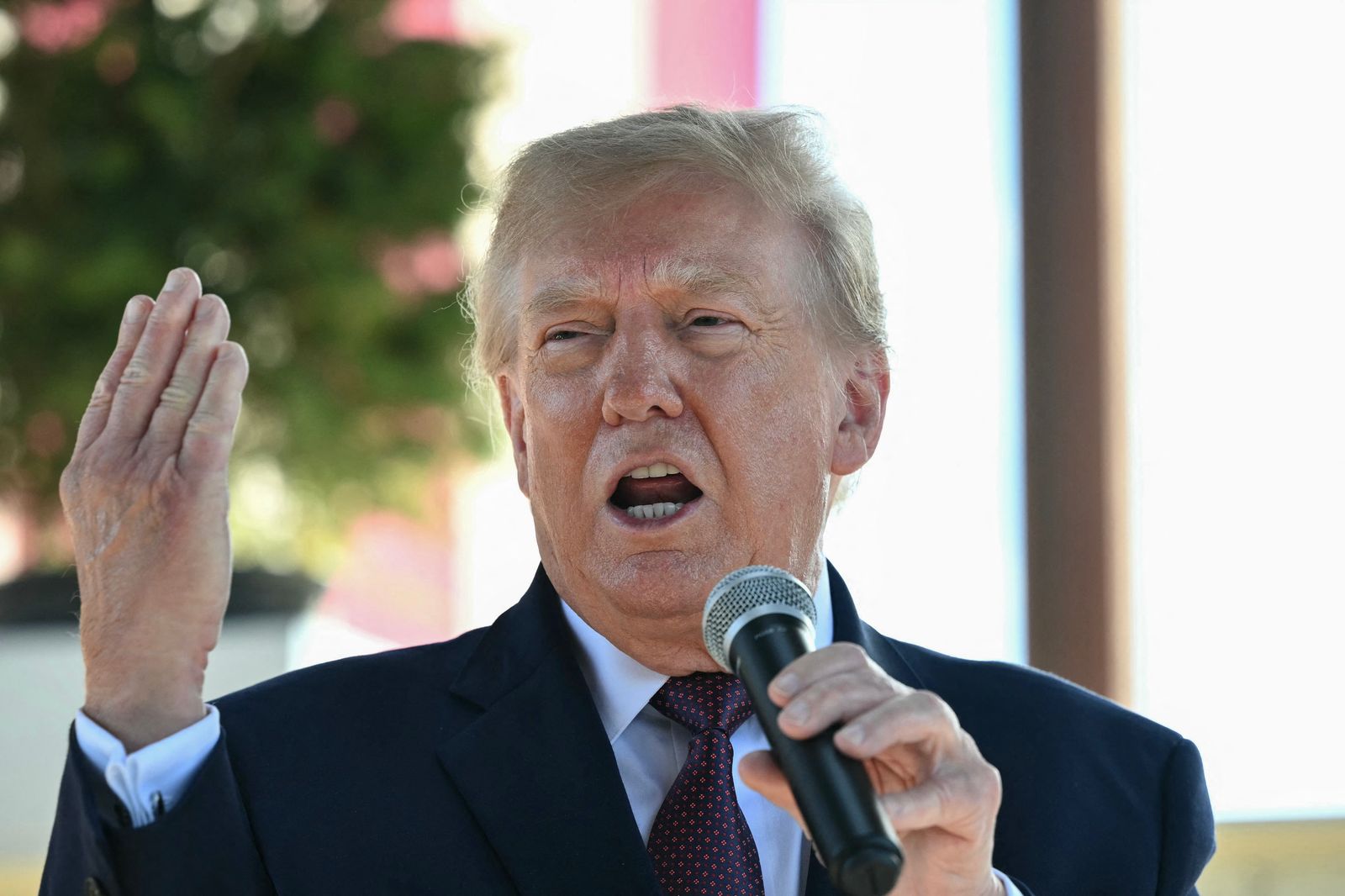
On November 3, while Americans were voting in the midterm elections, U.S. President Donald J. Trump made an announcement that should have raised more questions than it did.
The United States, he said in a television interview, would stop providing Israel with roughly $4 billion a year in aid beginning in 2027. American weapons would remain available for sale to Israel. The president added that Israeli Prime Minister Benjamin Netanyahu had raised the idea himself and that the two men had been discussing it for a few years. Trump also offered a revealing political explanation: the annual payment had become an easy target for Israel's critics, and he saw no reason to keep handing them ammunition.
It is an argument with the admirable simplicity that many people like. It also mistakes a complicated strategic relationship for an embarrassing slogan in a campaign advertisement. A serious American president is entitled to review every dollar of foreign aid—as Trump does. What he cannot afford is to let the people who detest Israel dictate the terms of that review.
The existing U.S.-Israel Memorandum of Understanding, negotiated under then-President Barack Obama in 2016, set the terms of $38 billion in military aid over ten fiscal years, from 2019 through 2028. The annual allocation is $3.3 billion in foreign military financing and $500 million for cooperative missile defense, so Trump's rounded figure of $4 billion is close enough for television. The announced termination in 2027, however, comes before the agreement's scheduled end. The MoU is not a treaty, and since Congress controls appropriations, changing the arrangement requires more than just a presidential declaration.
Washington also needs to stop pretending that the money is a charitable allowance deposited into Israel's checking account. The annual $3.3 billion—a tiny one-fifth of 1% of the $7 trillion U.S. federal budget—overwhelmingly pays for American defense equipment and services. Israel does receive a subsidy, certainly, and American taxpayers do bear its cost—and American manufacturers fill the orders and keep their production lines running.
The portion Israel was once allowed to spend domestically—more than a quarter of the grant—is being phased out and will reach zero in 2028, at which point every dollar of the 3.3 billion will be a purchase order placed with American manufacturers. Abolishing military aid removes that guarantee, as nothing would oblige Israel to continue buying the same quantity of U.S.-made weapons and ammunition once it pays for them itself.
This tension recently took on an almost comical turn in Arkansas. On October 7, the third anniversary of the Hamas massacre, the first batch of Iron Dome Tamir interceptor missiles manufactured entirely in the United States was completed at a Raytheon-Rafael plant in East Camden. Israeli engineers designed the Tamir interceptor, and now American workers are building it, providing both countries with a second production source. A similar process is expected to support SkyHunter, the American adaptation of the Tamir intended for the U.S. Marine Corps. Calling such an arrangement "dependency" would require a rather peculiar dictionary.
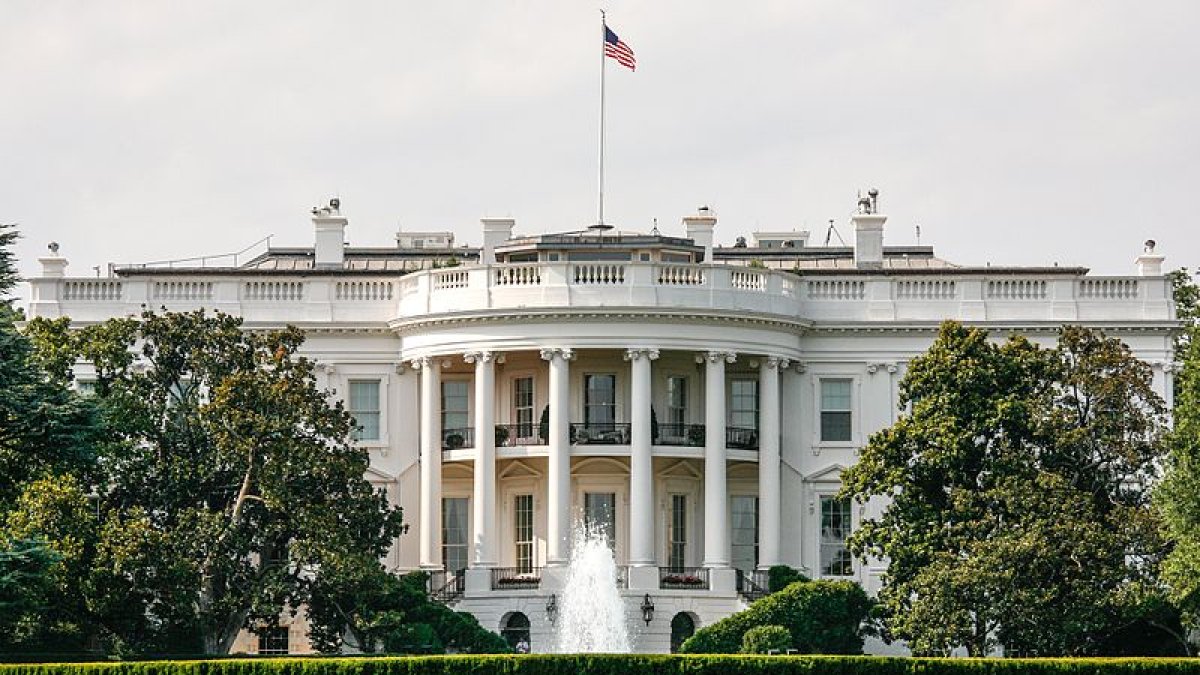
The same logic runs through the Arrow and David's Sling missile-defense systems, co-developed and co-produced by Israel with the Pentagon's Missile Defense Agency. Israel has spent decades testing weapons and equipment under conditions that American procurement committees cannot reproduce in PowerPoint slides or at testing ranges. The Pentagon cooperates with the Israeli military and defense industry for practical reasons, chief among them intelligence and technology proven effective against adversaries shared by both countries.
In the Middle East, where some American partner countries require an American defense umbrella as well as constant diplomatic reassurance before taking any meaningful action, Israel has proven willing to bear the human cost of its own defense and that of the West.
This benefit cannot simply be subtracted from the cost of military aid to produce a neat dollar figure. Intelligence does not come with a publicly audited price tag. Neither do lessons learned in combat or the ability to intercept ballistic missiles that can also target American forces. The absence of a convenient dollar figure makes these entirely real advantages inconvenient for politicians whose preferred method of foreign policy analysis is to shout "your tax dollars fund Israel" until the crowd boos.
Netanyahu had actually proposed something more orderly. In January, he said he wanted to phase out U.S. military aid to zero within a decade, and in July, at the White House, he reiterated that goal while proposing a joint weapons research fund worth roughly $16 billion. That is a clear strategic ambition: a country forced to fight for its survival should want the greatest possible control over its own arsenals. A transition negotiated over 10 years would give planners and manufacturers time to adapt, whereas an abrupt cutoff would conflict with contracts already signed. Israel has roughly $10 billion in American weapons on order beyond what the current agreement covers, including F-35s scheduled for delivery starting in 2028, and its military plans acquisitions based on multiyear commitments that no press release can rewrite.
Israel has learned why independence matters. U.S. administrations have used the flow of weapons to steer Israeli operations, as Washington did in 2024 when it withheld a shipment of 2,000-pound bombs over a planned offensive in Rafah. Even a friendly administration has domestic constituencies to appease.
The U.S. midterm elections showed just how far that pressure now extends across the political spectrum. Michigan's Senator-elect Abdulrahman Mohamed El-Sayed built his campaign on opposition to military aid to Israel, while Vice President JD Vance, explaining his own party's defeat, claimed that a changed relationship with Israel was among the demands of the voters who had deserted the Republicans. There is something perverse about treating this convergence as a reason to retreat. A foreign alliance that makes the United States stronger should survive a bad election season. The only test worth applying is whether military cooperation serves America's interests—a question that slogans devised by candidates who find the Jewish state a convenient punching bag do nothing to answer.
Foreign military financing may yet prove to be the least consequential part of the negotiations. U.S. officials are reportedly seeking the transfer of Israeli expertise to American management, including patents—a demand Jerusalem views as an erosion of the technological edge its defense industries hold in global markets. No finalized deal has emerged, and the terms remain uncertain. Precisely for that reason, Congress ought to examine them in the open, since Israeli patents and specialized engineering could prove far more valuable over time than the annual military aid amount being touted as a taxpayer savings.
Washington is also considering deeper industrial cooperation. The fiscal year 2027 defense authorization bill includes a U.S.-Israel Defense Technology Cooperation Initiative that would create a standing framework for joint development and co-production, although none of it has yet become law. The principle is sound: put both countries' inventors and manufacturers to work on tomorrow's defenses. The danger is that "partnership" could become a polite label for an arrangement in which Israel gives up proprietary technology and expertise while Washington retains the leverage to cut Israel off from deliveries of weapons and ammunition.
Above all, anti-Israel campaigners will not stop when military aid does. Those who accuse Israel of controlling U.S. foreign policy will simply move on to the next example. El-Sayed has already called for ending weapons sales to Israel altogether. The objection was never confined to a budget line item. Making concessions to a political accusation does little good when the accusation is designed to survive every concession.
Israel should become less dependent on American aid, and America should benefit from a deeper defense partnership. The transition deserves years of planning and firm guarantees that neither partner is quietly stripping the other of indispensable capabilities, along with congressional scrutiny before a television announcement turns into a security crisis.
Trump has an opportunity to modernize an extraordinarily productive alliance, or to hand Israel's adversaries a symbolic victory while American manufacturers lose orders and both countries lose strategic flexibility. Measured against what Washington gains from Israeli technology, engineering, battlefield experience, and intelligence, $4 billion a year is a modest figure, and a policy based solely on eliminating that amount could cost the United States far more down the road.
Pierre Rehov, who holds a law degree from Paris-Assas, is a French reporter, novelist, and documentary filmmaker. He is the author of six novels, including "Beyond Red Lines," "The Third Testament," and "Red Eden," which have been translated from French. His latest essay on the aftermath of the October 7 massacre, "7 octobre – La riposte," became a bestseller in France. As a filmmaker, he has produced and directed 17 documentaries, many of which were filmed under high-risk conditions in Middle Eastern war zones and focus on terrorism, media bias, and the persecution of Christians. His latest documentary, "Pogrom(s)," highlights the context of ancient anti-Semitism within Muslim civilization as the main force behind the October 7 massacre.
Originally published by Gatestone Institute. Author: Pierre Rehov. Read the original.